
Quick response
Quick Answer: The most reliable VIN location for the Audi TT (8J) is the stamped chassis number in the engine bay on the firewall/plenum chamber. It’s typically stamped into the metal under the rubber weather seal at the base of the windshield—use a flashlight because it sits recessed in shadow and often gets dirty.
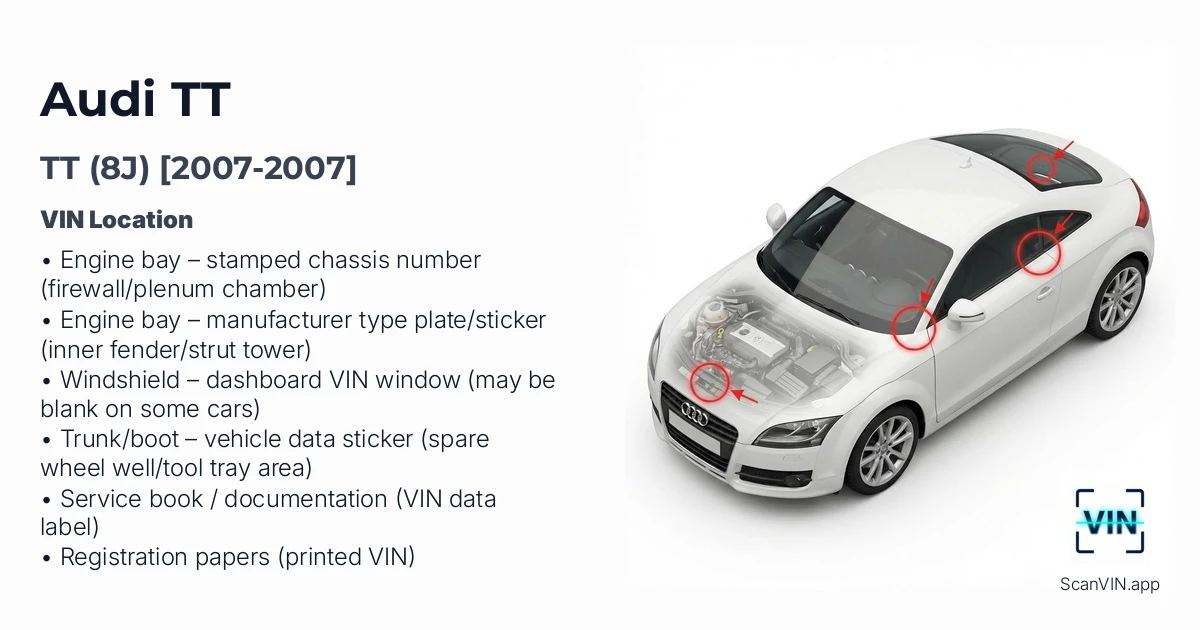
Where is the VIN number in Audi TT (8J)?
This guide shows the VIN (chassis number) locations on the Audi TT (8J) produced between 2007–2007, including the easiest scan points and the “hidden” backup spots used by Audi/VW-group vehicles.
Chassis Number Locations
Engine bay – stamped chassis number (firewall/plenum chamber) 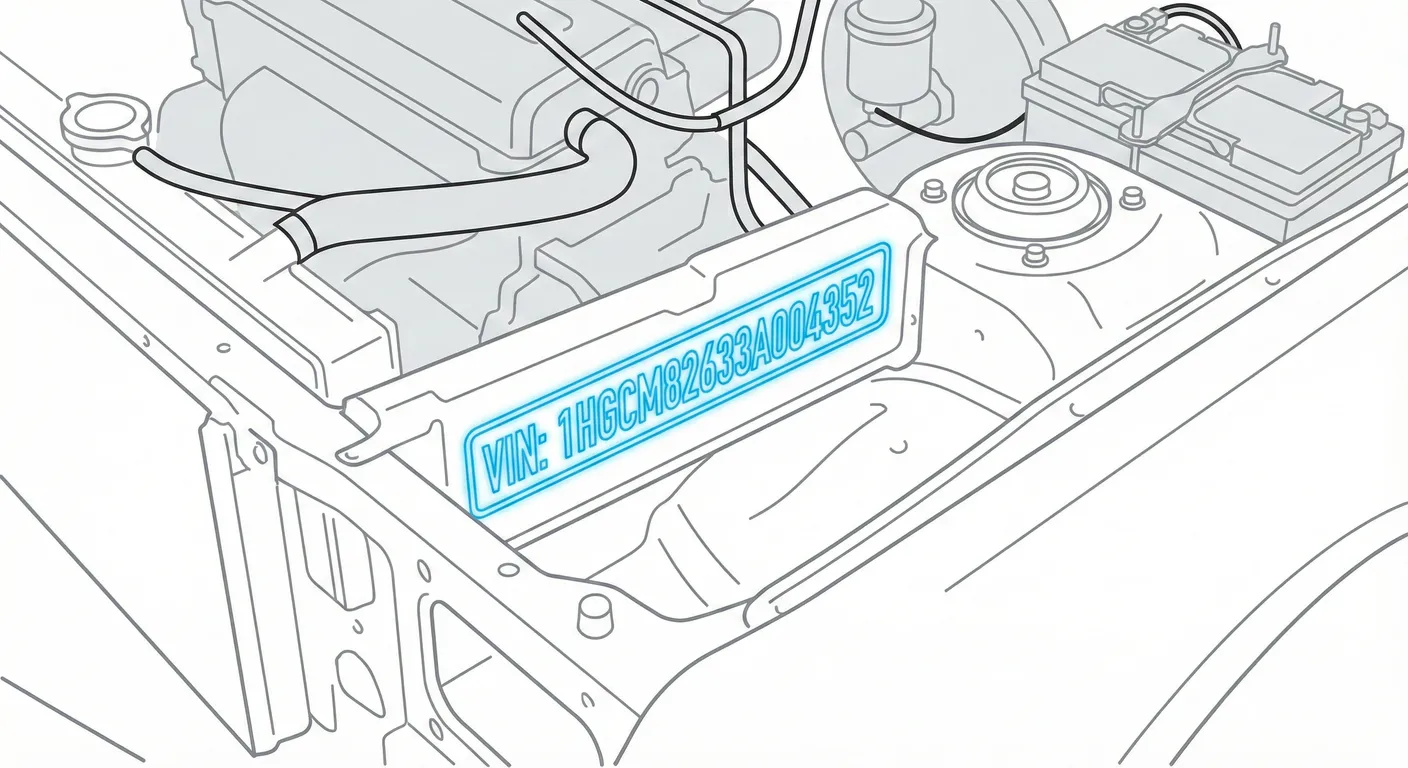
- Where to look: Open the hood and go to the plenum chamber (the area between the engine bay and the windshield). Lift the rubber weather strip that runs across the width of the bay—the VIN is stamped into the metal firewall, centered under that seal.
- Access: Medium. You must lift the seal and read a recessed stamping. Expect shadowing and grime buildup; a rag and a flashlight help.
- Note: This is shown on an LHD car; the stamping is centered in the plenum area so it’s not really “left/right dependent.”
- Tip: Because it’s dark and recessed, use flashlight + OCR to scan it cleanly—you’ll get fewer mistakes if you scan the stamped VIN directly with your phone instead of trying to write it down from an awkward angle.
Engine bay – manufacturer type plate/sticker (inner fender/strut tower)
- Where to look: With the hood open, look on the passenger-side strut tower/inner fender (for LHD cars). You’re looking for a black sticker with silver text listing the VIN plus weight/type approval details.
- Access: Low difficulty. It’s surface-mounted and usually easy to see once the hood is open.
- Note: On LHD cars, this is typically on the right side of the car (passenger side when seated).
- Tip: The silver-on-black print scans well—use the free VIN reader to capture it instantly so you don’t mix up characters like B/8, S/5, or 0/O.
Windshield – dashboard VIN window (may be blank on some cars) 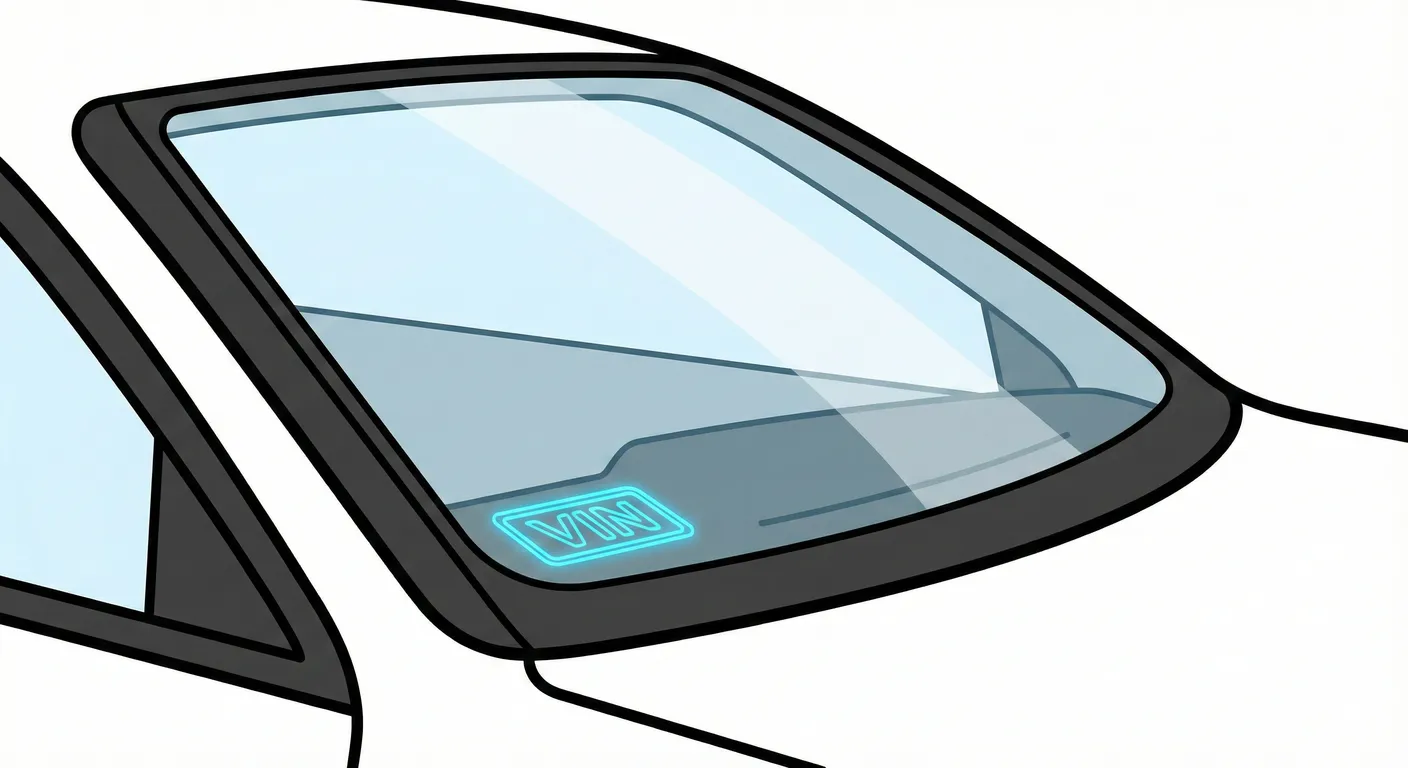
- Where to look: Check the lower corner of the windshield on the left side of the car (driver side on LHD). This is the standard “visible VIN” viewing window area.
- Access: Variable. If present it’s usually easy to see, but reflections and glare can block it. In the video guide below, the window area is shown blank/missing on that example car—so don’t panic if you can’t read one here.
- Note: If the windshield slot is blank on your TT, move straight to the engine bay stamped VIN and the type plate.
- Tip: If glare is the issue (or you’re viewing at an angle), capture the VIN with your phone in one shot so you’re not squinting through reflections and misreading digits.
Trunk/boot – vehicle data sticker (spare wheel well/tool tray area) 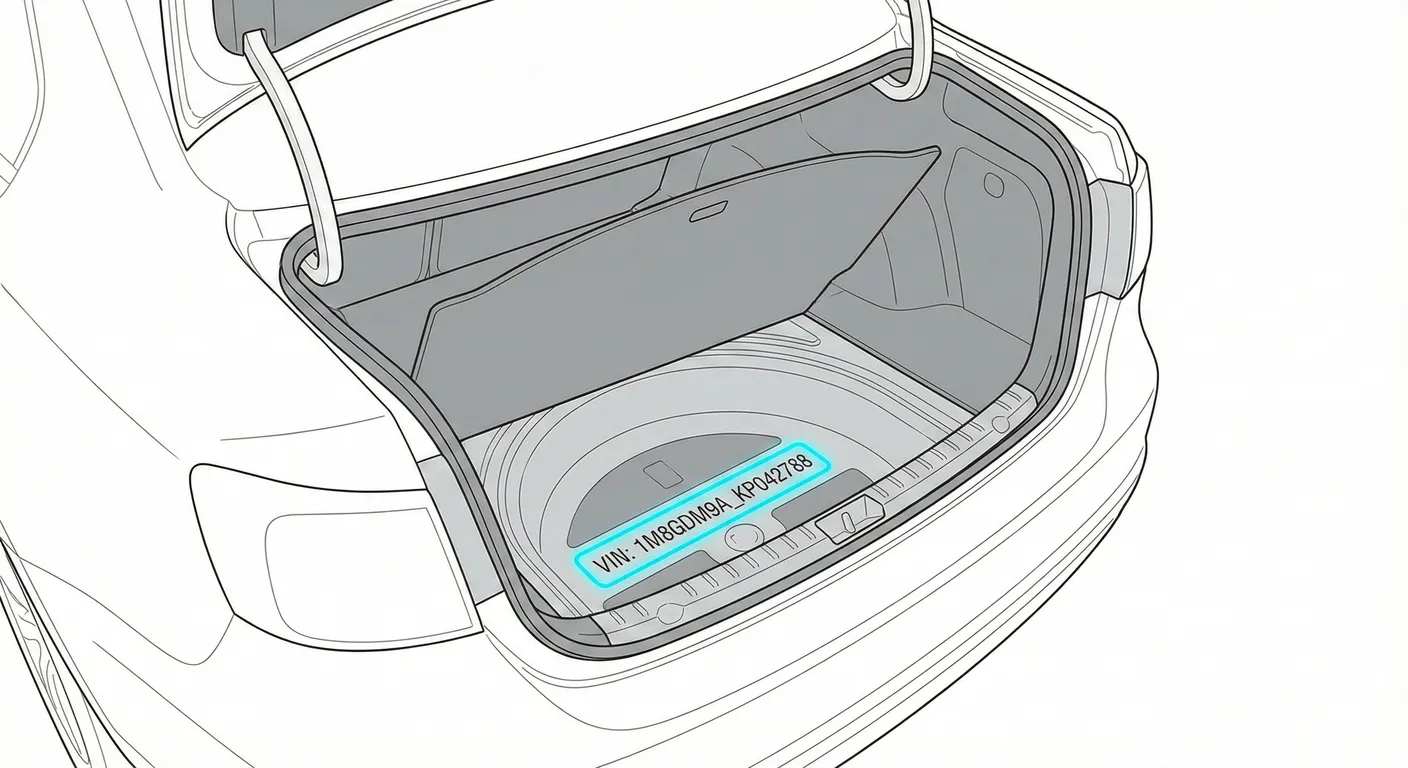
- Where to look: Open the trunk and lift the floor mat/cover. Remove the foam tool holder/insert and look for a white paper data sticker on the side wall of the spare wheel well (or on/next to the foam insert).
- Access: High difficulty. Requires lifting the floor and removing inserts; the sticker is paper and can be wrinkled, torn, or faded.
- Note: Treat this as a backup verification point, not your first stop.
- Tip: Because access is awkward and the label may be worn, scan it instead of copying it by hand—your phone can grab the text faster while you’re bent over the boot.
Service book / documentation (VIN data label) 
- Where to look: Inside the service schedule/warranty booklet (often the front page/inside cover), there’s typically a duplicate data sticker matching the trunk label.
- Access: N/A (document check).
- Note: Useful for cross-checking against the car’s physical VIN stamp.
- Tip: For clean, flat text, scan the document VIN label with your camera to avoid transcription errors.
Registration papers (printed VIN)
- Where to look: The VIN is printed on the vehicle’s registration documents.
- Access: N/A (document check).
- Note: Paperwork can be forged—always verify the VIN against the stamped chassis number on the vehicle.
- Tip: If you’re matching paperwork to the car, scan the VIN from the document and compare it character-for-character to the stamped VIN.
Video Guide
Video Tutorial: Where is VIN Chassis Number Car Code Location Audi VW Seat Škoda
- Walk-around tutorial showing the windshield VIN area (blank on the example car), the engine bay stamped VIN and type plate, the trunk data sticker, and VIN in documentation/registration.
Common Problems & Troubleshooting
- Stamped VIN hard to read in the plenum chamber: Dirt + shadow hide characters—wipe the area and use a direct light before scanning/photographing.
- Windshield VIN glare (or missing/blank window): If you can’t read it through reflections—or it’s blank—use the engine bay stamped VIN and type plate as your primary checks.
- Sticker vs stamped VIN mismatch: Stickers can be replaced or damaged; the stamped chassis number is the key identity mark—walk away from any purchase where numbers don’t match across locations and documents.
Frequently Asked Questions
Where is the VIN on Audi TT?
Check the stamped VIN in the engine bay plenum chamber/firewall under the rubber weather seal, and the manufacturer type plate sticker on the passenger-side inner fender/strut tower (LHD).
Which VIN location is the most important for Audi TT?
The stamped chassis number on the body (engine bay firewall/plenum area) is the most important because it’s physically stamped into the metal and is the primary identifier used to verify the car’s identity.
Ready to scan?
Start the scanner and scan the VIN in seconds. No registration, no fees.
Check other generations of this model
Note on Data Sources
Information about VIN location in this model comes from aggregation of official technical documentation (OEM) and spare parts catalogs. Despite careful algorithmic verification, the data is for reference purposes only. Final vehicle identification should always be confirmed by an authorized technician.
See how we verify data and build our database →