
Quick response
Quick Answer: The most reliable VIN location for the Audi TT is the stamped chassis number in the engine bay on the plenum chamber/firewall (passenger side). It’s typically visible through a small rectangular cutout along the base of the windshield under the weather strip/cowl. Use a flashlight because the stamping sits recessed and is often in shadow.
![VIN location Audi TT Audi TT (8S) [2007-2007]](/_astro/vin-location-audi-tt-8s-2007-2007.ChmtNl8m.webp)
Where is the VIN number in Audi TT (8S) [2007-2007]?
This guide covers where to find the VIN (Vehicle Identification Number) on the Audi TT (8S) [2007-2007], including the quickest scan points and the backup locations you’ll need when plates or stickers are missing or unreadable.
Chassis Number Locations
Engine Bay — Stamped Chassis Number (Plenum/Firewall, passenger side) 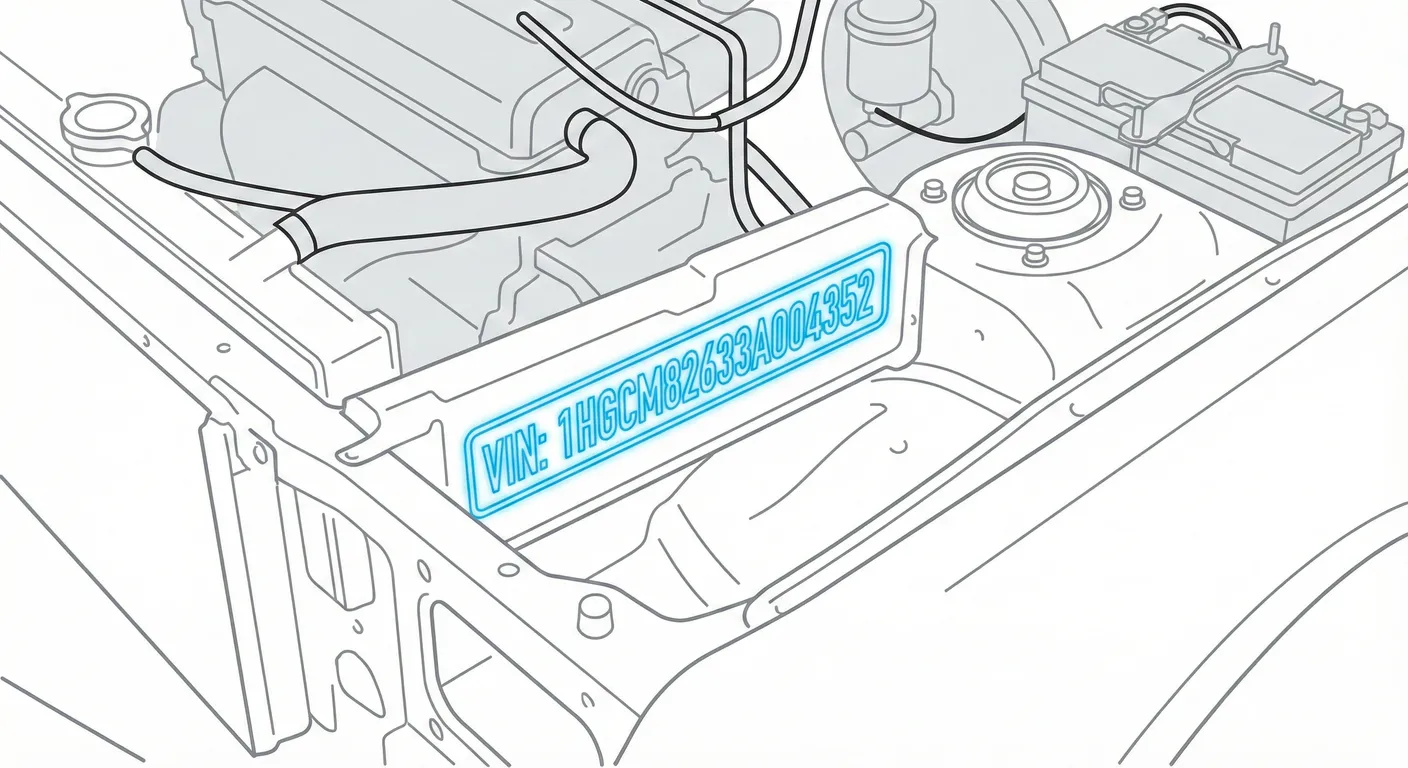
- Where to look: Open the hood and go to the plenum chamber/firewall area behind the engine on the passenger side. Look along the base of the windshield where the rubber weather strip/plastic cowl runs—there’s a small rectangular cutout you can peer through to see the stamped VIN in the metal.
- Access: Moderate. The opening is narrow and the VIN is recessed, so you’ll fight shadowing; dirt/grime commonly builds up here. Wipe the area and use a light to read the stamp.
- Note: The inspected car is LHD (left-hand drive). “Passenger side” here means the right side of the vehicle (direction of travel).
- Tip: Because the stamping sits in a dark recess and can be dirty, use the app’s camera with flashlight + high-contrast capture to pull the characters cleanly—then scan it directly with ScanVin.app instead of guessing from a bad angle.
Engine Bay — VIN Type Plate / Manufacturer Sticker (passenger strut tower area)
- Where to look: In the engine bay on the passenger-side wheel arch/strut tower top (fender/inner wing area). You’re looking for a black or silver manufacturer sticker listing the VIN plus weights/codes.
- Access: Low difficulty. Flat, surface-mounted, and usually easy to photograph; may peel or fade with heat/age.
- Note: LHD vehicle context; this is still on the passenger (right) side under the hood.
- Tip: This is one of the easiest places to capture accurately—use the free VIN reader to scan the sticker so you don’t mistype similar characters (like 8/B or 1/I).
Trunk / Boot — Data Sticker (under trunk mat near spare wheel well) 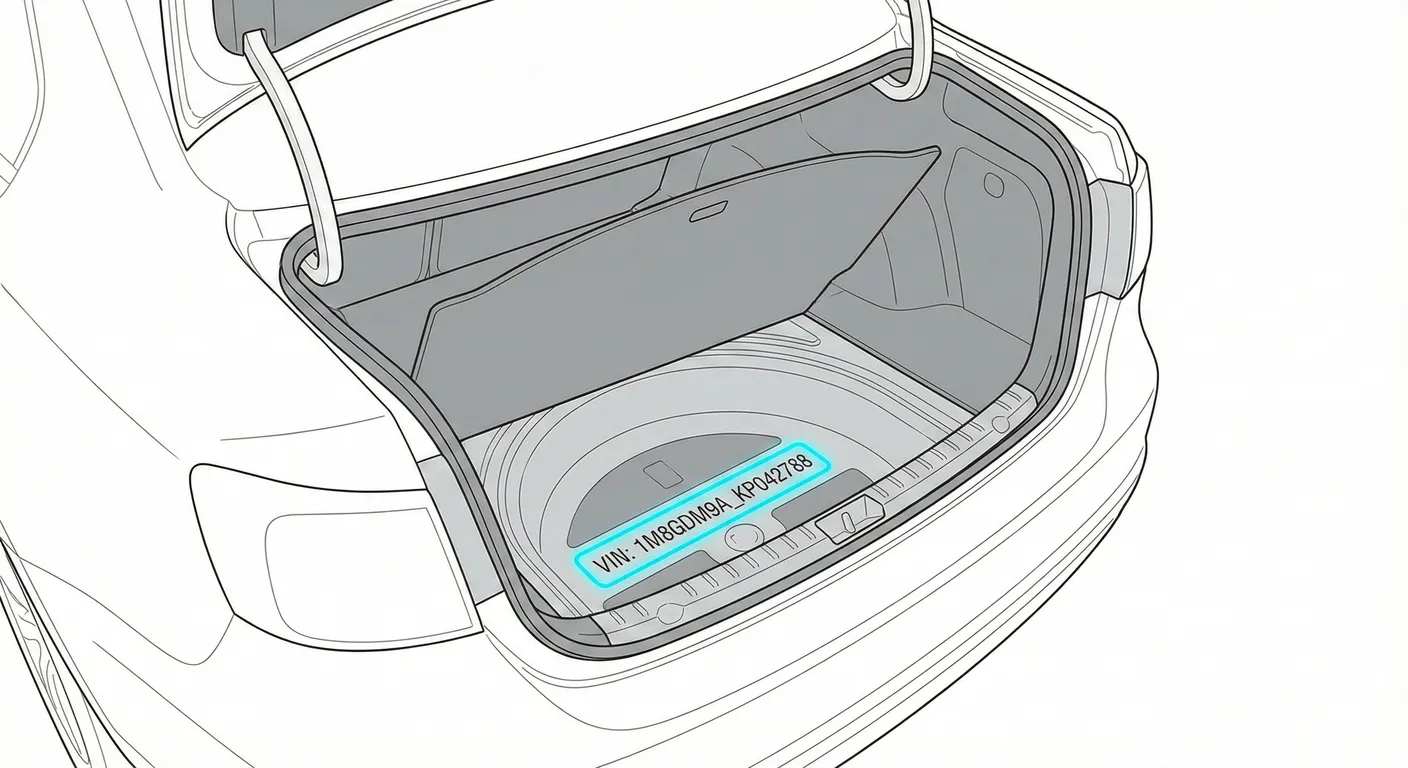
- Where to look: Open the trunk and lift the carpeted trunk floor liner. Check the floor panel/side wall around the spare wheel well, including under foam tool inserts—there’s typically a white paper data sticker with the VIN and option codes.
- Access: High difficulty. Often covered by cargo/tools/spare; paper sticker can be wrinkled, torn, water-damaged, or faded. Lighting in the trunk is usually poor.
- Note: No side bias needed here—focus on the spare wheel well area under the floor.
- Tip: If the sticker is wrinkled and the trunk is dark, capture it with your phone on ScanVin.app using the flashlight so the OCR can read across creases better than the human eye.
Windshield — Dashboard VIN Plate (lower corner) 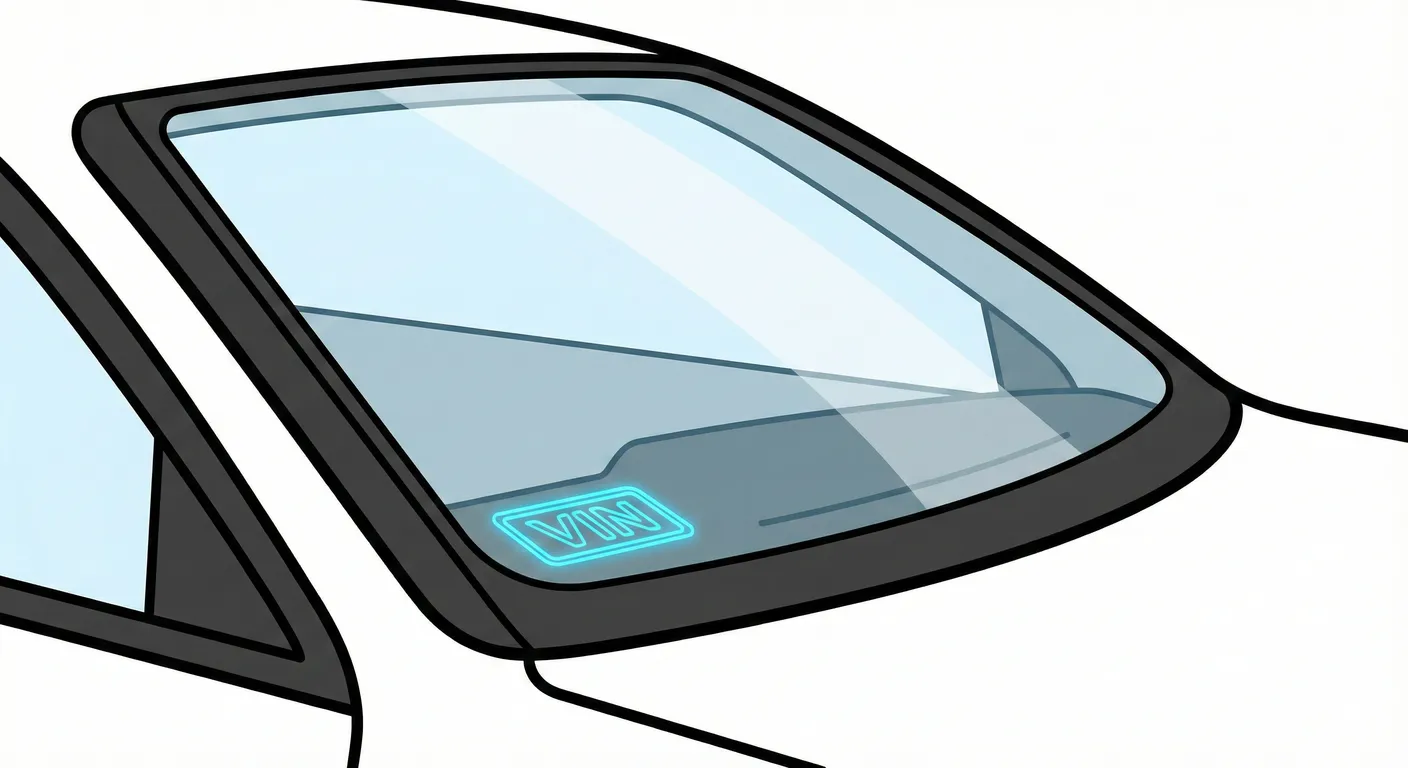
- Where to look: From outside the car, look through the windshield at the bottom corner on the driver’s side (left side on LHD cars) where a VIN plate is commonly visible on the dashboard.
- Access: Variable. When present it’s quick; glare, tint, and reflections can block it. Some vehicles may have this plate absent/blank.
- Note: LHD context: driver side is the left side of the vehicle.
- Tip: If reflections are washing out the number, scan it instantly with ScanVin.app to avoid transcription errors—try changing your angle to kill glare before capturing.
Documents — Service Book & Registration Papers 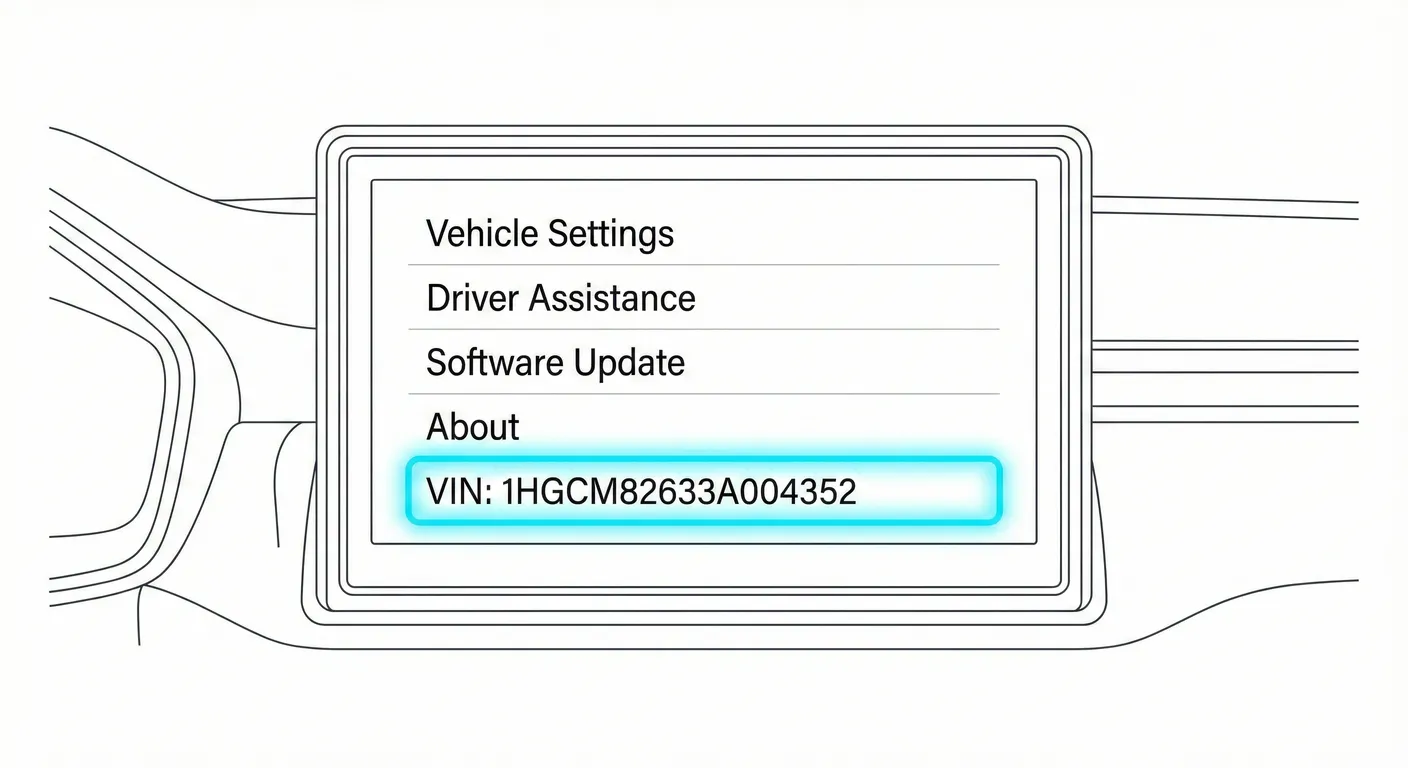
- Where to look: Check the service schedule booklet (often inside the owner’s manual folder in the glovebox) and the vehicle registration papers—the VIN is printed clearly on both.
- Access: Low difficulty if the documents are available.
- Note: Great for confirming what you find on the car, but documents can be missing or swapped—always match to the physical VIN on the chassis.
- Tip: For perfect accuracy, scan the printed VIN with ScanVin.app so you don’t accidentally transpose digits/letters while copying.
Video Guide
Video Tutorial: Where is VIN [UPDATE] Chassis Number Location Audi TT Mk2
- Walkthrough showing the engine-bay stamped VIN, the engine-bay VIN sticker, the trunk data sticker, and the VIN in service/registration documents, including an example where the windshield VIN plate is missing.
Common Problems & Troubleshooting
- Stamped VIN hard to read in the engine bay: The plenum/firewall stamp sits recessed and collects grime—scrub lightly and use a flashlight to avoid reading wrong characters.
- Trunk data sticker unreadable: Paper labels wrinkle, tear, or fade—lift the mat fully and photograph/scan with flash from straight-on to reduce distortion.
- Sticker vs stamped VIN mismatch: Stickers/plates can be replaced; the stamped chassis number is the primary identity check—always verify the physical stamp matches paperwork before buying.
Frequently Asked Questions
Where is the VIN on Audi TT?
Check the stamped VIN in the engine bay on the plenum chamber/firewall (passenger side) and the manufacturer VIN sticker on the passenger-side strut tower area.
Which VIN location is the most important for Audi TT?
The stamped chassis number on the body (engine bay/firewall area) is the most important because it’s the hardest to alter and is used to verify the car’s true identity against stickers and documents.
Ready to scan?
Start the scanner and scan the VIN in seconds. No registration, no fees.
Check other generations of this model
Note on Data Sources
Information about VIN location in this model comes from aggregation of official technical documentation (OEM) and spare parts catalogs. Despite careful algorithmic verification, the data is for reference purposes only. Final vehicle identification should always be confirmed by an authorized technician.
See how we verify data and build our database →