
Quick response
Quick Answer: The most reliable VIN location for the BMW Seria 4 (G22/G23/G26) is the driver-side B-pillar door jamb manufacturer label. It’s a black sticker/label near the door latch area with the VIN printed clearly. Expert tip: this is the easiest one to scan because it’s high-contrast and not behind glass.
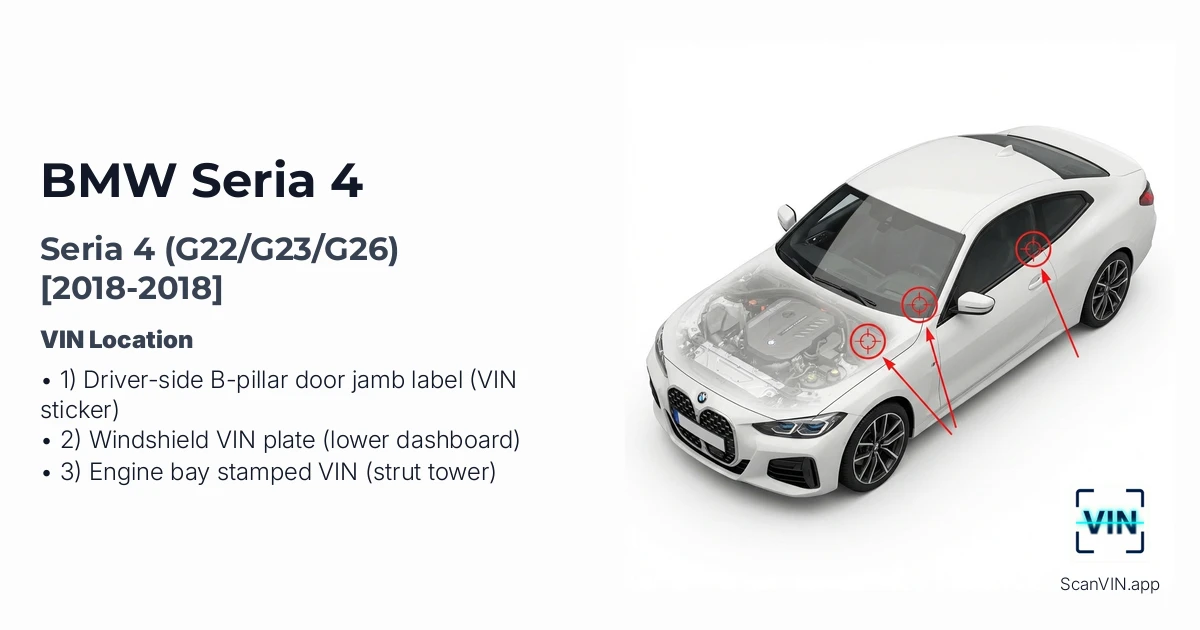
Where is the VIN number in BMW Seria 4 (G22/G23/G26)?
This guide is for the BMW 4 Series G22/G23/G26 generation (production starts 2020+). Note: the year range you provided [2018–2018] typically matches the prior F32/F33/F36 generation, but the VIN locations below are confirmed for the G22/G23/G26 chassis.
Chassis Number Locations
1) Driver-side B-pillar door jamb label (VIN sticker) 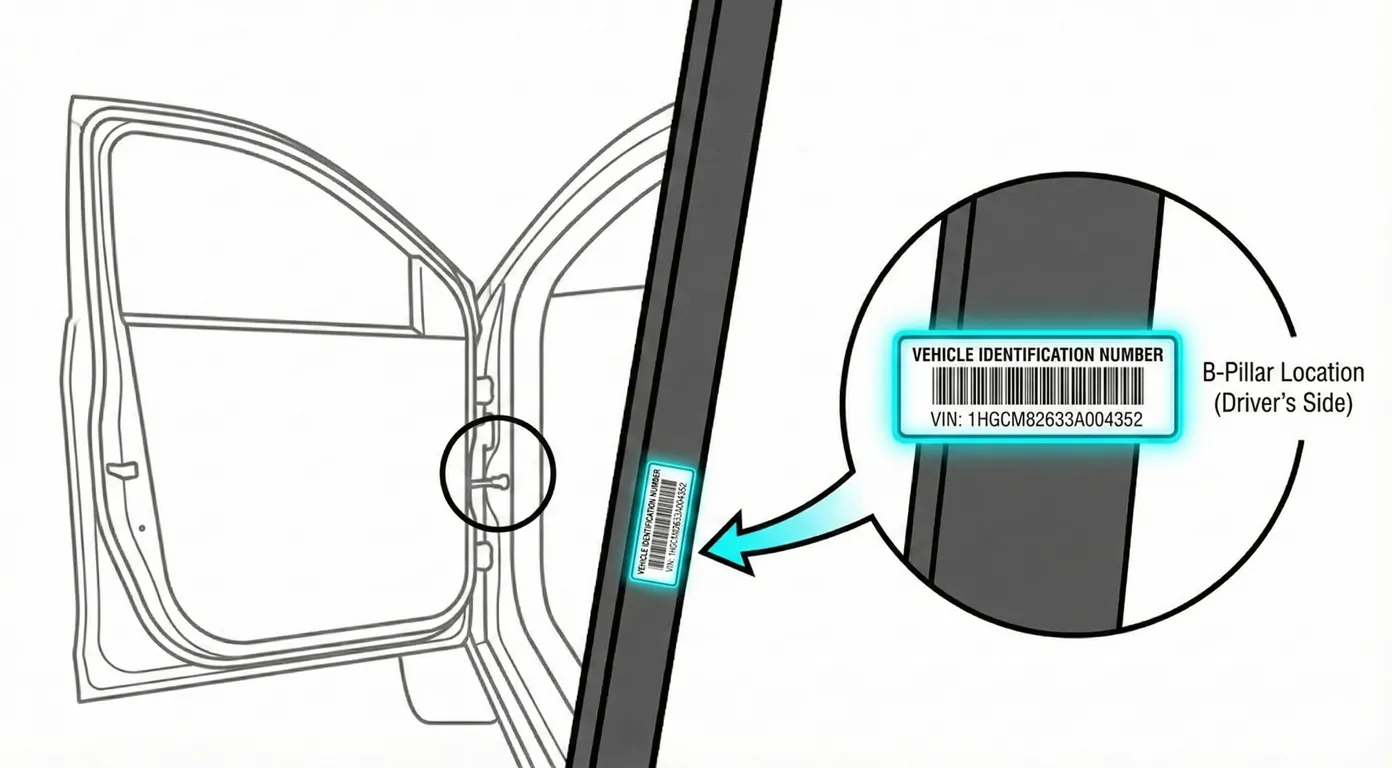
- Where to look: Open the driver door and look at the B-pillar (the vertical post where the door latches). Find the black manufacturer label with VIN + tire pressures/build info near the door striker/latch area.
- Access: Very easy. High contrast text on a flat/vertical surface—usually scans on the first try.
- Note: On RHD cars (UK/Japan/etc.), this is often mirrored to the right-side door area.
- Tip: Use ScanVin.app here first—this spot is the quickest and cleanest to scan, so you avoid mistyping a long VIN.
2) Windshield VIN plate (lower dashboard) 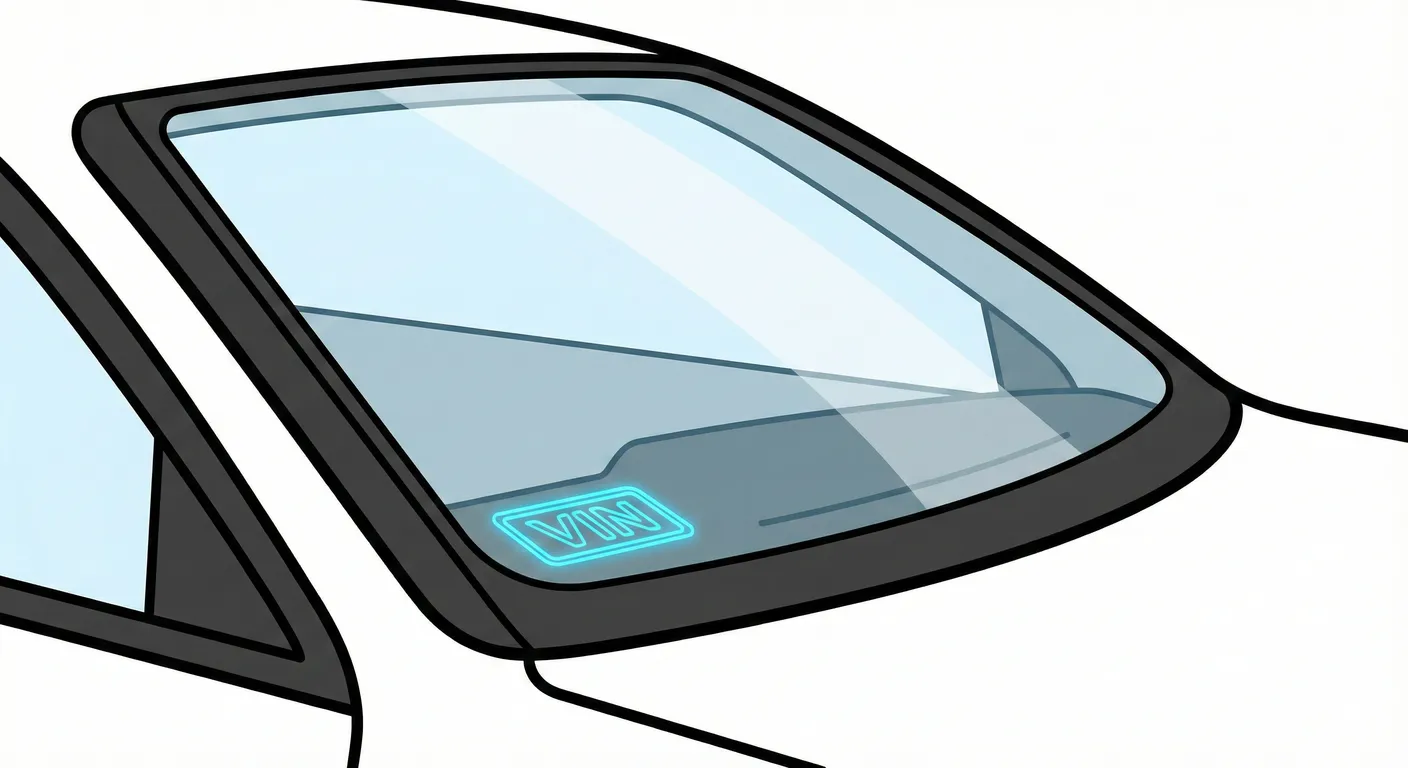
- Where to look: From outside the car, look through the lower corner of the windshield on the driver’s side, where the dashboard meets the glass. You’ll see the VIN on a plate.
- Access: Easy to locate, but glare/reflections on the windshield can make it annoying to read or photograph.
- Note: On RHD cars the visible corner is typically on the right side of the windshield area.
- Tip: If reflections wash the numbers out, use ScanVin.app to capture it instantly at the best angle—no manual transcription errors through glass glare.
3) Engine bay stamped VIN (strut tower) 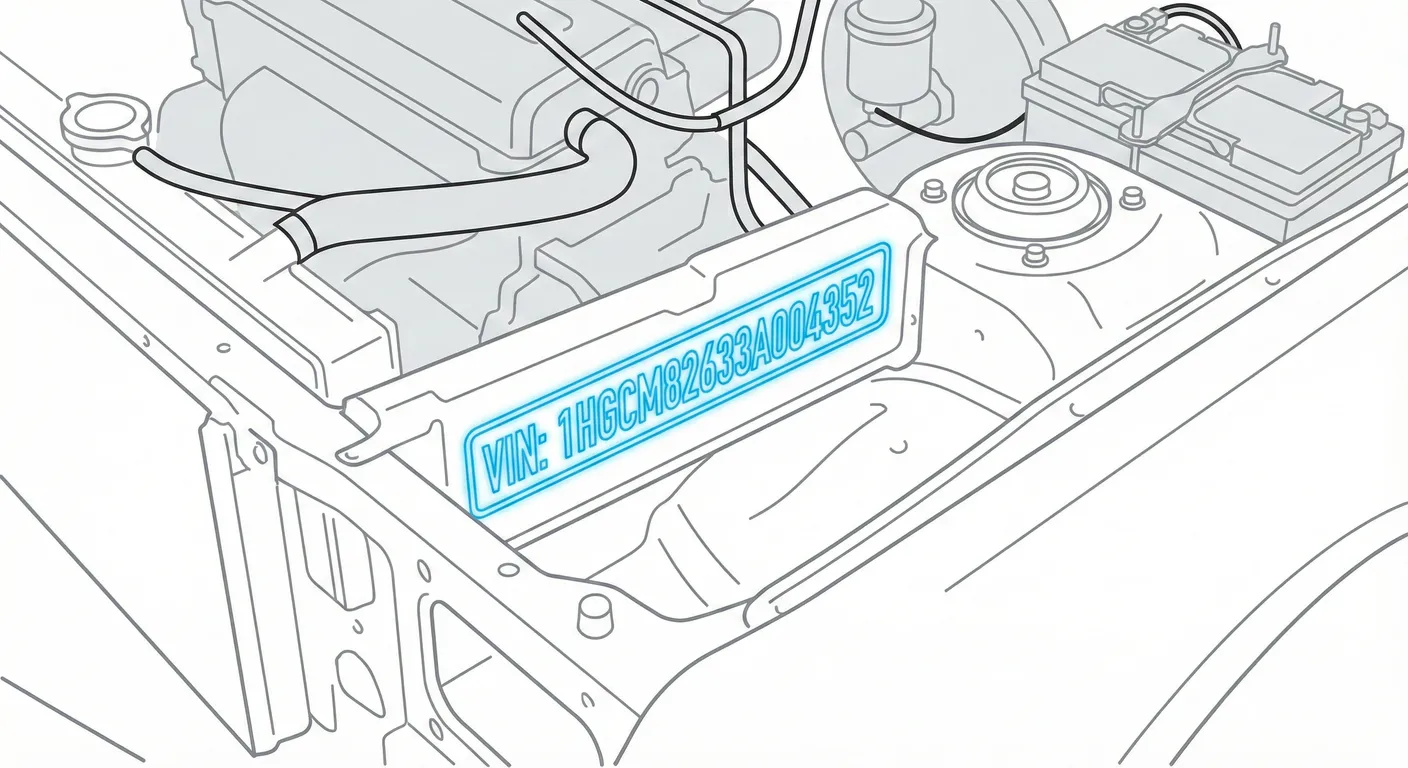
- Where to look: Open the hood. Check the right-front strut tower (passenger side on LHD cars). The VIN is stamped into the metal on top of the strut tower area (sometimes partly hidden by trim/weather strip).
- Access: Moderate difficulty. This area can be dusty/greasy, may be in shadow, and you might need to lift/push aside plastic trim to see the stamping clearly. A flashlight helps.
- Note: Orientation can vary by market—on some RHD vehicles the “right strut tower” becomes the driver-side.
- Tip: If the stamping is faint or dirty, wipe it and use ScanVin.app High Contrast AI Mode to pull the characters out of grime and low-contrast metal.
Video Guide
Video Tutorial: Where is the vin for the BMW 4 g22 second generation
- Shows the engine-bay stamped chassis VIN area (and also points out an engine number location—don’t confuse that with the VIN).
Video Tutorial: Where to find your BMW's VIN | How - To | BMW Northwest
- Clear walkthrough of the easy VIN checks: windshield VIN and the door jamb/B-pillar label.
Common Problems & Troubleshooting
- Windshield glare/reflections: If the plate “disappears” in reflections, change your angle, shade the area with your hand, or scan at dusk/in a garage.
- Engine bay stamp is dirty or partially covered: Scrub the strut tower stamping with a rag (light cleaner helps), then re-check with a flashlight—plastic trim/weather strip may need to be gently lifted.
- Sticker vs stamped VIN: The B-pillar sticker is great for quick ID, but for inspections/anti-tamper checks, always compare it to the stamped VIN (and paperwork). Stickers can be replaced.
Frequently Asked Questions
Where is the VIN on BMW Seria 4?
Start with the driver-side B-pillar door jamb manufacturer label (black sticker near the latch). You can also read it through the lower driver-side windshield corner on the dashboard VIN plate.
Is the VIN sticker on the pillar legal for registration?
No. In most jurisdictions (EU/UK/US), only the stamped chassis number (usually on the floor or engine bay) is legally binding.
Ready to scan?
Start the scanner and scan the VIN in seconds. No registration, no fees.
Check other generations of this model
Note on Data Sources
Information about VIN location in this model comes from aggregation of official technical documentation (OEM) and spare parts catalogs. Despite careful algorithmic verification, the data is for reference purposes only. Final vehicle identification should always be confirmed by an authorized technician.
See how we verify data and build our database →