
Quick response
Quick Answer: The most reliable VIN location for the Citroen C5 II is the stamped chassis number in the engine bay on the bulkhead/firewall. It’s typically stamped into the metal near the center, just below the plastic cowl/scuttle trim. Expect dirt and shadows here—clean it and use a light to read it clearly.
![VIN location Citroen C5 C5 II [2009-2013]](/_astro/vin-location-citroen-c5-ii-2009-2013.Dudip4i7.webp)
Where is the VIN number in Citroen C5 II [2009-2013]?
This guide covers the common VIN (chassis number) locations for the Citroen C5 II (X7) in the 2009–2013 year range.
Chassis Number Locations
1) Engine bay VIN stamping (bulkhead/firewall) 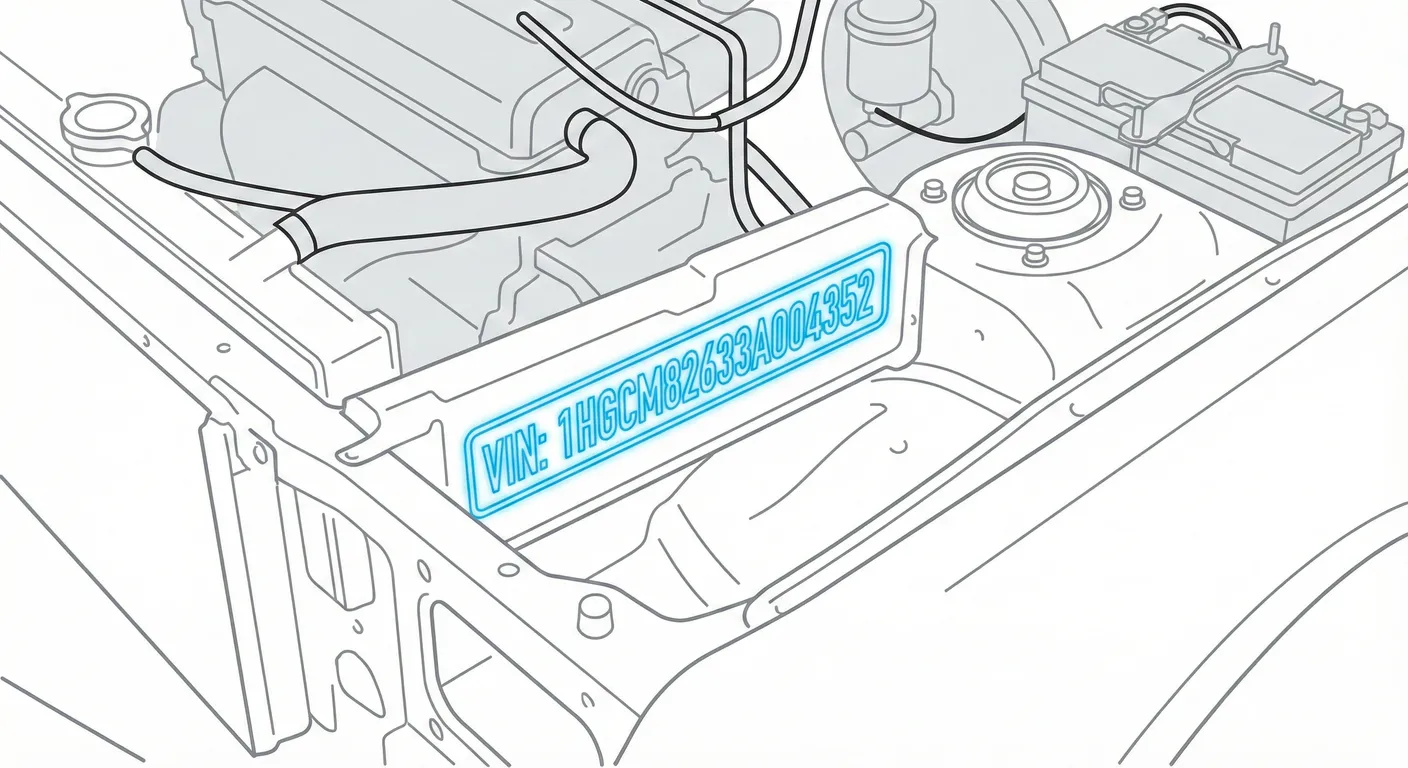
- Where to look: Open the bonnet and look at the rear of the engine bay (the bulkhead/firewall). The VIN is stamped into the metal, usually near the center and just below the plastic cowl/scuttle panel and its rubber seal.
- Access: This area often collects grime, and the cowl/bonnet creates shadow, so you may need to scrub the stamping with a rag/brush and shine a light across it to make the characters pop.
- Note: One reference vehicle shown is RHD; on LHD cars the stamping is still on the bulkhead area near the center, but may sit slightly offset. Don’t rely on “driver side” assumptions—follow the firewall across and find the stamped characters.
- Tip: If the stamping looks faded or dirty, use ScanVin.app “High Contrast AI Mode” after a quick clean to decipher worn characters without misreading them.
2) VIN visible through the windshield (dashboard plate) 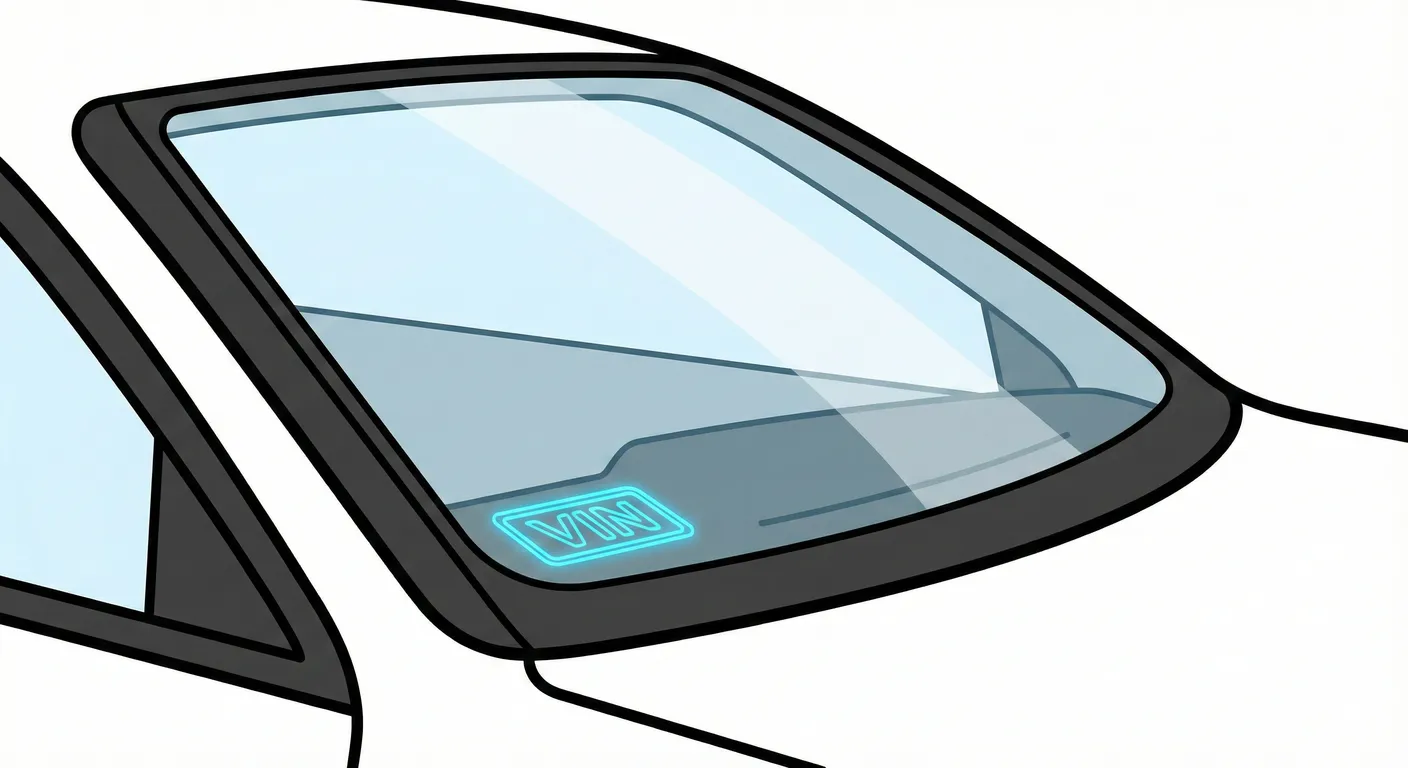
- Where to look: From outside the car, look through the lower corner of the windshield at the dash area. You’ll see the VIN on a plate/label visible through the glass.
- Access: Easy to reach, but glare/reflections on the windshield can make it hard to photograph or read—especially in direct sun.
- Note: Placement can vary with market/trim; some cars show it near the left-side lower corner even when steering wheel position differs.
- Tip: Use ScanVin.app to capture it instantly—move the phone angle to kill reflections and let OCR grab the VIN without transcription errors.
3) B-pillar VIN sticker/label (door jamb) 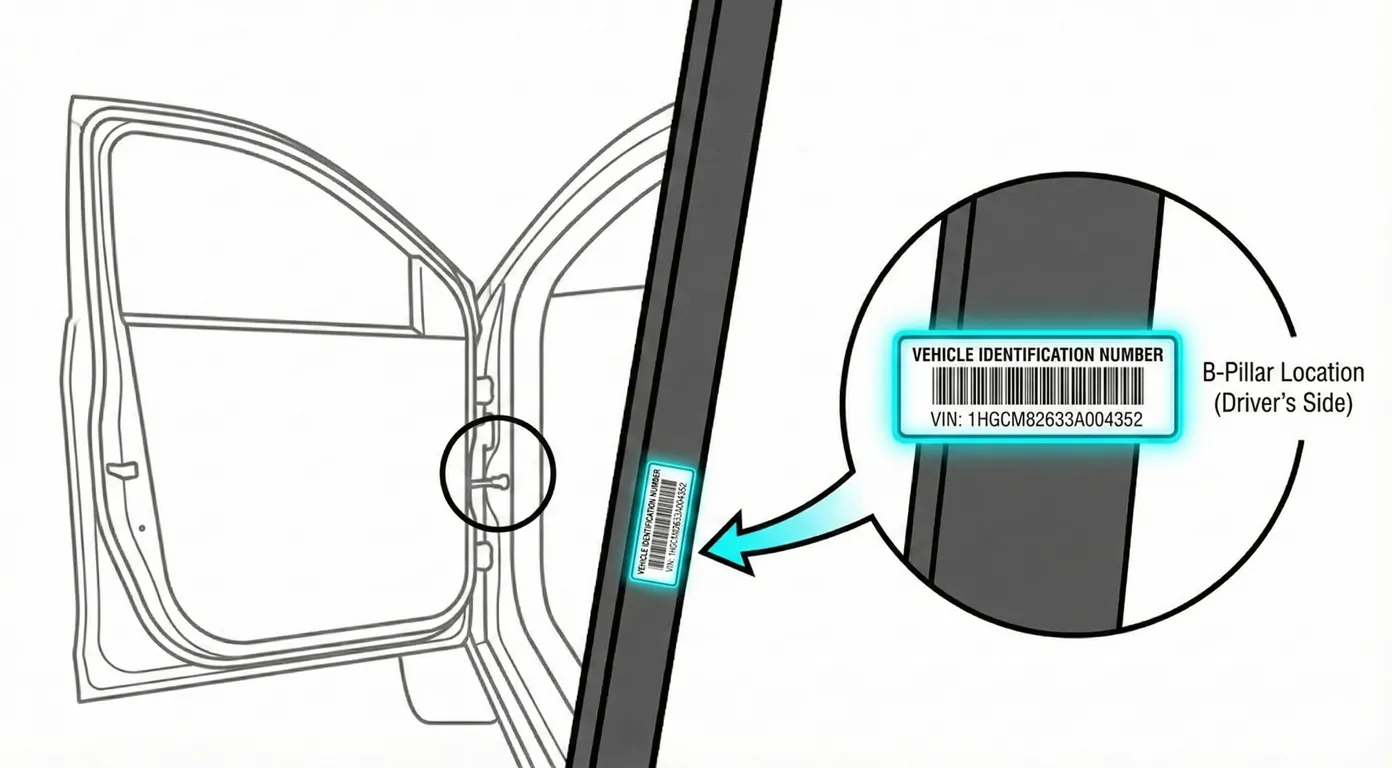
- Where to look: Open the front door and check the B-pillar (the post between the front and rear doors), typically low down near the bottom area. The label often includes tyre pressure info and the VIN.
- Access: Usually the easiest location to access and scan. The main issue is wear/peeling from age, cleaning chemicals, or repeated door entry.
- Note: Exact side can vary by market; if you don’t see it on one side, check the opposite B-pillar.
- Tip: This is the best “quick scan” spot—use ScanVin.app OCR for a fast, clean capture (great contrast on most factory labels).
Video Guide
Video Tutorial: Citroen C5 (2009) Chassis Vin Number Location pr/blk
- Shows the C5 II VIN in the engine bay (bulkhead stamp), the windshield VIN view, and the B-pillar label on a UK-spec estate.
Common Problems & Troubleshooting
- Can’t read the bulkhead stamping: Dirt + shadow is normal here. Scrub the metal lightly and use a torch/phone light at a low angle; then try High Contrast AI Mode to pull the characters out.
- Windshield VIN has heavy glare: Change your viewing angle, shade the glass with your body, and avoid direct overhead sun when scanning.
- Sticker vs stamped VIN: The B-pillar label is helpful, but it can be replaced/damaged. For legal identity checks, the stamped chassis VIN is what matters most.
Frequently Asked Questions
Where is the VIN on Citroen C5 II [2009-2013]?
Start with the stamped VIN in the engine bay on the bulkhead/firewall (below the plastic cowl). Also check the VIN visible through the lower corner of the windshield on the dashboard.
Is the VIN sticker on the pillar legal for registration?
No. In most jurisdictions (EU/UK/US), only the stamped chassis number (usually on the floor or engine bay) is legally binding.
Ready to scan?
Start the scanner and scan the VIN in seconds. No registration, no fees.
Check other generations of this model
Note on Data Sources
Information about VIN location in this model comes from aggregation of official technical documentation (OEM) and spare parts catalogs. Despite careful algorithmic verification, the data is for reference purposes only. Final vehicle identification should always be confirmed by an authorized technician.
See how we verify data and build our database →