
Quick response
Quick Answer: The most reliable VIN location for the Honda CR-V is the VIN plate at the base of the windshield on the driver’s side corner. It’s visible from outside through the glass. Expert tip: glare from sunlight can wash out the characters—use a quick camera scan instead of trying to read it by eye.
![VIN location Honda CR-V IV [2012-2016]](/_astro/vin-location-honda-cr-v-iv-2012-2016.B2yPZsCK.webp)
Where is the VIN number in Honda CR-V (Honda CR-V IV [2012-2016])?
This guide shows the real-world VIN (Vehicle Identification Number) locations on the Honda CR‑V IV, produced between 2012 and 2016, including the easy-to-check windshield plate and the hidden stamped chassis number under the carpet flap.
Chassis Number Locations
1) Lower Dashboard / Windshield VIN Plate 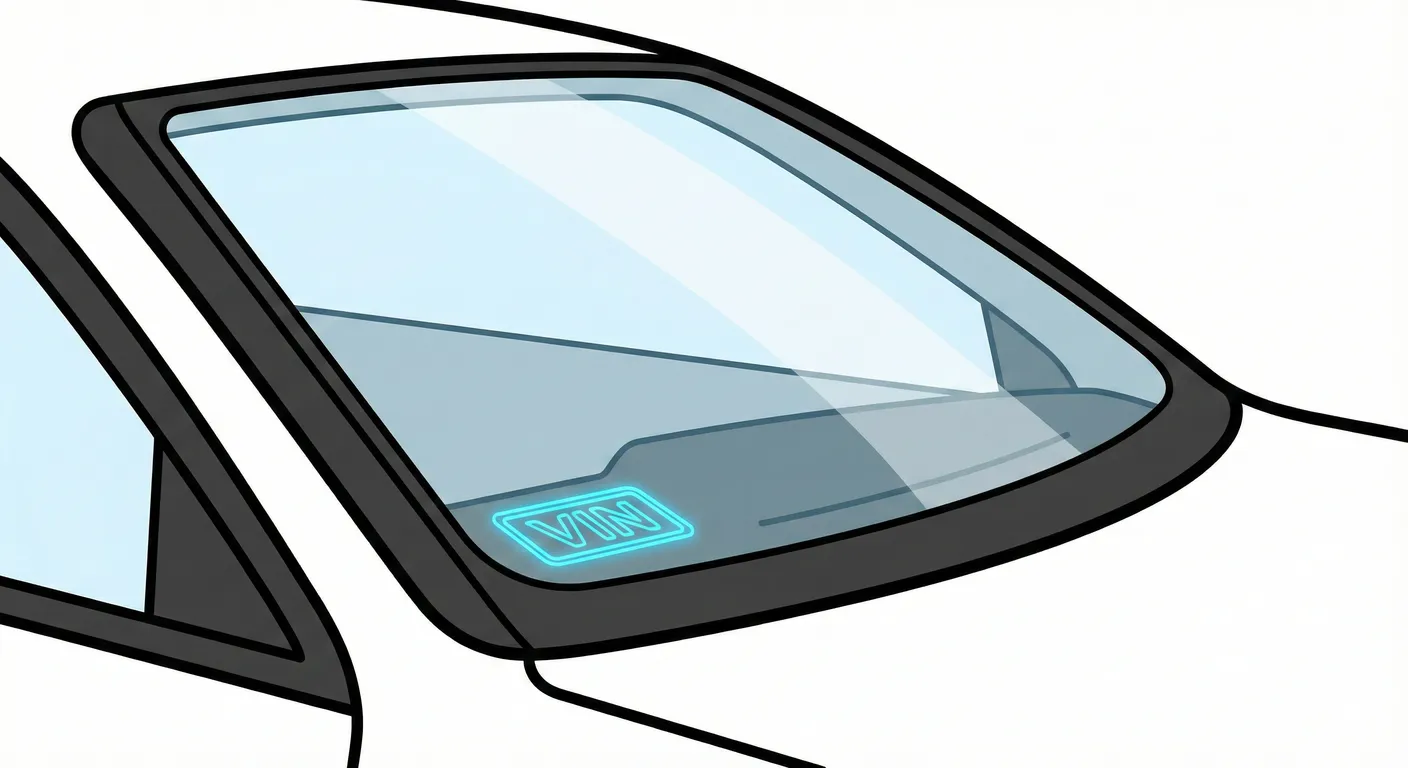
- Where to look: At the base of the windshield, driver’s side corner, on the top of the dashboard. The VIN plate is readable through the glass (some cars also show a QR code next to the alphanumeric VIN).
- Access: Usually easy—stand outside and look down through the windshield. Bright sun can cause reflection/glare, making it hard to read or photograph cleanly.
- Note: This is the standard “go-to” VIN spot on most markets.
- Tip: If reflections are hiding the last digits, scan it directly with your phone so you don’t misread characters like 8/B or 5/S through the glass.
2) Driver Door Jamb Certification Label / VIN Plate (B‑Pillar) 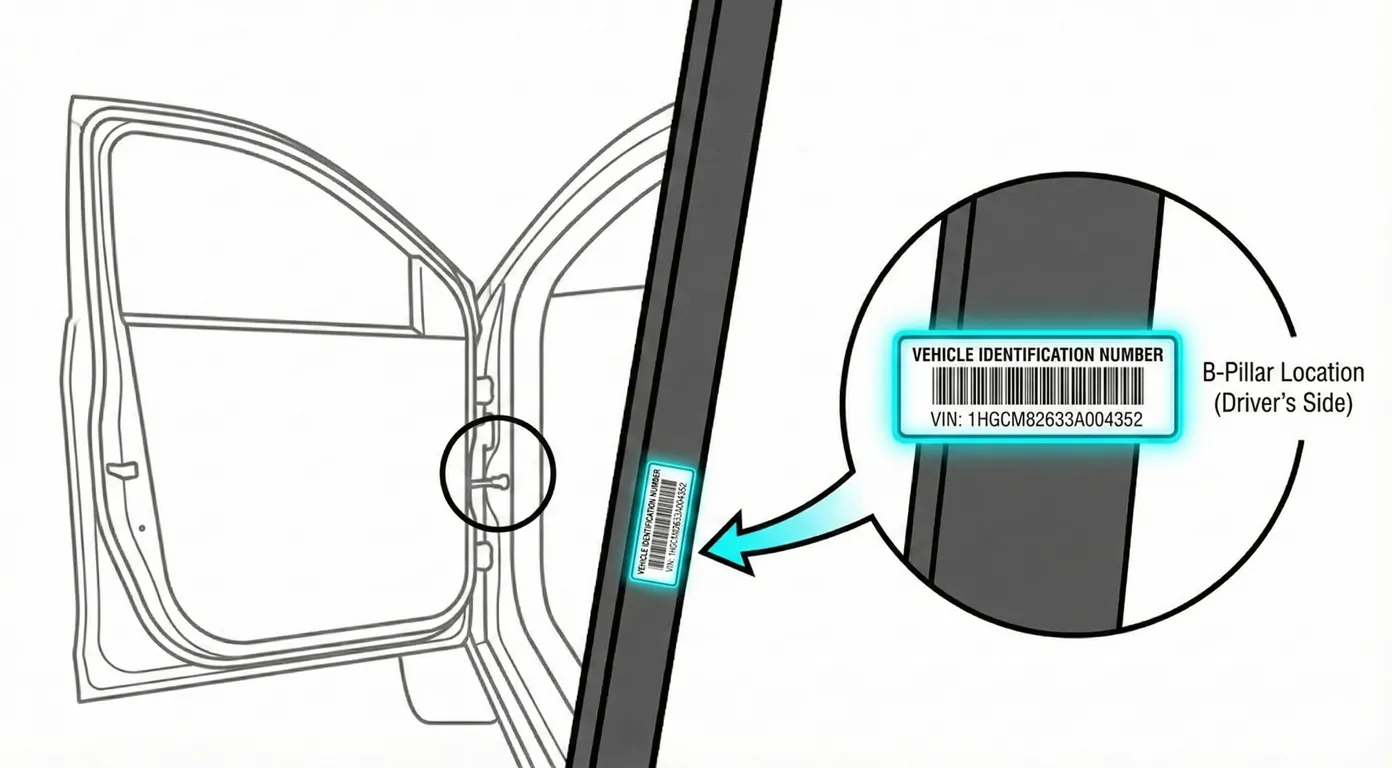
- Where to look: Open the driver’s door and inspect the B‑pillar / door jamb, below the door latch striker area.
- North America: usually a printed sticker with VIN + tire pressures + build date, often with a barcode.
- International/EU: may be a riveted metal plate with VIN + weight ratings + paint code.
- Access: Easy, but the label/plate is vertical and you need the door fully open. The metal plate version can throw glare from the camera flash.
- Note: If you’re checking a CR‑V imported from another region, expect either sticker or riveted plate.
- Tip: For barcode labels or shiny plates, use the free VIN reader to capture it cleanly without hand-typing or fighting reflections.
3) Chassis Stamping (Under Carpet Trapdoor “FRAME NUMBER”) 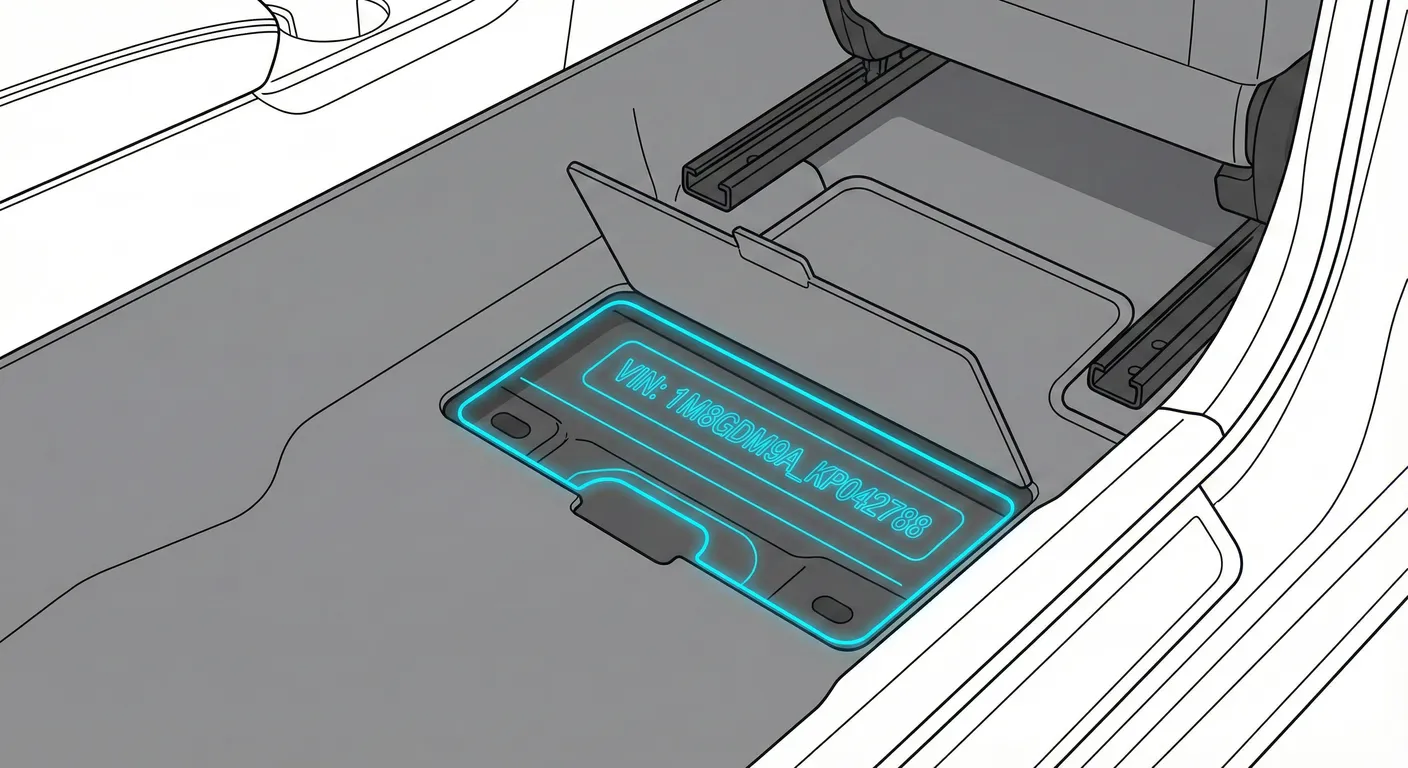
- Where to look: In the front footwell floor, under the carpet—commonly on the passenger side for LHD vehicles. There’s a rectangular plastic trapdoor labeled “FRAME NUMBER”; the VIN is stamped into the chassis beam underneath.
- Access: This one takes a bit of hands-on work:
- Open the front passenger door.
- Slide the seat fully rearward.
- Lift the floor mat.
- Locate the plastic cover labeled “FRAME NUMBER”.
- Pry the cover open using the finger slot (edge nearest the center console/seat).
- Note: If you don’t find it on the passenger side, check the driver side footwell as layouts can vary by market.
- Tip: Because the stamping sits in a dark recess and can be dusty, switch on your light and scan it with Flashlight + OCR for a cleaner read.
4) Firewall / Bulkhead Stamp (Engine Bay) 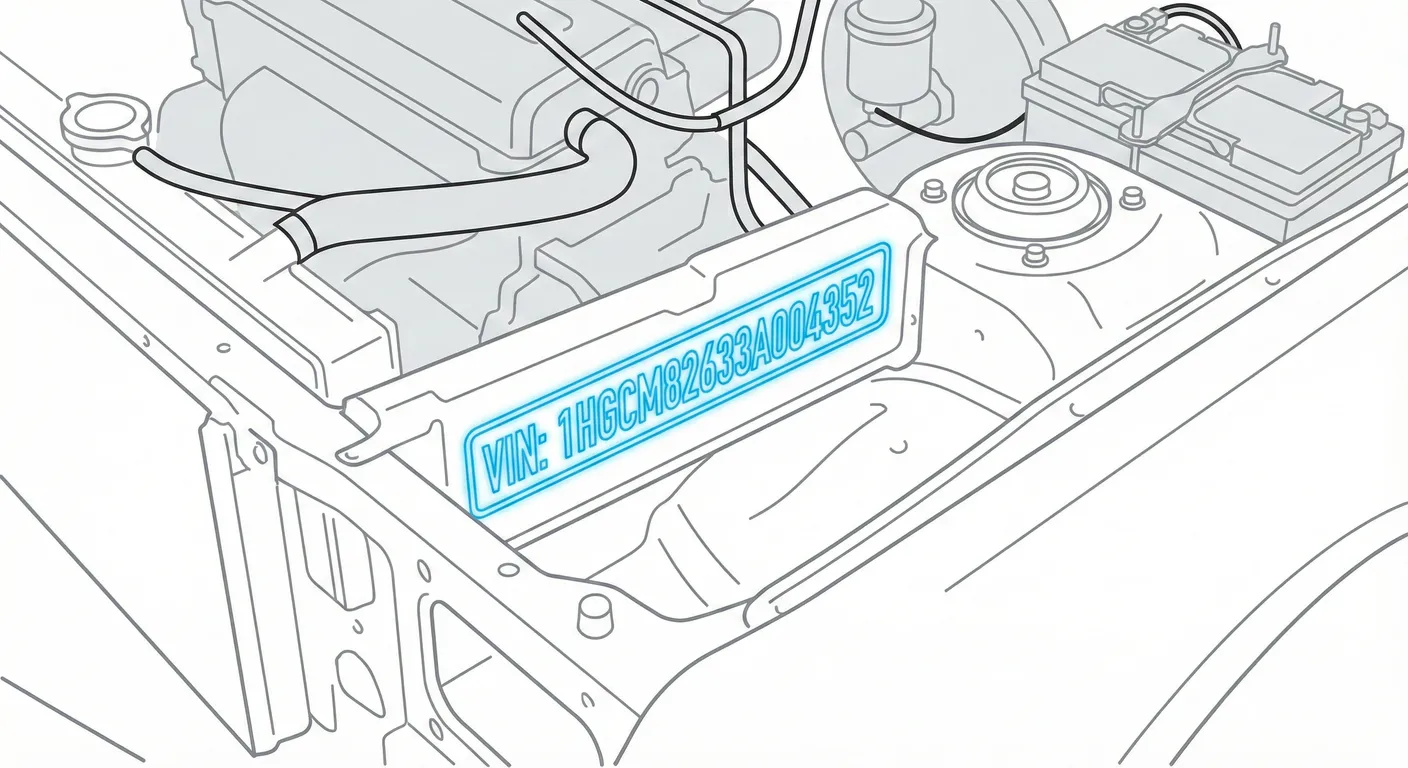
- Where to look: With the hood open, check the upper center firewall/bulkhead area (behind the engine, below the windshield cowl), slightly left of center when facing the car from the front.
- Access: More difficult—requires opening the hood and leaning over the engine. The stamping may be grimy, and it’s awkward to hold a phone steady at that distance (especially if the engine is hot).
- Note: Best used as a verification point if interior VINs look tampered with.
- Tip: If the numbers look faded under dirt or you can’t hold position comfortably, capture it with High Contrast AI Mode instead of trying to copy it by hand.
5) Anti‑Theft VIN Stickers on Panels (Bonus) 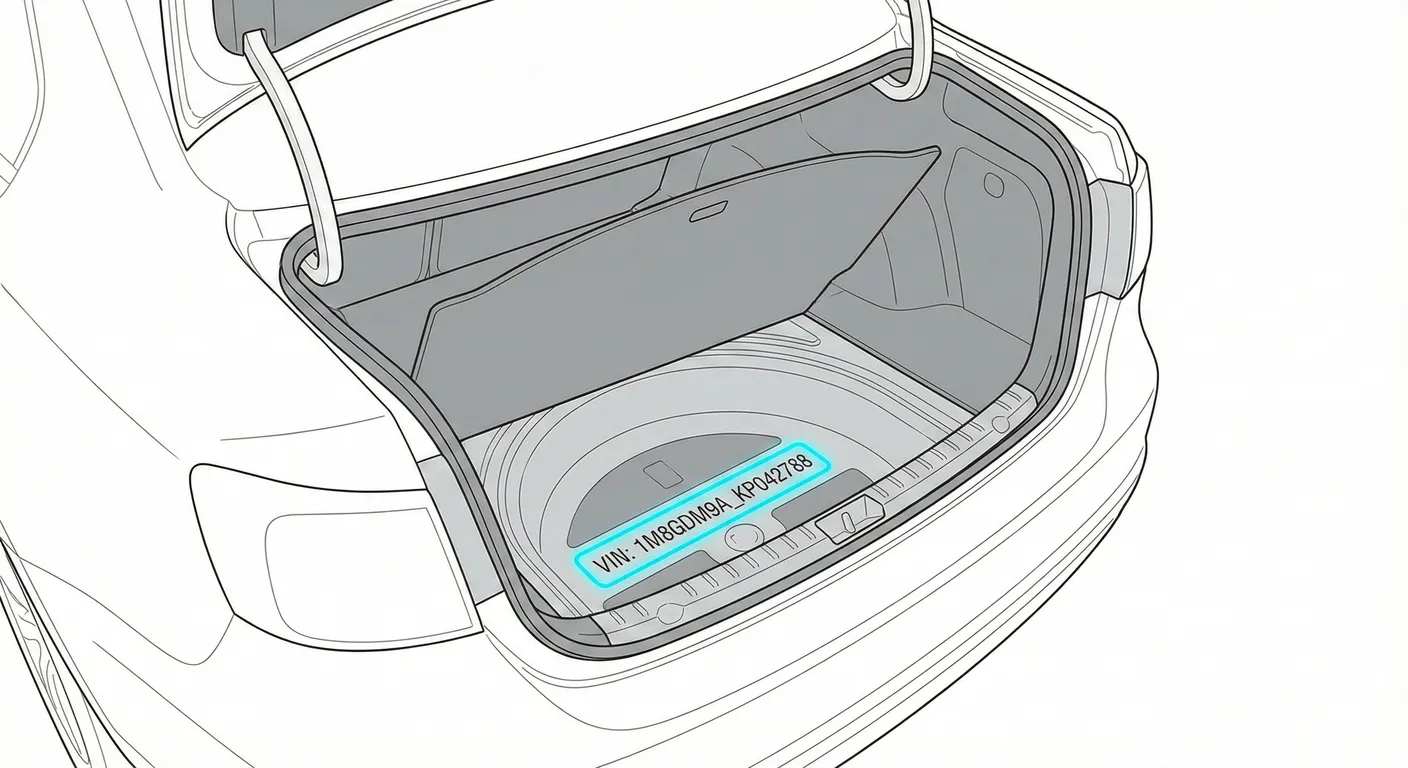
- Where to look: White VIN stickers may be found on multiple closures and edges, such as:
- Driver & passenger door edges
- Rear door jamb areas
- Tailgate/hatch edges and frame area
- Access: Very easy—just open the doors/hatch and inspect the edges.
- Note: These are helpful for spotting mismatched panels, but stickers can be missing after repaint/bodywork.
- Tip: If you’re comparing multiple stickers quickly, scan each one to confirm they all match the main VIN.
Video Guide
Video Tutorial: VIN Locations - Honda CR-V (2012-2016) - YouTube
- Comprehensive walkthrough showing the windshield VIN, B‑pillar label, the “FRAME NUMBER” floor trapdoor stamping, engine bay firewall stamp, and multiple bonus anti-theft stickers.
Video Tutorial: Honda CR-V 2012-2016 VIN Number location - YouTube
- Shows the windshield VIN, the B‑pillar metal plate variation (common outside North America), and the floor “FRAME NUMBER” stamping.
Common Problems & Troubleshooting
- Windshield glare: If the dash VIN is washed out by sun/reflection, change your viewing angle or shade the plate with your hand, then scan.
- Floor stamp hard to read: Dirt/dust and low light under the flap can hide characters—wipe the metal and use strong lighting before scanning.
- Sticker vs stamped VIN: Door/panel stickers can be replaced or removed during body repairs—always verify against the stamped chassis VIN and/or the windshield plate.
Frequently Asked Questions
Where is the VIN on Honda CR-V?
Check the VIN plate at the base of the windshield on the driver’s side, then verify it on the driver-side B-pillar door jamb label/plate.
Which VIN location is the most important for Honda CR-V?
The stamped chassis VIN (under the floor trapdoor labeled “FRAME NUMBER”) is the hardest to tamper with and is the best verification point if you suspect VIN swapping or body repairs.
Ready to scan?
Start the scanner and scan the VIN in seconds. No registration, no fees.
Check other generations of this model
Note on Data Sources
Information about VIN location in this model comes from aggregation of official technical documentation (OEM) and spare parts catalogs. Despite careful algorithmic verification, the data is for reference purposes only. Final vehicle identification should always be confirmed by an authorized technician.
See how we verify data and build our database →