
Quick response
Quick Answer: The most reliable VIN location for the Mercedes-Benz Klasa A (W176) is the B-pillar label in the driver’s door jamb. It’s a black manufacturer sticker on the pillar between the front and rear doors (visible with the door open). Tip: scan the label instead of copying it by hand—stickers can be hard to read if they’re dusty or starting to fade.
![VIN location Mercedes-Benz Klasa A W176 [2012-2017]](/_astro/vin-location-mercedes-benz-klasa-a-w176-2012-2017.1J20xI9c.webp)
Where is the VIN number in Mercedes-Benz Klasa A (W176) (2012-2017)?
This guide shows where to locate the VIN (chassis number) on the Mercedes-Benz A-Class W176 produced between 2012 and 2017, using the most common factory placements on the body and inside the cabin.
Chassis Number Locations
1) B-Pillar Label (Driver’s Door Jamb) 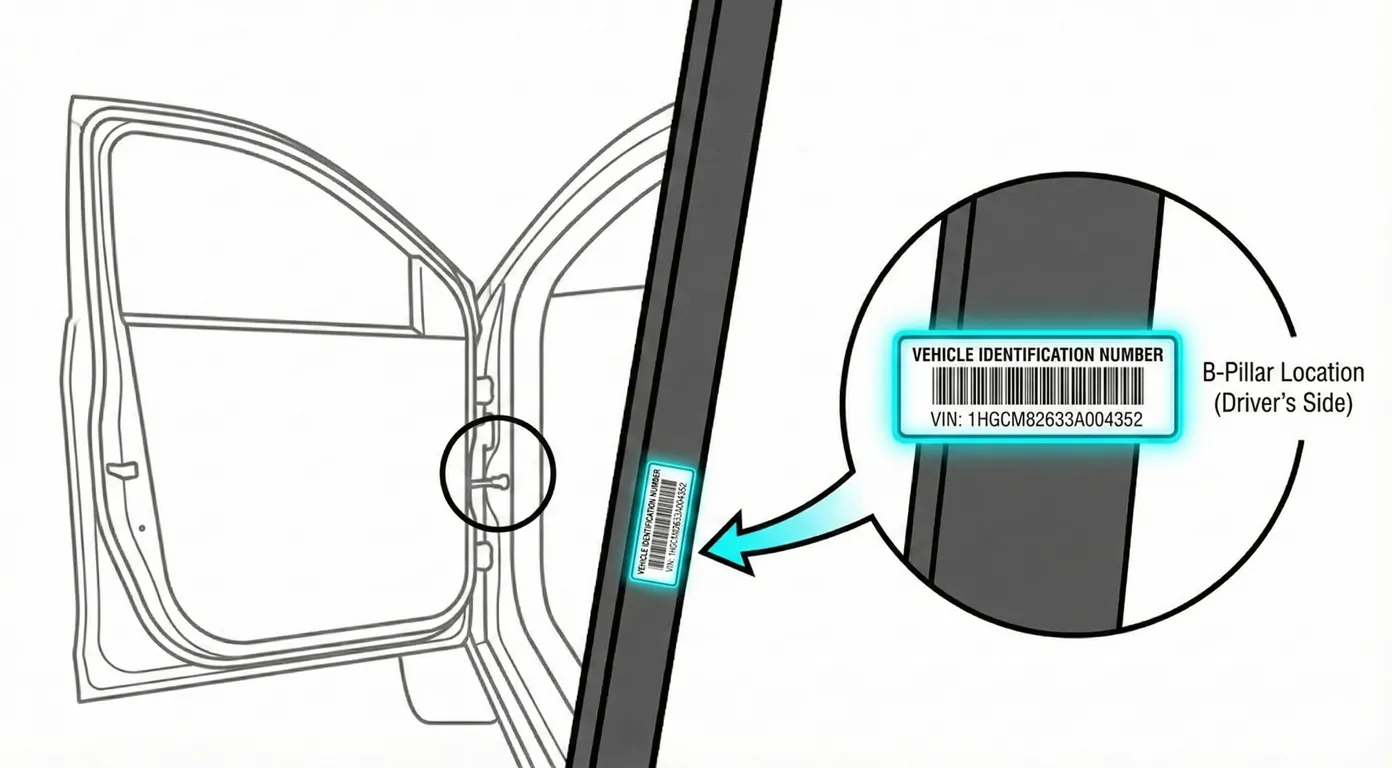
- Where to look: Open the driver’s door and inspect the B-pillar (the post between the front and rear doors). Look low on the pillar near the rocker panel/sill for a black VIN/vehicle data sticker.
- Access: Easy access on a vertical surface; no tools needed. Sticker condition can vary (peeling/fading over time).
- Note: The example vehicle is LHD. On RHD cars, you’ll typically find the equivalent label on the driver’s side (right side).
- Tip: If the print is faint or you don’t want transcription mistakes, scan the label directly with your phone while holding the camera square to the sticker.
2) Windshield (Dashboard VIN Plate) 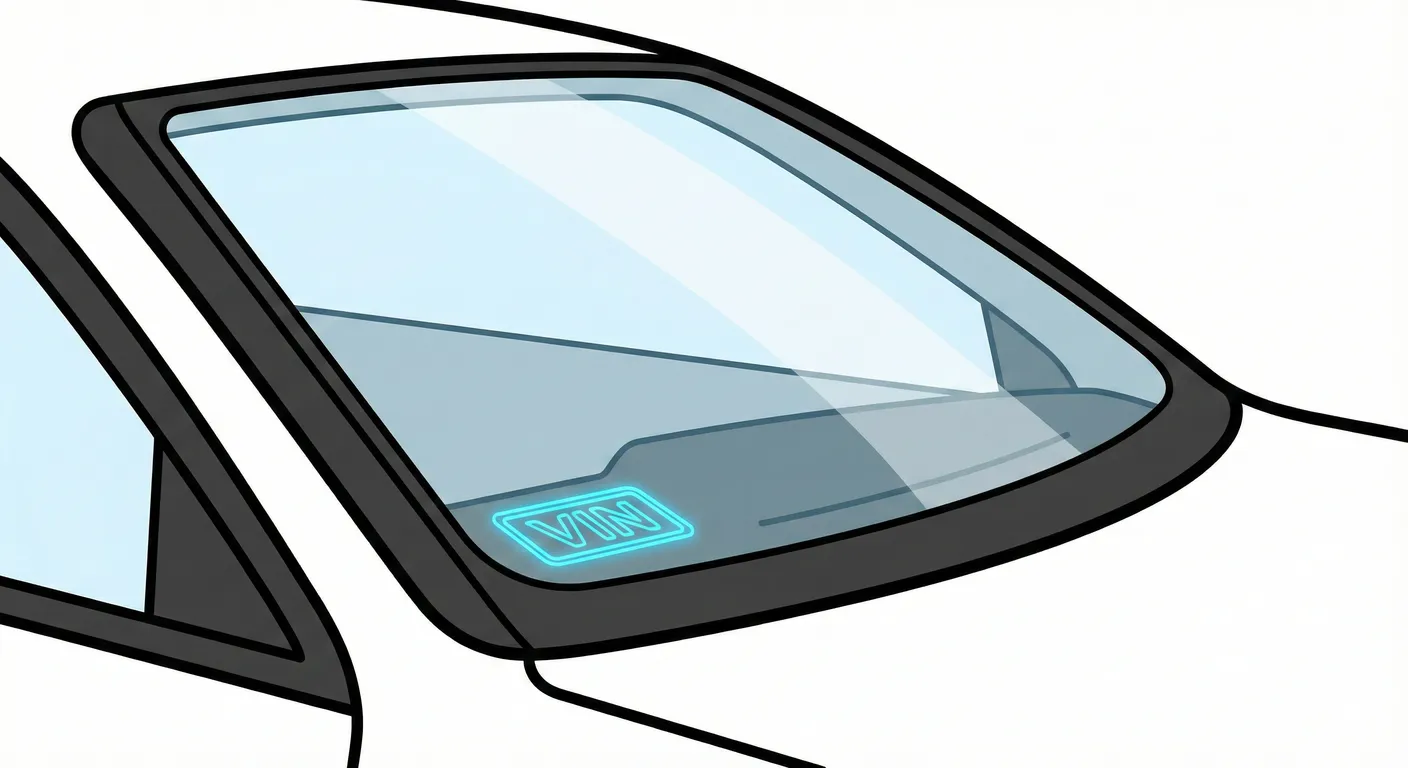
- Where to look: Stand outside the car and look through the bottom corner of the windshield on the driver’s side (left side on LHD). The VIN sits on a plate mounted on top of the dashboard.
- Access: Very quick to check, but reflections from sky/clouds can make it hard to read; dirty exterior glass also blocks characters.
- Note: On RHD cars, this windshield VIN position typically swaps to the right side.
- Tip: When glare is bad, capture it instantly using the VIN scanner from a slight angle instead of trying to read each character through reflections.
3) Floor (Under Front Passenger Seat / Footwell Carpet Flap) 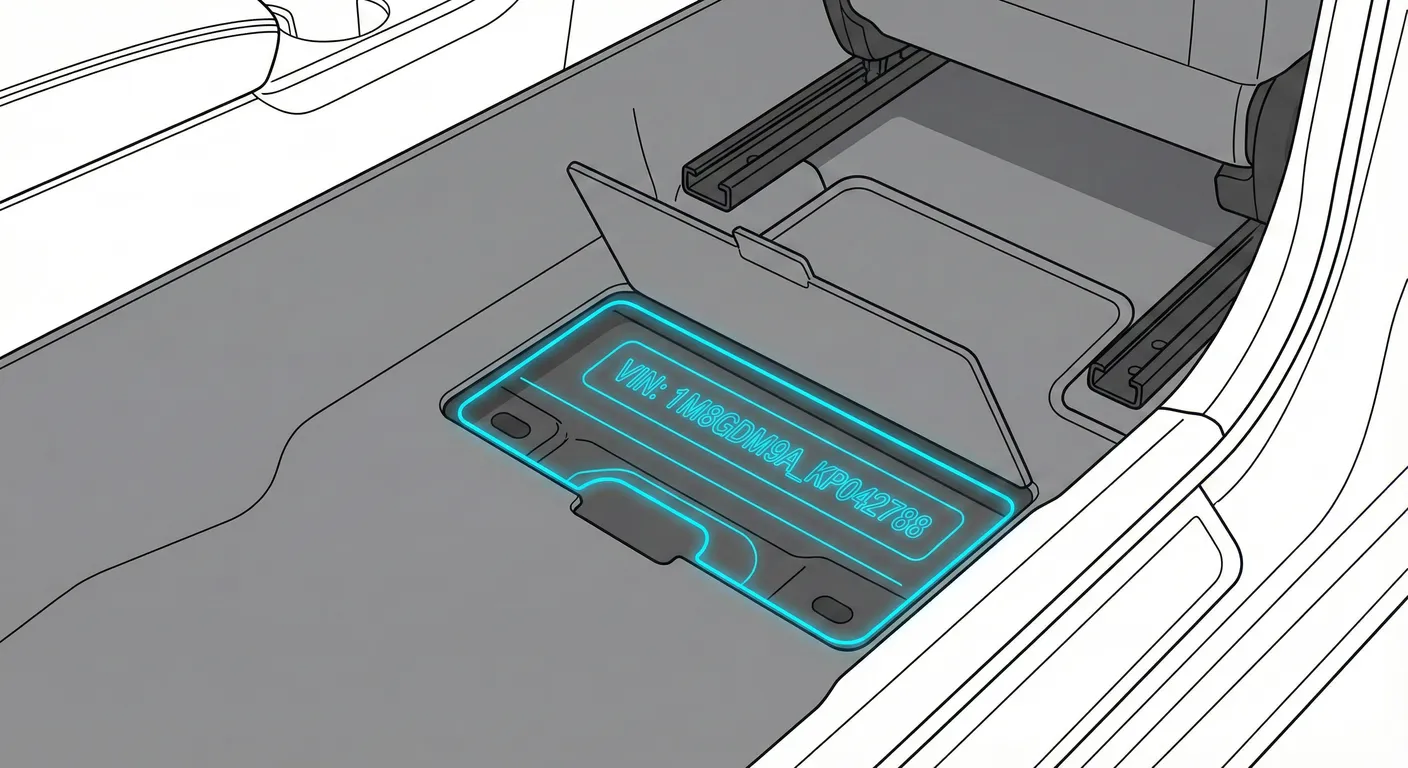
- Where to look: Inside the cabin, move to the front footwell floor and find the pre-cut rectangular carpet flap with a small plastic clip/tab. Lift it to expose the VIN stamped into the metal cross-member/structural beam (commonly on the right side for LHD vehicles, but check the driver side footwell if not found).
- Access: Dark and recessed; you’ll likely need to hold the carpet flap open while viewing/scanning the stamping.
- Note: This is a stamped chassis VIN (hard to fake compared to a sticker), so it’s a key verification point when buying.
- Tip: Because it’s in deep shadow, use the flashlight + OCR scanner so you’re not fighting the darkness while bent over the footwell.
4) B-Pillar Label (Passenger Side Door Jamb) – Alternate/Backup
- Where to look: Open a door on the right side and check the B-pillar for another black manufacturer label (often a tire-pressure placard that also lists the VIN near the top).
- Access: Easy access; great redundancy if the driver-side label is damaged.
- Note: This is a useful backup location—especially on vehicles where one jamb sticker has been replaced or worn.
- Tip: If you’re comparing multiple labels quickly, scan and save the VIN straight from the sticker instead of re-typing it each time.
Video Guide
Video Tutorial: MERCEDES-BENZ A Class W176 (2012-2017) – VIN Number ...
- Handheld walkthrough showing the floor chassis stamp, windshield plate, and two door-jamb labels on a real Mercedes-Benz A-Class W176.
Common Problems & Troubleshooting
- Windshield glare/reflections: Change your viewing angle, shade the VIN area with your hand, and clean the outside glass to reduce sky reflections.
- Floor VIN too dark to read: Lift the carpet flap fully and add light—this stamping sits low and is easy to miss in shadows.
- Sticker vs. stamped VIN: Door-jamb stickers can peel, fade, or be replaced—always cross-check against the stamped floor VIN for a proper identity verification.
Ready to scan?
Start the scanner and scan the VIN in seconds. No registration, no fees.
Check other generations of this model
Note on Data Sources
Information about VIN location in this model comes from aggregation of official technical documentation (OEM) and spare parts catalogs. Despite careful algorithmic verification, the data is for reference purposes only. Final vehicle identification should always be confirmed by an authorized technician.
See how we verify data and build our database →