
Where is the VIN in the Ford Fiesta?
Select your car's generation to see the exact VIN number locations
VIN Location Overview for Ford Fiesta
3 generationsSelect the generation of your car to see the exact VIN number locations
| Generation & Years | Typical VIN Locations | Details | |
|---|---|---|---|
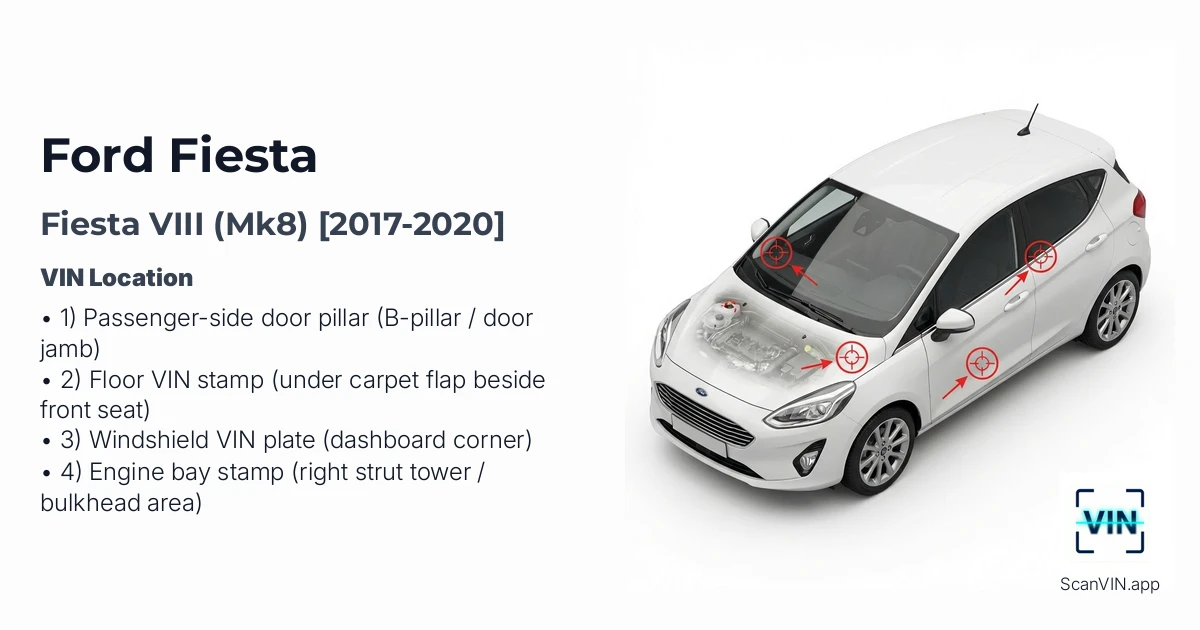 | VIII Mk8 2017 2020 | 1) Passenger-side door pillar (B-pillar / door jamb) 2) Floor VIN stamp (under carpet flap beside front seat) 3) Windshield VIN plate (dashboard corner)
+1 | View details |
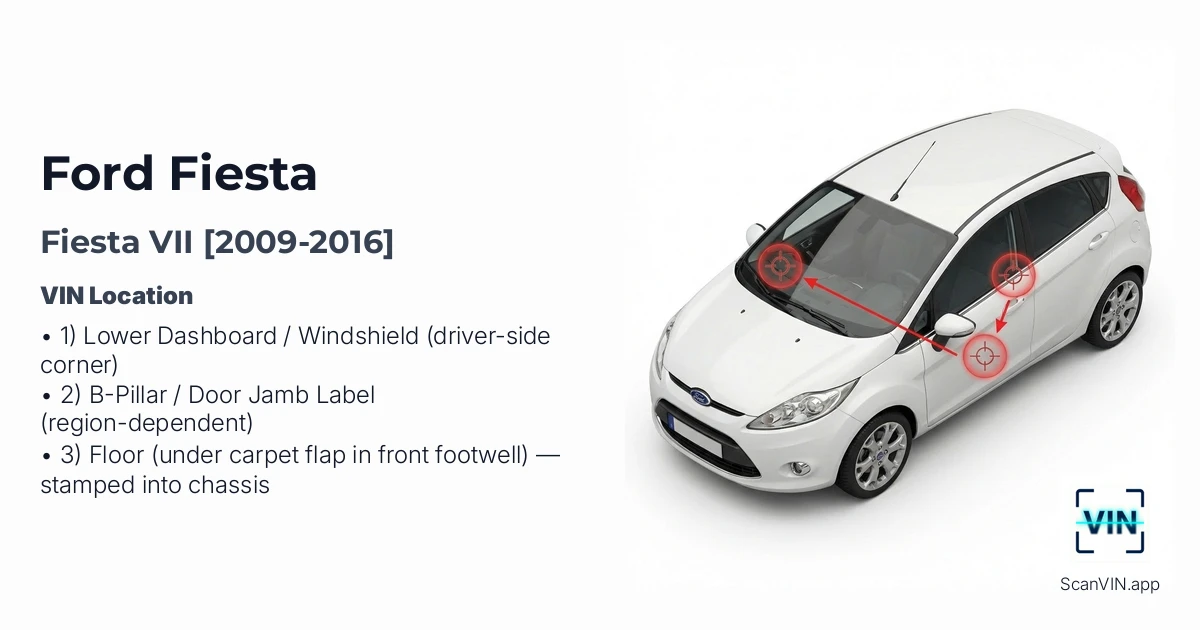 | VII 2009 2016 | 1) Lower Dashboard / Windshield (driver-side corner) 2) B-Pillar / Door Jamb Label (region-dependent) 3) Floor (under carpet flap in front footwell) — stamped into chassis | View details |
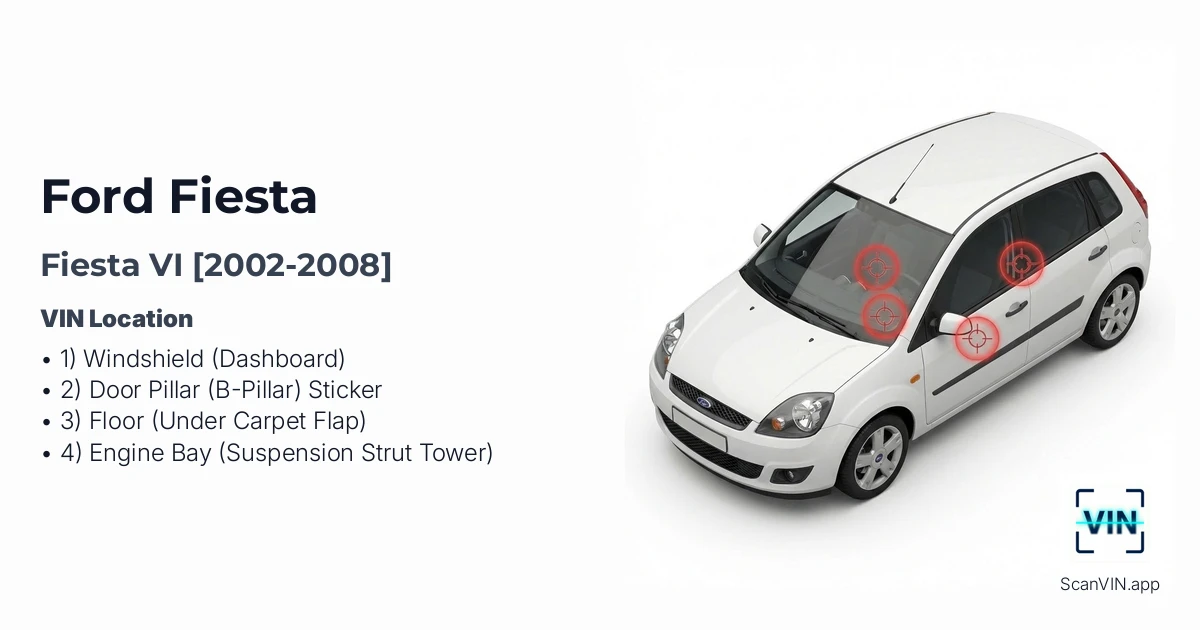 | VI 2002 2008 | 1) Windshield (Dashboard) 2) Door Pillar (B-Pillar) Sticker 3) Floor (Under Carpet Flap)
+1 | View details |
VIII Mk8 2017 2020
VII 2009 2016
VI 2002 2008
Ford Fiesta VIII (Mk8) [2017-2020]
Quick response
Quick Answer: The most reliable VIN location for the Ford Fiesta is the VIN sticker on the passenger-side B-pillar/door jamb. It’s typically a tamper-proof label near the door latch area with clear black text on a light background. Expert tip: Wipe dust off the label first—phone cameras and OCR read it best when it’s clean.
This guide covers the VIN (Vehicle Identification Number) locations for the Ford Fiesta VIII (Mk8) produced between 2017–2020, including the most common “easy” VIN label and the hidden stamped chassis number.
Chassis Number Locations
1) Passenger-side door pillar (B-pillar / door jamb) 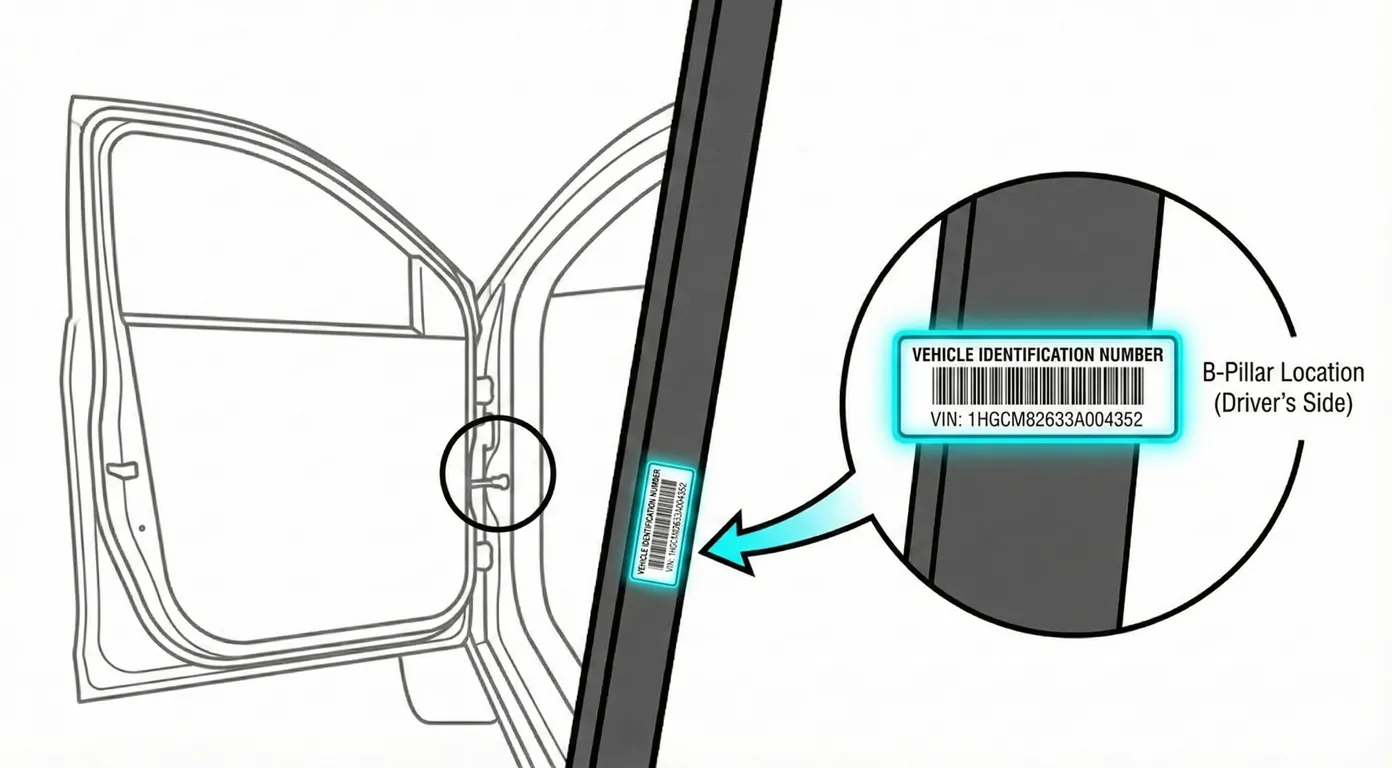
- Where to look: Open the front passenger door and inspect the B-pillar/door jamb area near the latch/striker line or lower sill zone. You’re looking for a tamper-proof sticker listing the VIN, weights, and other codes.
- Access: Usually easy to access and read, but the label can get scuffed from shoes or cleaning over the years—wipe it gently.
- Note: This guide is written for LHD vehicles; on some markets Ford may mirror label placement, so if you don’t see it on the passenger side, check the opposite B-pillar.
- Tip: If the sticker print is slightly faded or you’re reading at an angle, scan the label with your phone using ScanVin.app to capture the VIN cleanly without transcription mistakes.
2) Floor VIN stamp (under carpet flap beside front seat) 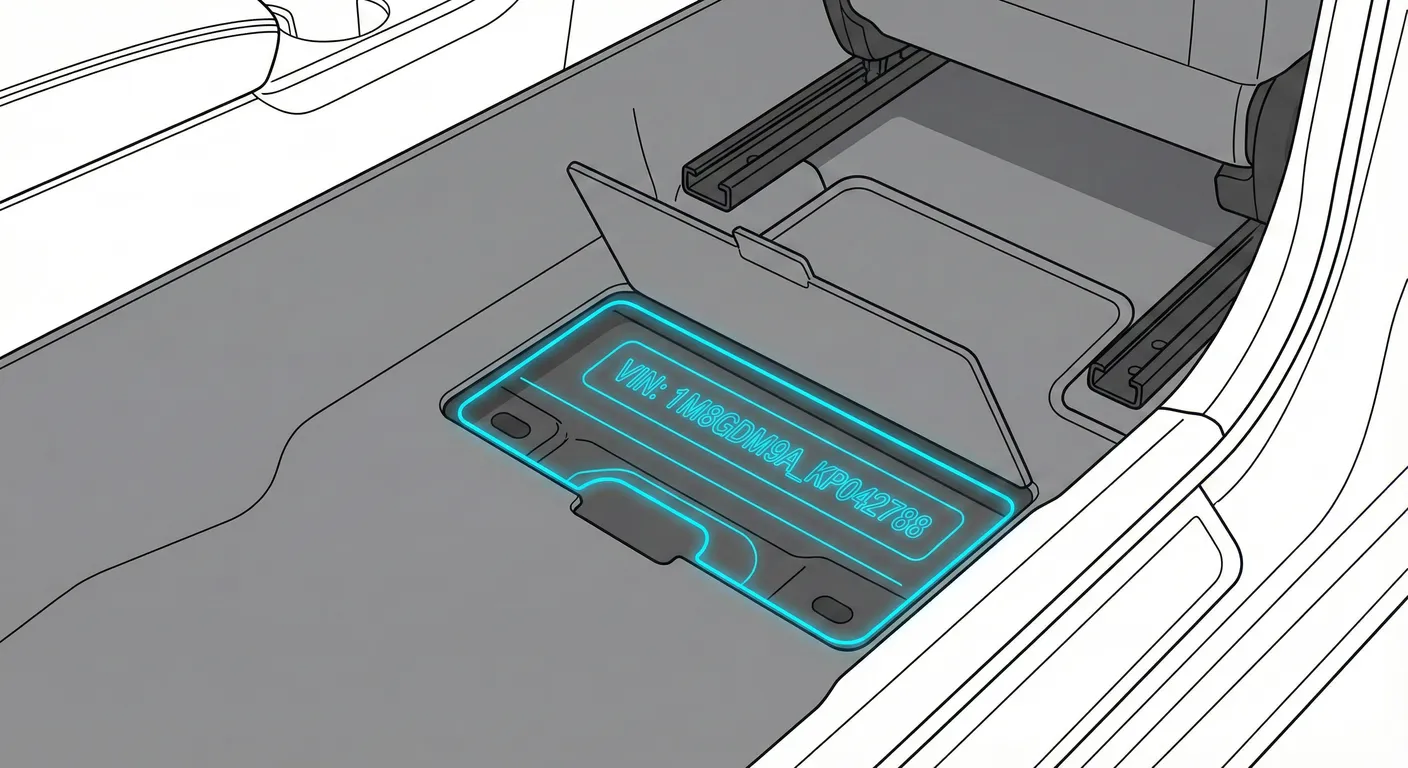
- Where to look: Check the front footwell floor panel beside the front right seat area (commonly passenger side for LHD). Look for a pre-cut carpet flap (often marked) that you can lift to reveal the VIN/chassis number stamped into metal.
- Access: Requires physical interaction—lift the carpet flap and aim light into the recess. The footwell is naturally shadowy and the metal stamp can be low-contrast.
- Note: On some cars/markets the floor stamp may be on the other side. If it’s not on the passenger-side footwell area, check the driver-side footwell as well.
- Tip: Because it’s dark and the stamping can be hard to “see,” use your camera flash and scan it directly with ScanVin.app so OCR can pick up the characters without you kneeling there writing them down.
3) Windshield VIN plate (dashboard corner) 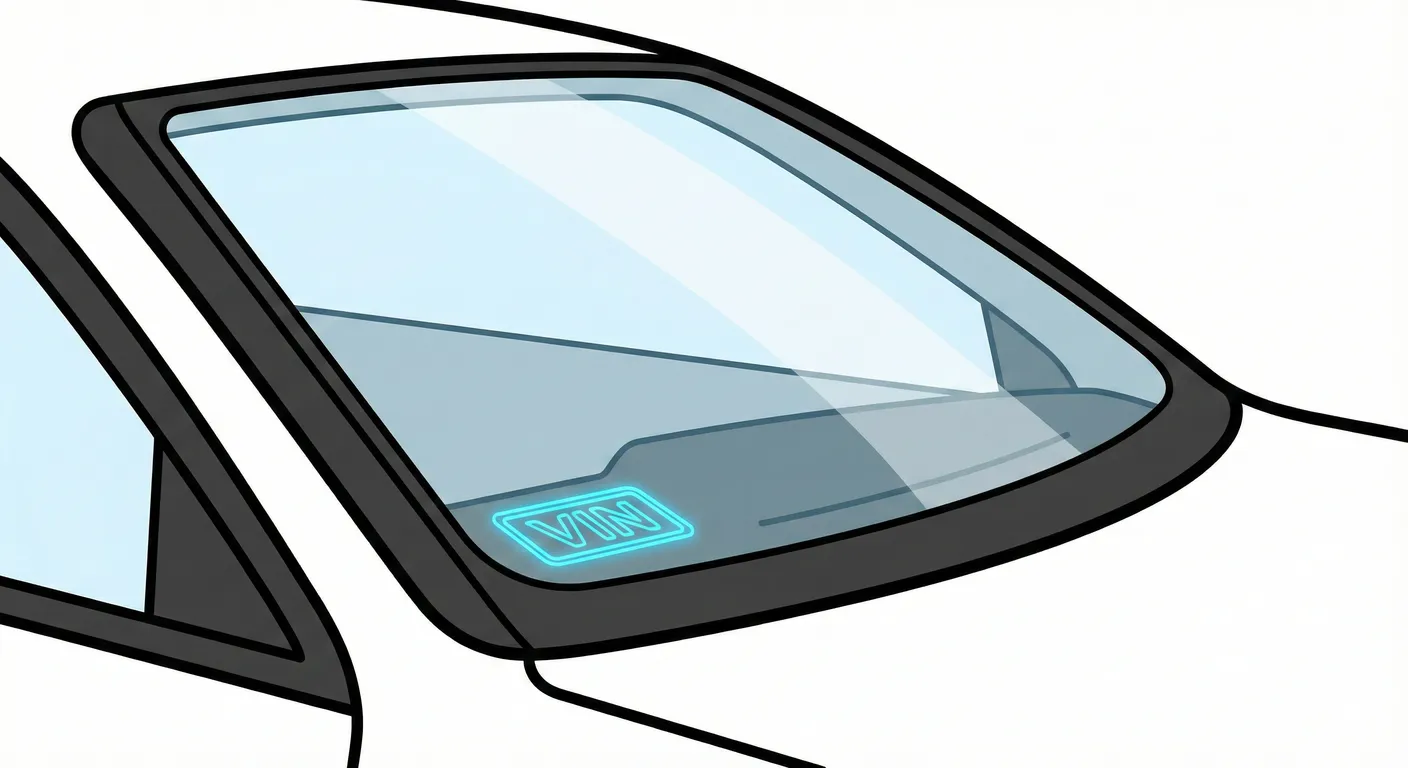
- Where to look: From outside the car, look through the lower driver-side corner of the windshield at the dashboard. The VIN is visible in a small cutout in the black ceramic frit area.
- Access: Quick to find, but glare/reflections on the glass and small font can make it annoying to read accurately.
- Note: Windshield VIN placement is typically consistent even across LHD/RHD, but reflections vary with sun angle.
- Tip: If glare is washing out the digits, capture it instantly with ScanVin.app so you don’t misread similar characters like 8/B or 5/S.
4) Engine bay stamp (right strut tower / bulkhead area) 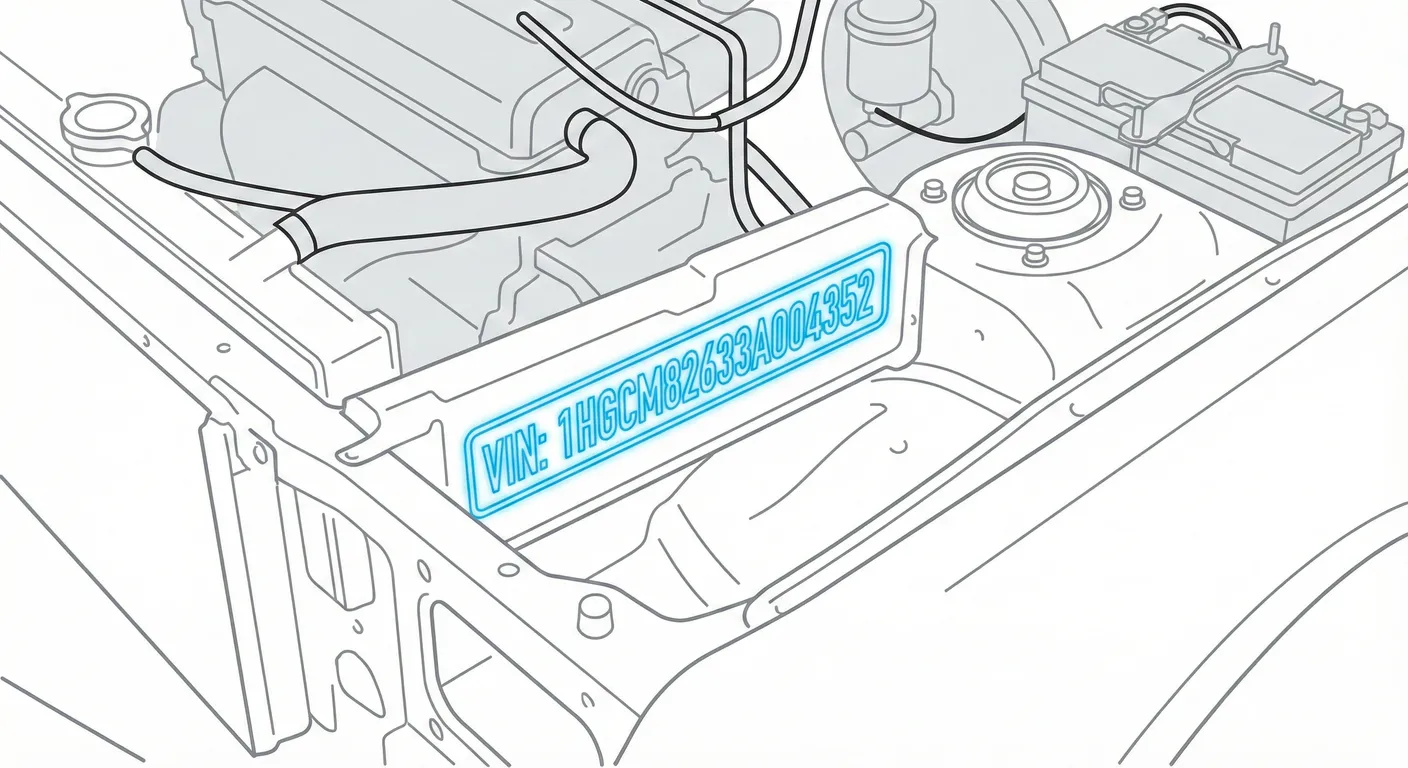
- Where to look: In the engine bay, inspect the right-hand suspension strut dome (strut tower) area and nearby bulkhead/firewall surfaces for a stamped VIN/chassis marking.
- Access: Strut tower stamps are usually reachable, but paint thickness and dirt can obscure the characters; if the stamp is lower/deeper in the bay, it can be awkward to photograph.
- Note: “Right-hand” here means the vehicle’s right side (as you sit driving, it’s your passenger side on LHD).
- Tip: If the stamping is faint under paint or grime, clean the area and use ScanVin.app’s camera scan to improve read accuracy without straining over the engine bay.
Video Guide
No videos in the provided source list were approved as Mk8-specific for publishing in this guide.
Common Problems & Troubleshooting
- Windshield glare: Move a step left/right, shade the glass with your hand, or scan when the sun isn’t hitting the VIN window directly.
- Floor stamp hard to read: Lift the flap fully, use a strong flashlight/phone flash, and angle the light from the side to make stamped characters cast shadows.
- Sticker validity warning: A door-jamb sticker can be missing, repainted over, or replaced—always cross-check the VIN across at least two locations before buying or registering the car.
Frequently Asked Questions
Where is the VIN on Ford Fiesta?
Check the VIN sticker on the passenger-side B-pillar/door jamb first, then verify it against the windshield VIN visible at the lower driver-side dashboard corner.
Which VIN location is the most important for Ford Fiesta?
For quick ID, the door-jamb VIN label is usually the easiest to read. For verification, match it to a second source like the windshield VIN or the stamped chassis number (floor/engine bay) to rule out tampering.
Ford Fiesta Ford Fiesta VII [2009-2016]
Quick response
Quick Answer: The most reliable VIN location for the Ford Fiesta is the VIN plate at the lower dashboard, visible through the driver-side windshield corner. It’s typically visible from outside the car through the glass. If glare or rain droplets make it hard to read, use your phone camera and light to capture it cleanly.
This guide covers where to find the VIN (vehicle identification number) on the Ford Fiesta VII, produced between 2009 and 2016, including the quickest “look-through-the-glass” spot and the hidden stamped chassis location.
Chassis Number Locations
1) Lower Dashboard / Windshield (driver-side corner)
- Where to look: Stand outside the car and look through the bottom corner of the windshield on the left side (driver’s side). The VIN sits on a plate under the glass in a cutout area of the dashboard.
- Access: Generally easy to see, but glare/reflections, rain droplets, or grime near the cowl can block a clean view.
- Note: This is the most consistent “quick check” location on Fiesta VII in LHD markets.
- Tip: If reflections are washing out the characters, capture it instantly with the ScanVin.app VIN scanner so you don’t misread a 3/8, S/5, or B/8 through the windshield.
2) B-Pillar / Door Jamb Label (region-dependent)
- Where to look: Open a front door and inspect the B-pillar door jamb sticker area (the pillar between the front and rear doors). Some cars will have a VIN/vehicle info label here.
- Access: Very easy if present, but stickers can be faded, peeling, or replaced/painted over after bodywork.
- Note: On the LHD European car shown, the B-pillar label displayed tire pressure info and not the VIN; on some other markets (commonly noted for US-spec cars), the VIN is often printed on the door-jamb label—so check what the sticker actually contains.
- Tip: If the label print is faint or glossy, use the ScanVin.app camera OCR to grab the characters without squinting or copying errors.
3) Floor (under carpet flap in front footwell) — stamped into chassis
- Where to look: In the front footwell floor, lift the pre-cut rectangular carpet flap (commonly found on the passenger side for LHD vehicles, but check the driver-side footwell if you don’t find it). Under the flap, the VIN is stamped directly into the metal chassis.
- Access: You’ll need to lift the carpet flap and deal with dust/debris; the stamping can be low-contrast if dirty.
- Note: This is the “hard VIN” stamped into the body—very useful for verification if you suspect a swapped windshield plate or missing sticker.
- Tip: Because the footwell is dark and the stamping can be dirty, scan it with ScanVin.app using Flashlight + OCR instead of trying to read it at an awkward angle.
Video Guide
Video Tutorial: Ford Fiesta MK7 VIN number location - YouTube
- Clear tour of a Fiesta Mk7/VII showing the windshield VIN and the under-carpet stamped chassis VIN, plus useful context about the B-pillar label varying by region.
Common Problems & Troubleshooting
- Windshield glare / rain droplets: Change your viewing angle, shade the VIN area with your hand, and clean the glass; glare can make characters look “broken” or merged.
- Under-carpet VIN is dirty/low contrast: Vacuum the area and scrub lightly with a nylon brush (don’t grind debris into the stamping); use a light to bring out the stamped depth.
- Door-jamb sticker doesn’t prove everything: Stickers can be replaced or damaged during repainting—always cross-check the VIN against the windshield plate and the stamped floor VIN when buying.
Frequently Asked Questions
Where is the VIN on Ford Fiesta?
Check the VIN plate at the lower dashboard visible through the driver-side windshield corner first. Then verify the stamped VIN under the carpet flap in the front footwell (commonly passenger side on LHD, but check both sides).
Which VIN location is the most important for Ford Fiesta?
For quick identification, the windshield VIN is the most convenient. For verification and anti-tamper checks, the stamped VIN on the chassis (under the front footwell carpet flap) is the most important because it’s physically part of the body shell.
Ford Fiesta Ford Fiesta VI [2002-2008]
Quick response
Quick Answer: The most reliable VIN location for the Ford Fiesta is the VIN plate visible through the lower windshield (dashboard area), passenger side. It’s typically located behind the glass at the bottom corner of the windshield. Expert tip: wipe the glass and change your viewing angle to reduce glare/reflections before scanning.
This guide shows you where to locate the VIN (Vehicle Identification Number) on the Ford Fiesta VI produced between 2002 and 2008, including the easy-to-spot windshield plate and the hidden stamped chassis locations.
Chassis Number Locations
1) Windshield (Dashboard)
- Where to look: Check the lower corner of the windshield on the passenger side, viewed from outside the car. You’ll see a white strip/plate with black VIN text behind the glass.
- Access: Easy to reach, but glare, reflections, dirt, leaves, or water droplets on the glass can block the characters.
- Note: Works the same on LHD cars shown in the videos—stand at the passenger-side corner and look down through the glass.
- Tip: If reflections make the numbers hard to read, use your phone to capture it instantly and avoid transcription errors—try to scan the VIN directly with your camera after wiping the glass and tilting the phone slightly.
2) Door Pillar (B-Pillar) Sticker
- Where to look: Open the front passenger door and inspect the B-pillar/door jamb area—look for a black manufacturer label with white text (VIN may be printed vertically).
- Access: Generally easy, but the label can be worn, faded, or dirty from shoes/road grime near the sill.
- Note: This sticker is not guaranteed on all markets/trims (some cars may only show a tire-pressure label here), so treat it as a strong secondary check, not the only source.
- Tip: If the sticker text is faded or you’re fighting bad lighting in the jamb, use the VIN reader to scan it cleanly instead of trying to guess characters by eye.
3) Floor (Under Carpet Flap)
- Where to look: In the front footwell floor, look beside the seat track close to the door sill trim. There’s a precut carpet flap—lift it to reveal the stamped VIN on the metal chassis.
- Access: Hardest location. You’ll need to kneel, pry/lift a stiff carpet/plastic flap, and deal with heavy dirt/debris and possible rust. Lighting is usually poor down there.
- Note: On LHD cars, this stamp is commonly found on the passenger-side front footwell, but if you don’t find it there, check the driver-side footwell as well.
- Tip: Because it’s dark and awkward to hold the flap open, turn on a light and scan it using your phone with flashlight + OCR so you don’t have to write it down in an uncomfortable position.
4) Engine Bay (Suspension Strut Tower)
- Where to look: Open the hood and check the top of the passenger-side suspension strut tower (shock mount dome). The VIN is stamped into the painted metal.
- Access: Medium difficulty—usually reachable and top-facing, but the stamp can be painted over, dirty, or corroded, which lowers contrast.
- Note: Use this as a solid backup verification point if the sticker is missing or the windshield plate is hard to read.
- Tip: If the embossed characters blend into the paint, use High Contrast AI scanning to pull the stamp out of the shadows—angled light often makes the numbers “pop.”
Video Guide
Video Tutorial: Ford Fiesta MK7 VIN number location
- Handheld walkthrough showing the windshield VIN and the hidden floor stamp under the carpet flap, including the real-world dirt/effort involved.
Video Tutorial: Ford Fiesta - Vehicle Identification Number (VIN) decoded
- Clear walkthrough of windshield, B-pillar sticker, and engine-bay strut tower VIN locations, followed by a VIN character breakdown.
Common Problems & Troubleshooting
- Windshield VIN won’t photograph clearly: glare/reflections and exterior dirt/water droplets can wash out the characters—clean the glass and shoot from a slight angle.
- Floor stamp is unreadable: expect heavy dirt/rust and very low light—scrub the area lightly and use a flashlight before scanning.
- Missing B-pillar VIN label: some cars/markets may only have tire-pressure info in the door jamb—verify using the windshield plate and/or stamped metal locations.
Frequently Asked Questions
Where is the VIN on Ford Fiesta?
Start with the VIN plate visible through the lower passenger-side windshield. If you need another match, check the front passenger-side B-pillar/door jamb sticker (if fitted) or the stamped VIN under the carpet flap in the front footwell.
Which VIN location is the most important for Ford Fiesta?
The windshield VIN plate is the quickest for checks and paperwork, but for verification you should also match it to a stamped VIN on the body/chassis (floor under carpet or engine bay strut tower), because stamped numbers are harder to tamper with than stickers.
Don't see your generation?
Try scanning simple VIN code. Our scanner will automatically identify the Make, Model and Generation.
Scan VINNote on Data Sources
Information about VIN location in this model comes from aggregation of official technical documentation (OEM) and spare parts catalogs. Despite careful algorithmic verification, the data is for reference purposes only. Final vehicle identification should always be confirmed by an authorized technician.
See how we verify data and build our database →