
Where is the VIN in the Honda Civic?
Select your car's generation to see the exact VIN number locations
VIN Location Overview for Honda Civic
5 generationsSelect the generation of your car to see the exact VIN number locations
| Generation & Years | Typical VIN Locations | Details | |
|---|---|---|---|
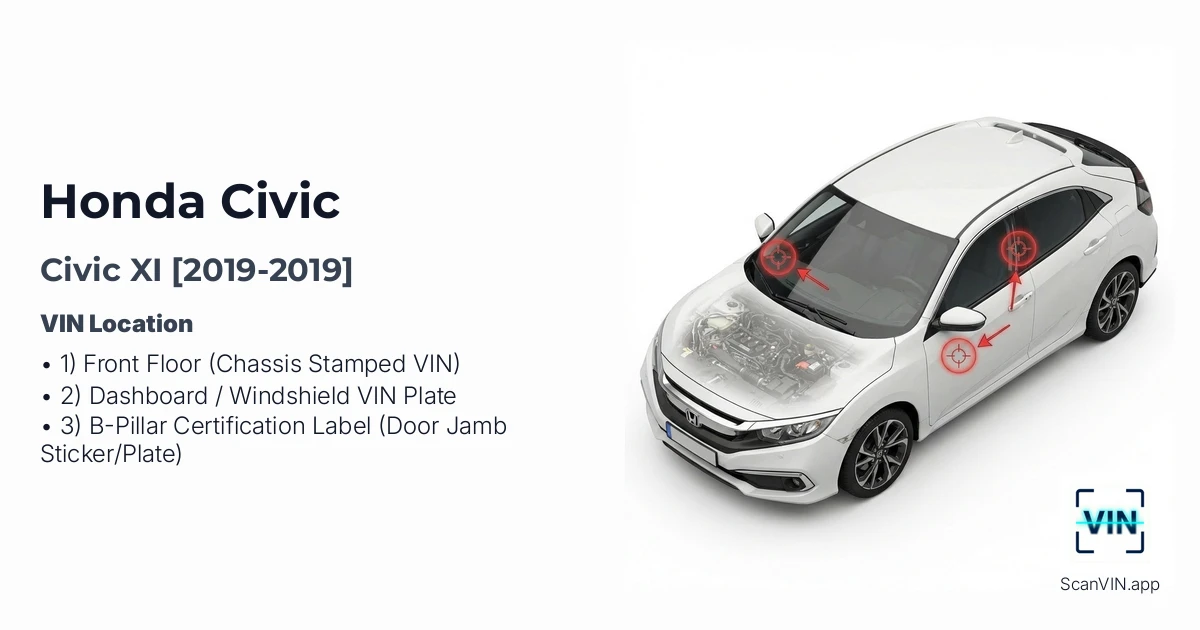 | XI 2019 2019 | 1) Front Floor (Chassis Stamped VIN) 2) Dashboard / Windshield VIN Plate 3) B-Pillar Certification Label (Door Jamb Sticker/Plate) | View details |
 | X 2016 2019 | Floor (Frame Chassis Number) Dashboard / Windshield Door Jamb (Certification Label)
+1 | View details |
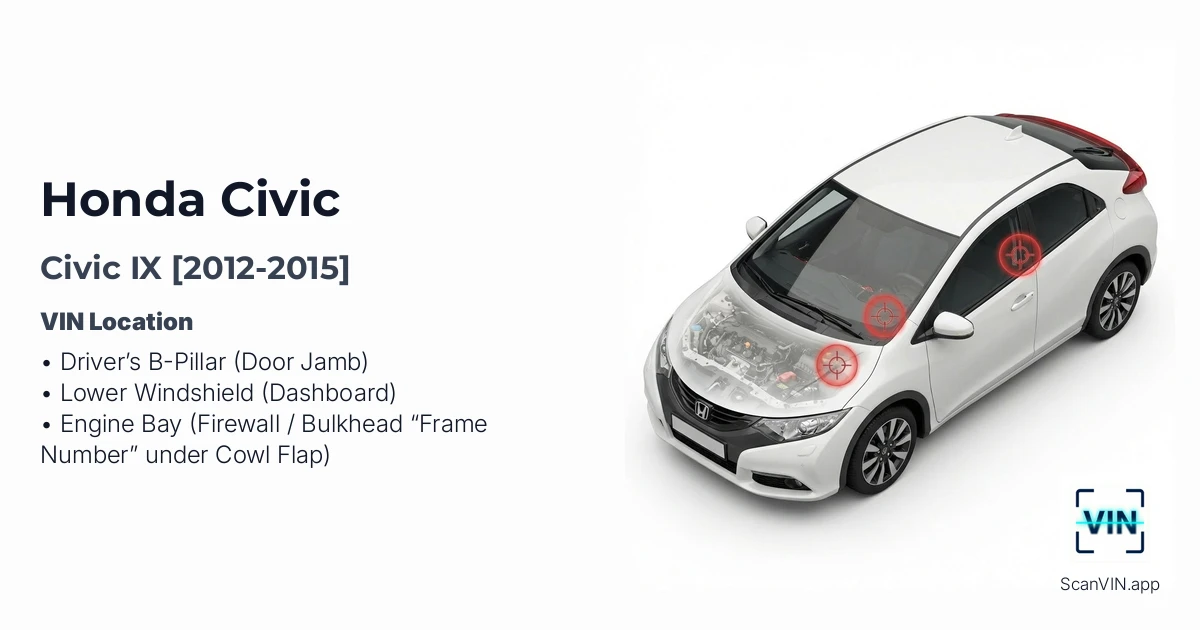 | IX 2012 2015 | Driver’s B-Pillar (Door Jamb) Lower Windshield (Dashboard) Engine Bay (Firewall / Bulkhead “Frame Number” under Cowl Flap) | View details |
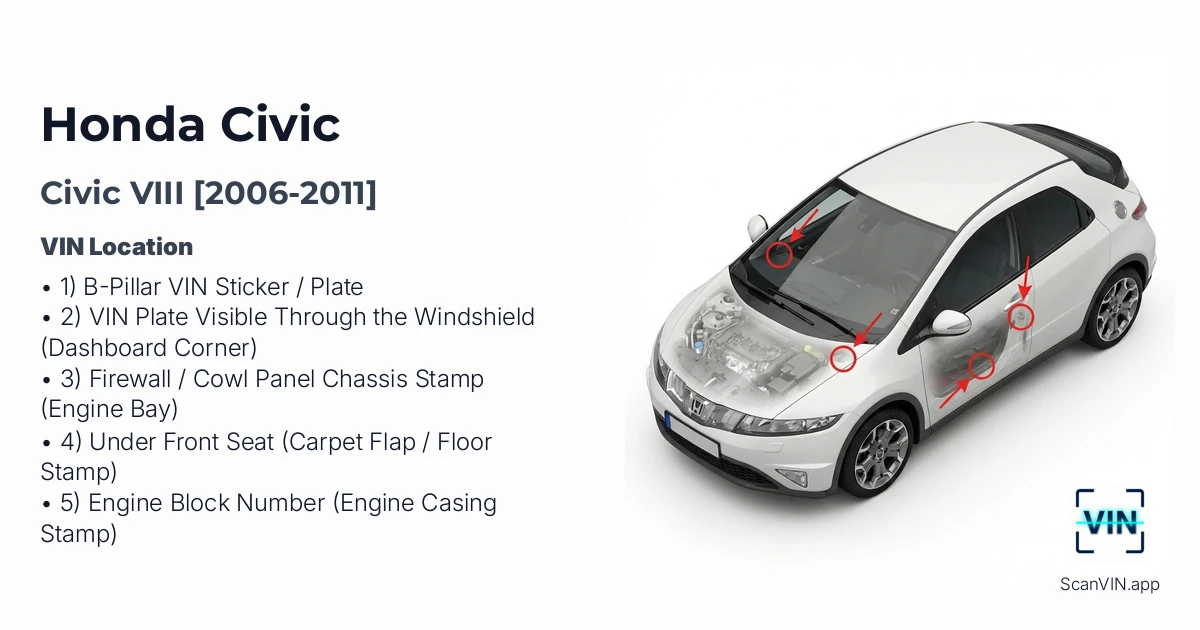 | VIII 2006 2011 | 1) B-Pillar VIN Sticker / Plate 2) VIN Plate Visible Through the Windshield (Dashboard Corner) 3) Firewall / Cowl Panel Chassis Stamp (Engine Bay)
+2 | View details |
 | VII 2004 2005 | Firewall / Bulkhead (Chassis Stamp) B-Pillar / Door Jamb (Certification Label) Dashboard (VIN Plate) | View details |
XI 2019 2019
X 2016 2019
IX 2012 2015
VIII 2006 2011
VII 2004 2005
Honda Civic Honda Civic XI [2019-2019]
Quick response
Quick Answer: The most reliable VIN location for the Honda Civic is the stamped chassis VIN on the front floor (under the front-right seat area). It’s hidden under the carpet flap behind a small “FRAME NUMBER” cover—use a flashlight because it’s dark and tight to access.
This guide shows where to find the VIN (Vehicle Identification Number) on the Honda Civic (Honda Civic XI [2019-2019]) produced between 2019–2019, including the easiest-to-check labels and the hidden stamped chassis number.
Chassis Number Locations
1) Front Floor (Chassis Stamped VIN) 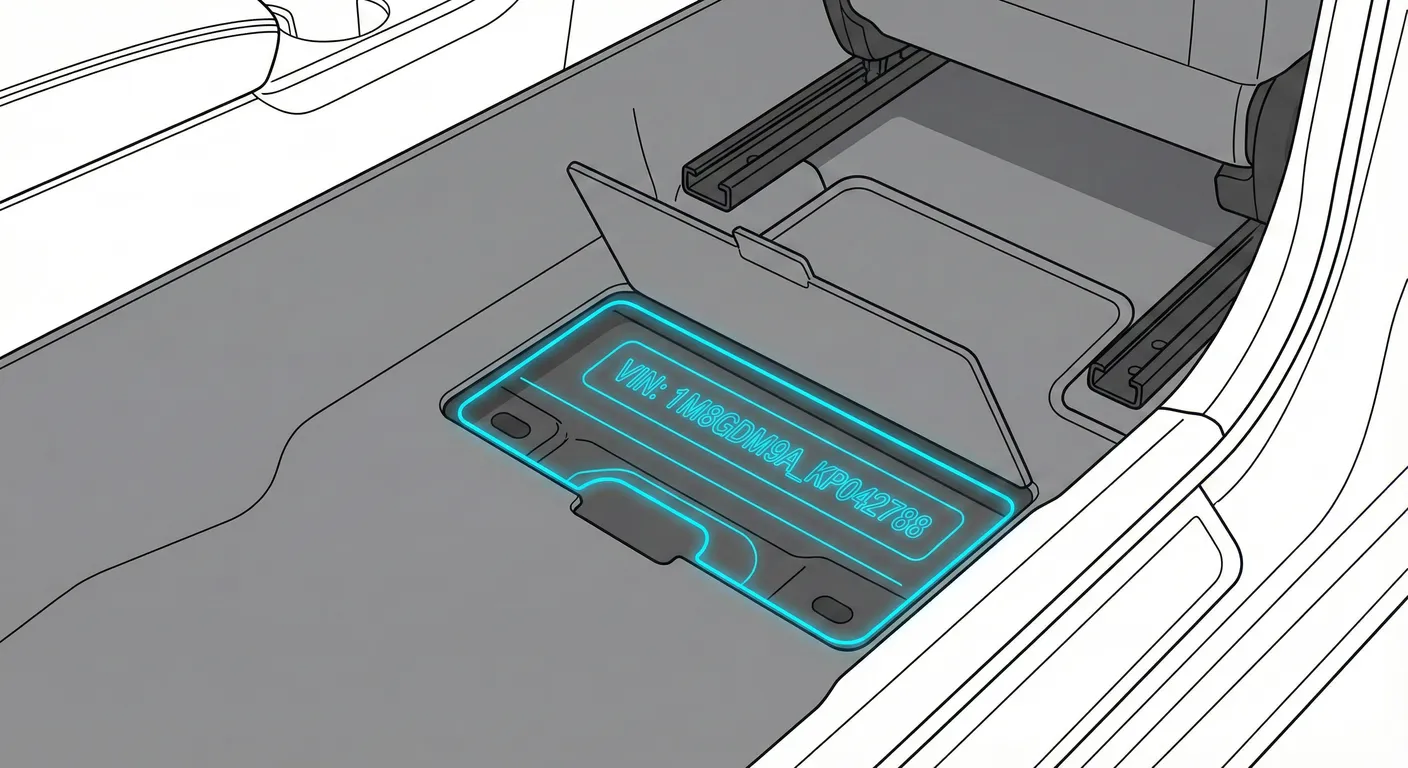
- Where to look: On the floor pan cross-member under the front-right seat area, directly in front of the front-right seat rails. Look for a rectangular plastic cover in the carpet labeled “FRAME NUMBER” (some trims may have just a carpet cut-out). Pry the cover up, then lift the thick carpet/insulation flap to reveal the VIN stamped into bare metal.
- Access: High difficulty. It’s dark in the footwell area, the plastic cap can be stiff to pry open, and the insulation padding often covers the stamping—expect to hold the flap open while you read/scan.
- Note: This floor VIN is commonly on the right side of the vehicle. On LHD cars it’s usually the front passenger-side floor, but if you don’t find it there, check the driver-side footwell as well.
- Tip: Because it’s shadowy and awkward to reach, use the app’s flashlight and let the camera read it—scan the VIN directly with your phone instead of trying to transcribe it while holding the carpet up.
2) Dashboard / Windshield VIN Plate 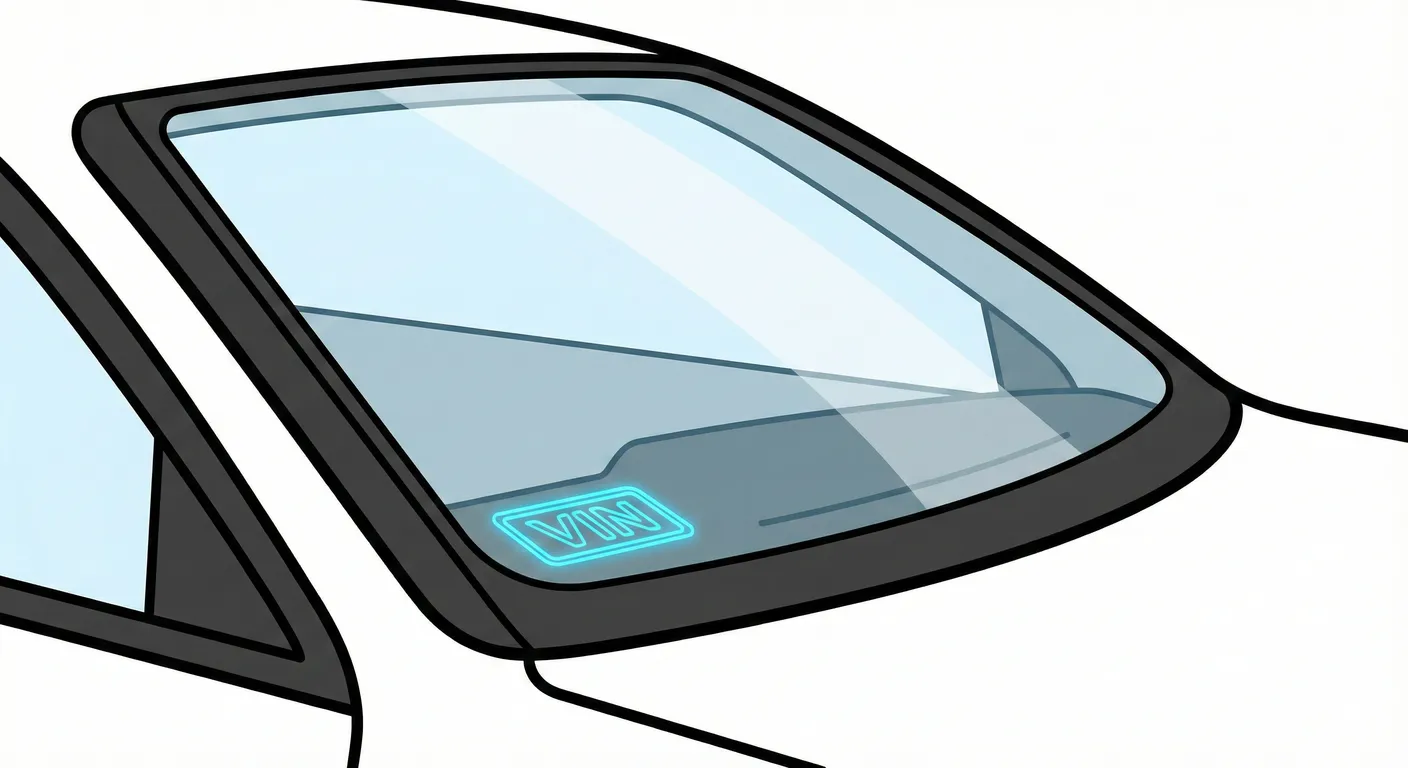
- Where to look: At the bottom corner of the windshield on the driver’s side (LHD)—a VIN plate mounted on the dashboard and readable from outside through the glass.
- Access: Medium difficulty. Easy to see, but glare/reflections and a dirty windshield can make characters hard to read.
- Note: Best checked from outside the car in daylight, but avoid direct sun hitting the glass.
- Tip: If glare is washing out the text, capture it instantly with the VIN scanner so you don’t misread similar characters (like 8/B or 5/S).
3) B-Pillar Certification Label (Door Jamb Sticker/Plate) 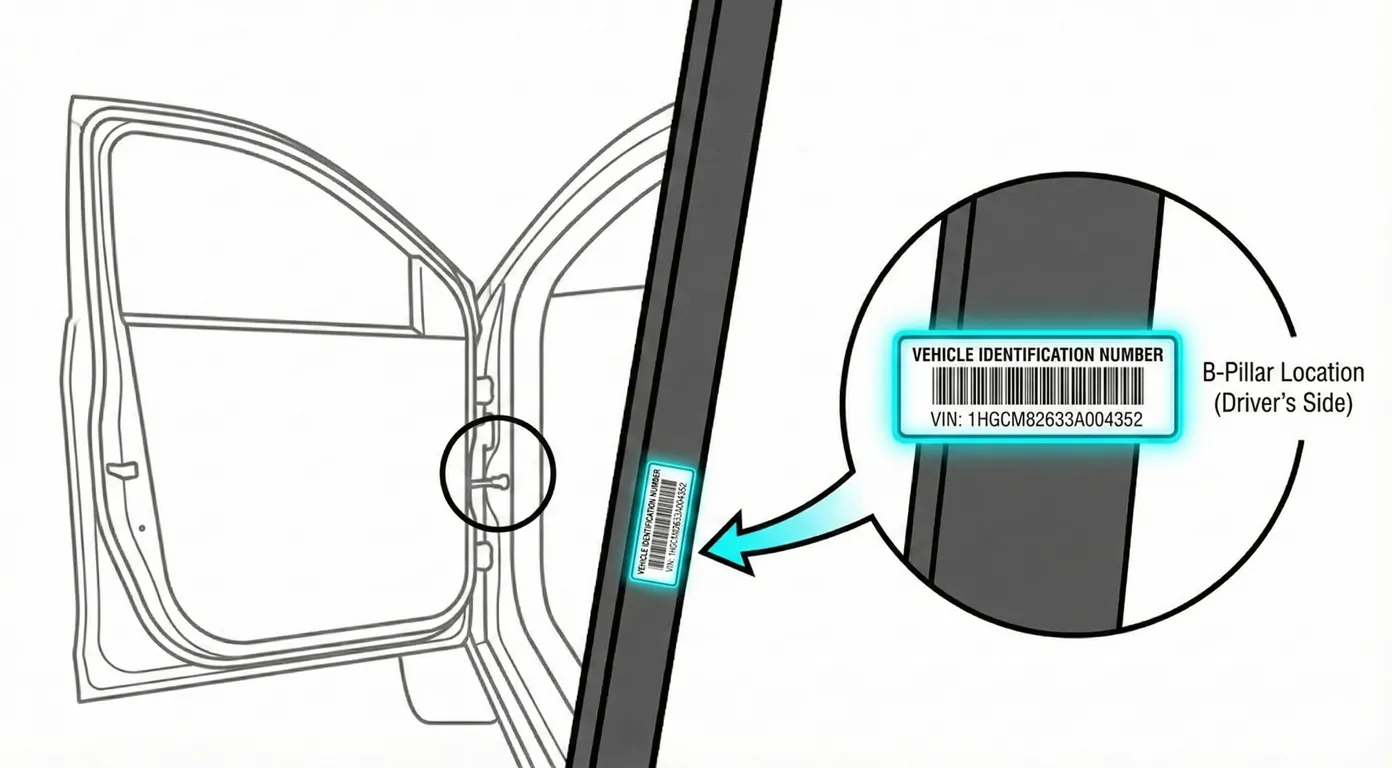
- Where to look: Open the front door and check the B-pillar door jamb.
- LHD (US/EU): Usually a certification sticker on the driver-side B-pillar.
- Some markets: May use a metal riveted plate on the opposite side.
- Access: Low difficulty. Clean, vertical surface, easy to photograph.
- Note: This is one of the quickest locations for confirming the VIN matches paperwork.
- Tip: Because it’s the easiest and often includes a barcode, use the free VIN reader to scan it cleanly without typing errors.
Video Guide
Video Tutorial: Honda Civic Frame VIN Number Location - 2016 2017 2018 2019 ...
- Quick, direct demo of the hidden “FRAME NUMBER” floor flap that covers the stamped chassis VIN.
Video Tutorial: 2016-2021 Honda Civic - Vehicle Identification Number (VIN) Location
- Best all-around walkthrough showing the door jamb label, windshield VIN plate, and the floor-stamped VIN with clear lighting.
Common Problems & Troubleshooting
- Can’t see the stamped floor VIN clearly: The insulation pad blocks the stamp and the area is dark—pry the cover, lift the padding fully, and add light (phone flashlight helps).
- Windshield VIN is hard to read: Sun glare and reflections on the glass can hide characters—change your viewing angle, wipe the glass, and avoid direct sunlight.
- Door jamb label doesn’t “prove” the chassis stamp: Stickers/labels can be replaced—when buying a used Civic, confirm the windshield VIN and door jamb VIN match the stamped floor VIN.
Frequently Asked Questions
Where is the VIN on Honda Civic?
Check the stamped VIN on the front floor under the carpet flap near the front-right seat rails, then verify it against the windshield VIN plate at the base of the driver-side windshield.
Which VIN location is the most important for Honda Civic?
The stamped chassis VIN on the body (front floor under the carpet flap) is the most authoritative because it’s physically stamped into the metal and is hardest to tamper with; use the windshield and door-jamb label for quick cross-checks.
Honda Civic [2016-2019]
Quick response
Quick Answer: The most reliable VIN location for the Honda Civic X is the front right floor (frame/chassis number) under the front floor mat. It’s stamped into the chassis under a plastic flap marked “FRAME NUMBER.” Tip: it’s dark down there—use a flashlight to read it clearly.
This guide shows the VIN (Vehicle Identification Number) locations on the Honda Civic X (10th generation) produced between 2016 and 2019, including the easy-to-check label and the hidden chassis stamp.
Chassis Number Locations
Floor (Frame Chassis Number)
- Where to look: In the front right footwell floor (commonly the passenger side on LHD cars), under the front floor mat. Look for a rectangular plastic cover embossed “FRAME NUMBER”—lift/pry it up (or slide it open) to reveal the VIN stamped into the chassis cross-member.
- Access: Medium. You must remove the mat and open the plastic cover; the stamping can be dusty or packed with debris, so wipe/scrub it before reading.
- Note: In RHD markets, check the front footwell floor on the opposite side if you don’t find it—don’t assume it’s always “driver side.”
- Tip: Because the footwell is shadowy and you’re reading stamped metal, use the Flashlight + OCR VIN scanner to scan it in place without guessing characters.
Dashboard / Windshield
- Where to look: At the lower driver-side corner of the windshield, on a VIN plate riveted to the dashboard and readable through the glass.
- Access: Low to Medium. Easy to see, but reflections/glare from the windshield can make the digits hard to read.
- Note: This is the quickest “walk-up” VIN check when you’re outside the car.
- Tip: If glare is washing it out, capture the VIN instantly with your phone so you don’t transpose letters/numbers.
Door Jamb (Certification Label)
- Where to look: Open the driver door and check the driver-side B-pillar (the center pillar where the door latches). You’ll find a black certification label listing the VIN along with tire pressures and build info.
- Access: Low. High-contrast label, usually the cleanest and easiest VIN to scan.
- Note: The label is on the B-pillar, not on the door skin itself.
- Tip: For fast, error-free entry, scan the sticker with the VIN reader instead of typing it.
Engine Bay (Firewall / Bulkhead) 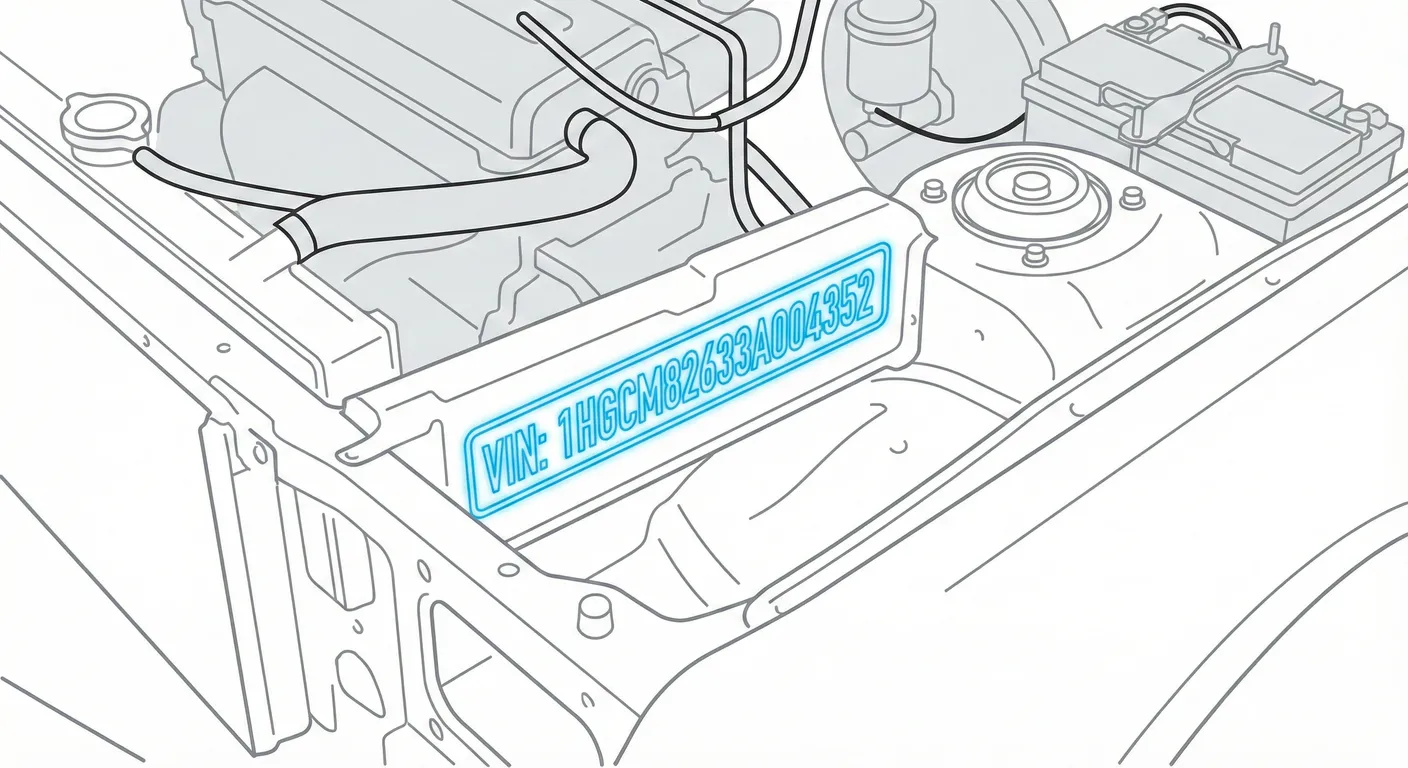
- Where to look: Some technical references mention a VIN stamp on the engine compartment bulkhead/firewall, but it was not shown in the provided videos, so exact placement/access on this generation isn’t confirmed here.
- Access: Not verified in the video inspection.
- Note: If you’re doing an anti-tamper check, prioritize matching the windshield VIN, B-pillar label, and the floor chassis stamp first.
- Tip: If you do locate a faint stamp in the bay, use high-accuracy scanning to avoid misreading worn characters.
Video Guide
Video Tutorial: Honda Civic Frame VIN Number Location - 2016 2017 2018 2019 ...
- Close-up walkthrough showing how to find and open the “FRAME NUMBER” floor flap to access the stamped chassis VIN.
Video Tutorial: 2016-2021 Honda Civic - Vehicle Identification Number (VIN) Location
- Professional overview of the main VIN locations: B-pillar certification label, windshield VIN plate, and the floor/frame number cover.
Video Tutorial: Where is the VIN number of my Honda Civic X ( 2017 - YouTube
- Walkaround-style video showing the sticker, windshield VIN, and the hidden floor/frame VIN on a European-spec Civic.
Common Problems & Troubleshooting
- Floor VIN is hard to read: Dirt and debris collect under the “FRAME NUMBER” cover—lift the mat, open the flap, then scrub/wipe the stamped metal before scanning/reading.
- Windshield VIN glare: Sunlight and reflections can wash out the plate—change your viewing angle or shade the area when capturing the VIN.
- Sticker validity warning: The B-pillar label is convenient, but for theft/repair checks you should confirm it matches the windshield VIN and the stamped floor chassis number.
Frequently Asked Questions
Where is the VIN on Honda Civic X?
Check the B-pillar certification label (driver-side center pillar) and the windshield VIN plate at the lower driver-side corner. For the stamped chassis VIN, lift the front floor mat and open the plastic cover marked “FRAME NUMBER” on the front right footwell floor.
Which VIN location is the most important for Honda Civic X?
For identity verification, the stamped chassis VIN (floor/frame number) is the most authoritative because it’s physically stamped into the body structure. The windshield plate and the B-pillar label should match it exactly.
Honda Civic Honda Civic IX [2012-2015]
Quick response
Quick Answer: The most reliable VIN location for the Honda Civic is the driver’s B-pillar (door jamb) compliance sticker. It’s typically on the B-pillar frame when you open the driver’s door, around seat-cushion height. It’s usually easy to access, but faded labels and poor lighting can slow you down—use your phone light if needed.
This guide shows you where to find the VIN (Vehicle Identification Number) on the Honda Civic IX [2012-2015]. Use these spots to verify the car’s identity before buying parts, checking history, or confirming paperwork.
Chassis Number Locations
Driver’s B-Pillar (Door Jamb)
- Where to look: Open the driver’s door and look on the B-pillar frame for the manufacturer compliance label (sticker). The VIN is printed along with tire pressure and weight info, typically around the height of the seat cushion.
- Access: Easy access. Main issues are a worn/faded sticker or low light in the door jamb—wipe dust off so the text is sharp.
- Note: Works the same idea on LHD and RHD cars—just check the front door on the driver’s side for your market.
- Tip: If the sticker text is faint or you’re fighting shadows, scan it directly with your phone instead of trying to manually type every character.
Lower Windshield (Dashboard)
- Where to look: Look through the windshield at the very bottom corner near the A-pillar—you’ll see a small VIN plate/tag sitting on the dashboard, with light characters on a dark background.
- Access: No tools needed, but this spot is prone to glare/reflections and awkward camera angles that make focusing difficult.
- Note: On many Civics this plate appears on the passenger side for LHD and the opposite side for RHD—use the corner nearest the A-pillar and scan whichever side has the plate.
- Tip: Windshield reflections cause misreads when you type it—capture it with the free VIN scanner so you can grab the code quickly before the glare shifts.
Engine Bay (Firewall / Bulkhead “Frame Number” under Cowl Flap)
- Where to look: Open the hood and go to the rear of the engine bay near the windshield wipers. Find the plastic ventilation cowl/grille with a cutout/inspection flap labeled “FRAME NUMBER”. Lift/pry up that flap to reveal the stamped chassis/VIN on the metal firewall underneath.
- Access: Harder than the others. You must physically lift the plastic flap, and the stamped number is often low-contrast (body-colored metal) and sitting in a shadowed recess.
- Note: This location is demonstrated on a UK-spec RHD hatchback, but the same “cowl flap / frame number” concept can appear on other Civic IX hatchbacks.
- Tip: If the stamping is hard to see because it’s dark and low-contrast, clean the area and use high-contrast scanning with your camera to pick up the characters without guessing.
Video Guide
Video Tutorial: Where is VIN number of my Honda Civic IX ( 2012 - 2017 ) - YouTube
- Clear walkthrough showing the windshield VIN plate and the driver’s B-pillar door-jamb label on an LHD Civic.
Video Tutorial: Honda Civic (2013) Chassis Vin Number Location pr/blk-trm
- Shows the hidden stamped frame number in the engine bay and how to lift the “FRAME NUMBER” cowl flap to expose it.
Common Problems & Troubleshooting
- Windshield glare/reflections: Move your body angle, shield the glass with your hand, and try focusing on the plate—reflections can make characters look wrong.
- Engine-bay stamping hard to read: Dirt and low contrast on body-colored metal can hide digits—scrub the area lightly and use strong lighting.
- Door-jamb sticker isn’t “perfect proof”: Compliance labels can be replaced or damaged; for a stronger identity check, compare multiple VIN locations on the same car.
Frequently Asked Questions
Where is the VIN on Honda Civic?
Check the driver’s door jamb (B-pillar) compliance sticker first. You can also view the VIN through the lower corner of the windshield on the dashboard.
Which VIN location is the most important for Honda Civic?
The stamped chassis/frame number in the engine bay is typically the hardest to tamper with, so it’s the best cross-check if you suspect the door sticker or windshield plate has been altered.
Honda Civic Honda Civic VIII [2006-2011]
Quick response
Quick Answer: The most reliable VIN location for the Honda Civic is the B-pillar VIN sticker/plate. It’s typically located low on the B-pillar (between the front and rear doors) and is visible when you open the door. It sits low, so crouch down and use extra light if you’re in a garage.
This guide shows where to find the VIN/chassis number on the Honda Civic VIII (2006–2011), including the easiest “everyday check” locations and the harder stamped chassis locations used for inspections.
Chassis Number Locations
1) B-Pillar VIN Sticker / Plate
- Where to look: Open the front door and look at the lower B-pillar (the pillar between the front and rear doors). You’re looking for a metallic sticker/plate that lists the VIN, and often the engine number and color code.
- Access: Easy, but it’s mounted low, so you’ll need to crouch. If lighting is poor, use a flashlight/phone light.
- Note: This label can be found on either side depending on market/body style, so check both sides if you don’t see it immediately.
- Tip: Because you’re crouched and the print is small, it’s faster to scan the label with your phone instead of writing it down in an awkward position.
2) VIN Plate Visible Through the Windshield (Dashboard Corner)
- Where to look: From outside the car, look through the windshield at the bottom corner of the glass where the dash meets the windshield (commonly driver side on LHD, and often passenger side on RHD).
- Access: Easy, but the glass causes glare/reflections, and dirt/leaves can block the view.
- Note: If you’re in an LHD market, start at the left-side lower corner (driver side), then check the opposite corner if not found.
- Tip: If glare makes characters hard to read, capture it instantly with the VIN scanner so you don’t mistype letters/numbers.
3) Firewall / Cowl Panel Chassis Stamp (Engine Bay)
- Where to look: Open the hood and look at the firewall/bulkhead area near the cowl. The chassis number is cold-stamped into metal and is often hidden behind a rectangular plastic clip-in access cover—pry the cover off to reveal the stamp.
- Access: Harder. You must open the hood and remove a trim cover (a key or flat screwdriver helps). The stamping is often dirty or paint-colored, so contrast is poor until you clean it.
- Note: This location is common on the hatchback shown in the walkthrough, and also appears on some sedan markets—use it as a “verification” VIN when buying.
- Tip: After wiping the area, use High Contrast AI scanning to pull characters out of faint/dirty stamped metal.
4) Under Front Seat (Carpet Flap / Floor Stamp)
- Where to look: Slide the front seat back and check the floor under the seat for a carpet cut-out/plastic flap. Lift it to reveal the VIN stamped into the floor cross-member.
- Access: Difficult. You’ll be crouched, it’s very dark, and you may need to move the seat to get a good angle while holding the flap open.
- Note: This is commonly seen on some sedan variants. Check the front footwell floor (commonly on the passenger side for LHD vehicles, but check the driver side footwell if not found).
- Tip: Since it’s dark and awkward to photograph, use Flashlight + OCR scanning to grab the stamped number without repeatedly repositioning yourself.
5) Engine Block Number (Engine Casing Stamp)
- Where to look: In the engine bay, find a flat machined surface on the engine block where the number is stamped. It’s usually low down and can be hidden by hoses/intake plumbing.
- Access: Very hard. Tight clearance, poor lighting, and the stamp may be greasy/oily, making it difficult to focus a phone camera.
- Note: This is typically an engine number, not the primary body VIN label—useful for matching drivetrain identity during inspections.
- Tip: If the stamp is greasy or low-contrast, clean it and use High Contrast AI Mode to scan it instead of trying to read it upside-down in a cramped bay.
Video Guide
Video Tutorial: HONDA CIVIC MK8 2006-2012 - How To Locate VIN Plate Chassis ...
- Clear walkthrough showing the B-pillar label, windshield VIN, and the hidden firewall/cowl stamp behind a plastic cover.
Video Tutorial: Chassis no. location in Honda Civic - YouTube
- Shows the sedan-style under-seat carpet flap and the floor-stamped chassis number location.
Common Problems & Troubleshooting
- Windshield glare/dirt: Reflections and debris at the dash corner can hide characters—shade the glass or change your viewing angle before scanning.
- Stamped VINs are faint or filthy: Firewall/floor stamps can be body-colored or dirty—wipe with a rag and mild cleaner, then re-check with a light.
- Sticker vs. stamp mismatch: Door/B-pillar stickers can be replaced; for purchase/inspection, always verify the stamped chassis VIN (firewall or floor) matches the label.
Frequently Asked Questions
Where is the VIN on Honda Civic?
Check the low B-pillar VIN sticker/plate when the door is open, and the VIN plate visible through the lower corner of the windshield. For stamped VIN verification, check the firewall/cowl stamp in the engine bay (behind a plastic cover) and, on some sedans, the floor stamp under the front seat carpet flap.
Which VIN location is the most important for Honda Civic?
For quick identification, the B-pillar label and windshield VIN are the fastest. For anti-tamper verification during an inspection or before purchase, the stamped chassis VIN (firewall/cowl or floor under-seat area, depending on market) is the most important because it’s physically stamped into the body.
Honda Civic Civic VII [2004-2005]
Quick response
Quick Answer: The most reliable VIN location for the Honda Civic is the firewall / bulkhead chassis stamp in the engine bay. It’s typically stamped into the metal firewall near the center, slightly below the cowl area behind the engine. Tip: it’s often greasy and partly hidden—bring a light and be ready to wipe it clean.
This guide shows you where to find the VIN/chassis number on the Honda Civic VII produced between 2004–2005, including the most dependable stamped location and the easiest label/plate checks.
Chassis Number Locations
Firewall / Bulkhead (Chassis Stamp)
- Where to look: Open the hood and check the metal firewall/bulkhead at the back of the engine bay. The chassis number is stamped directly into the metal, usually near the center, slightly below the cowl top, often behind/above the intake side of the engine (exact visibility depends on engine/trim).
- Access: High difficulty. Expect hoses, wiring looms, or the air intake box to partially block the view. The stamp is commonly covered in grime—scrub with a rag and a little degreaser, then wipe dry.
- Note: On RHD cars the stamp is still generally central on the firewall, but your viewing angle changes because the brake booster/steering components sit on the opposite side compared to LHD.
- Tip: If the characters are faint or greasy, use the app’s contrast tricks—scan the stamp with High Contrast AI Mode so you’re not guessing worn digits in a dark engine bay.
B-Pillar / Door Jamb (Certification Label)
- Where to look: Open the left front door (LHD) and inspect the B-pillar / door jamb area for the certification/VIN sticker.
- Access: Low difficulty. It’s usually clean and right at eye level; no tools needed unless the label is covered with dirt.
- Note: Label placement can vary slightly by market, but it’s generally on a door jamb/B-pillar area rather than buried under trim.
- Tip: If the sticker is faded or you don’t want to mistype it, use the VIN reader to scan it instantly and copy the number cleanly.
Dashboard (VIN Plate)
- Where to look: Look through the windshield at the lower corner of the dashboard for the VIN plate (viewable from outside the car).
- Access: Moderate difficulty. The plate is easy to spot, but reading it can be annoying due to windshield glare and reflections.
- Note: This is a common “quick check” location, but always compare it to the stamped chassis number if you’re verifying identity.
- Tip: To beat reflections and transcription errors, capture the VIN with your phone camera using ScanVin instead of squinting through the glass.
Video Guide
(No videos are published for this exact 2004–2005 Honda Civic VII guide from the submitted sources.)
Common Problems & Troubleshooting
- Firewall stamp unreadable: Grease/oxidation and tight access are normal—wipe, scrub, and re-check from a different angle with a strong light.
- Windshield plate hard to read: Sun glare and dashboard reflections can hide characters; shade the plate with your hand or change your viewing angle.
- Door jamb sticker mismatch: Stickers can be replaced after repainting/door swaps—treat the firewall stamped number as the key identity check.
Frequently Asked Questions
Where is the VIN on Honda Civic?
Start with the firewall/bulkhead stamped chassis number in the engine bay. Then confirm it matches the door jamb (B-pillar) certification label and the VIN plate visible through the windshield.
Which VIN location is the most important for Honda Civic?
The stamped chassis number on the firewall/bulkhead is the most important because it’s physically stamped into the body and is harder to alter than stickers or plates.
Don't see your generation?
Try scanning simple VIN code. Our scanner will automatically identify the Make, Model and Generation.
Scan VINNote on Data Sources
Information about VIN location in this model comes from aggregation of official technical documentation (OEM) and spare parts catalogs. Despite careful algorithmic verification, the data is for reference purposes only. Final vehicle identification should always be confirmed by an authorized technician.
See how we verify data and build our database →