
Quick response
Quick Answer: The most reliable VIN location for the Hyundai Elantra GT is the VIN certification label on the driver’s side B-pillar (door jamb). It’s a printed sticker you can read as soon as you open the driver’s door. Expert tip: if the floor-stamped VIN is needed, bring a flashlight because it’s under the seat and low-contrast.
![VIN location Hyundai Elantra GT [2017-2017]](/_astro/vin-location-hyundai-elantra-gt-2017-2017.tMx9YQ-U.webp)
Where is the VIN number in Hyundai Elantra GT (2017-2017)?
This guide shows where to find the VIN on the Hyundai Elantra GT (2017-2017) (the hatchback version also known as the Hyundai i30 in many markets), including the quick-to-check label and the hidden stamped chassis VIN under the seat.
Chassis Number Locations
Driver’s door jamb (B-pillar) certification label 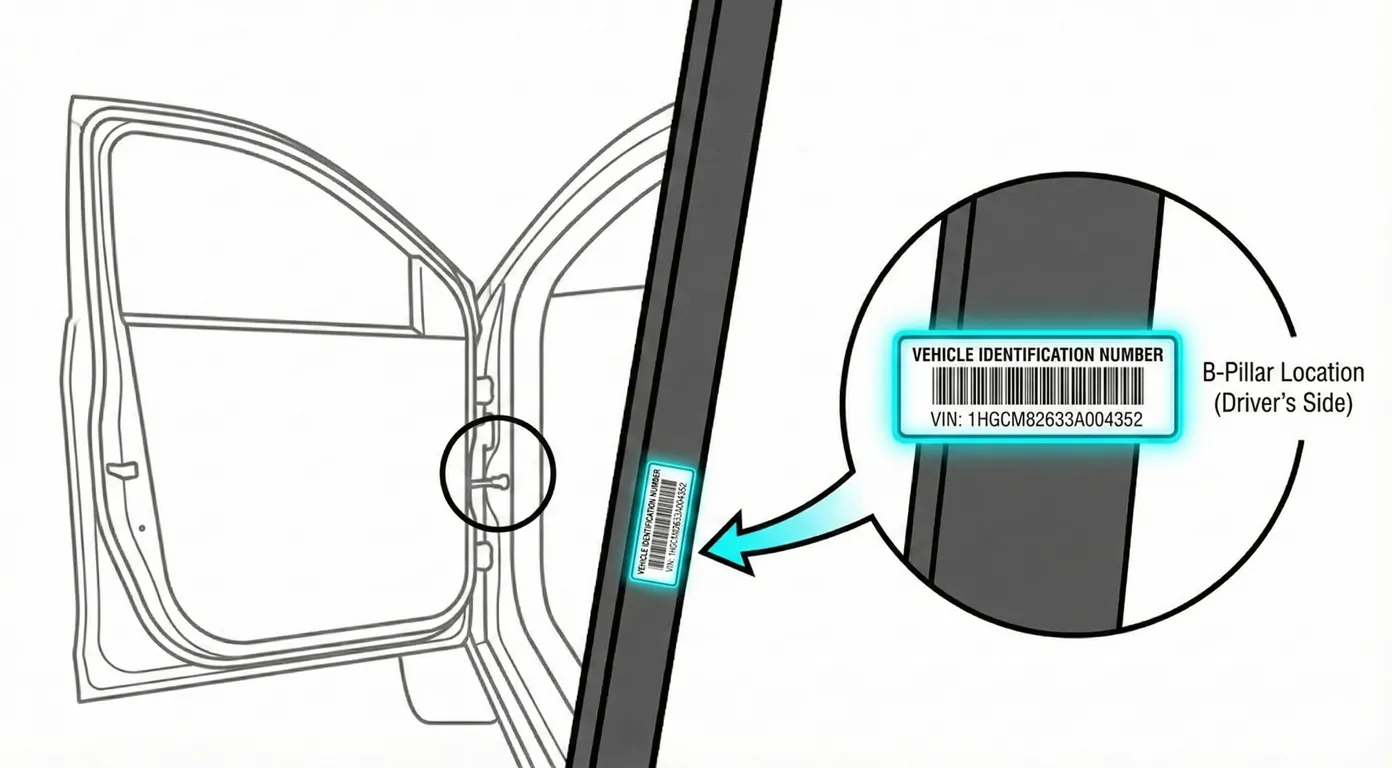
- Where to look: Open the driver’s door and look at the lower section of the B-pillar (the center pillar). You’ll find a black/white sticker showing the VIN plus production and paint info.
- Access: Easy—clean, well-lit, and readable without removing parts, but it can be worn or faded on older/high-mileage cars.
- Note: Works the same way in LHD and RHD cars (it’ll be on the driver’s side for that market).
- Tip: If the label is faded, scan the VIN with your phone using the free VIN reader so you don’t misread letters/numbers.
Floor pan stamped VIN (under front passenger seat) 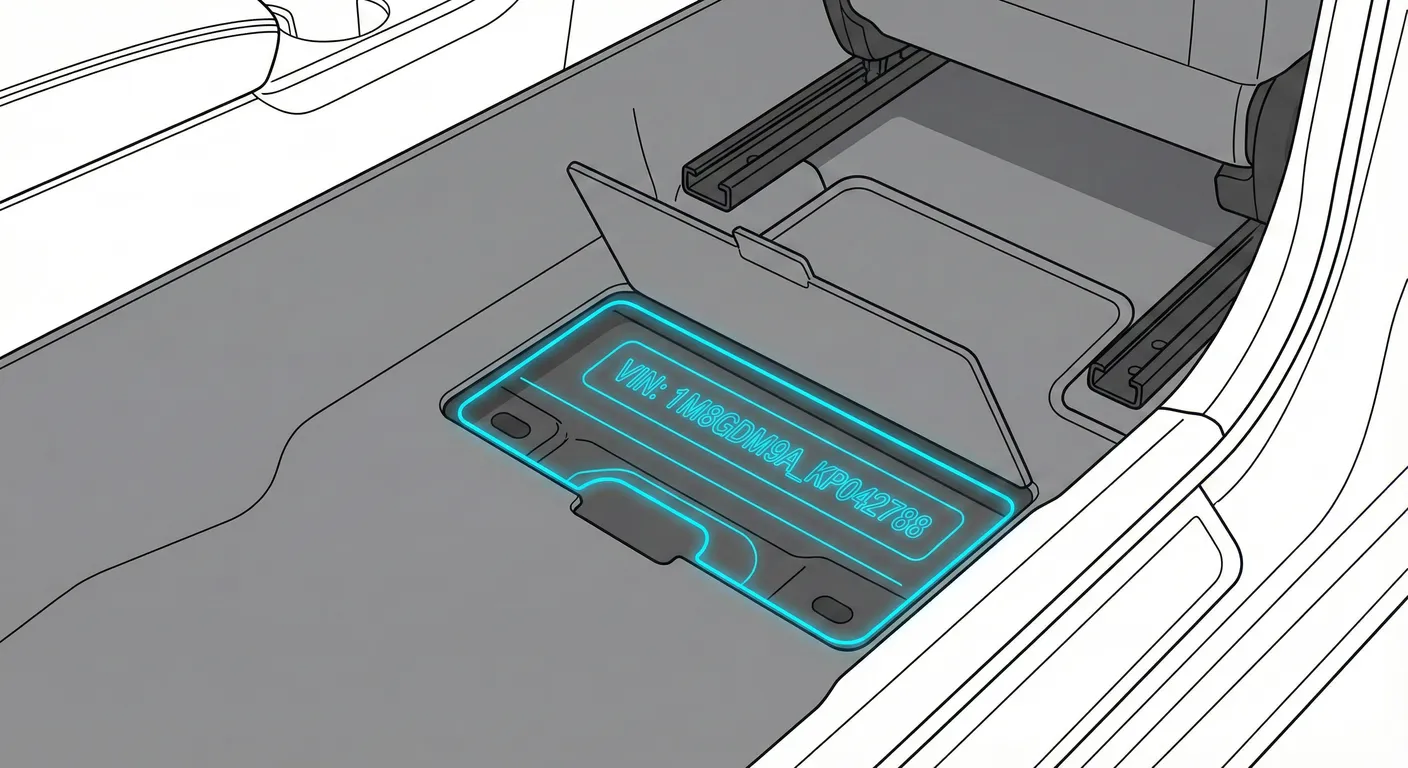
- Where to look: Inside the cabin, move the front passenger seat all the way back. On the floor cross-member directly under the seat (commonly on the right side for LHD vehicles), locate the pre-cut carpet flap—it blends in with the carpet and is held down with Velcro. Lift the flap to reveal the stamped VIN.
- Access: Moderate—dark under the seat, and the flap is “hidden in plain sight.” The stamped characters can be body-color painted, so contrast is low.
- Note: For RHD markets, if you don’t find it under the passenger seat, check under the driver’s seat as well.
- Tip: Because it’s shadowy and low-contrast, use ScanVin.app’s flashlight + OCR to scan it directly instead of trying to decipher the stamp by eye.
VIN plate visible through windshield (dashboard) 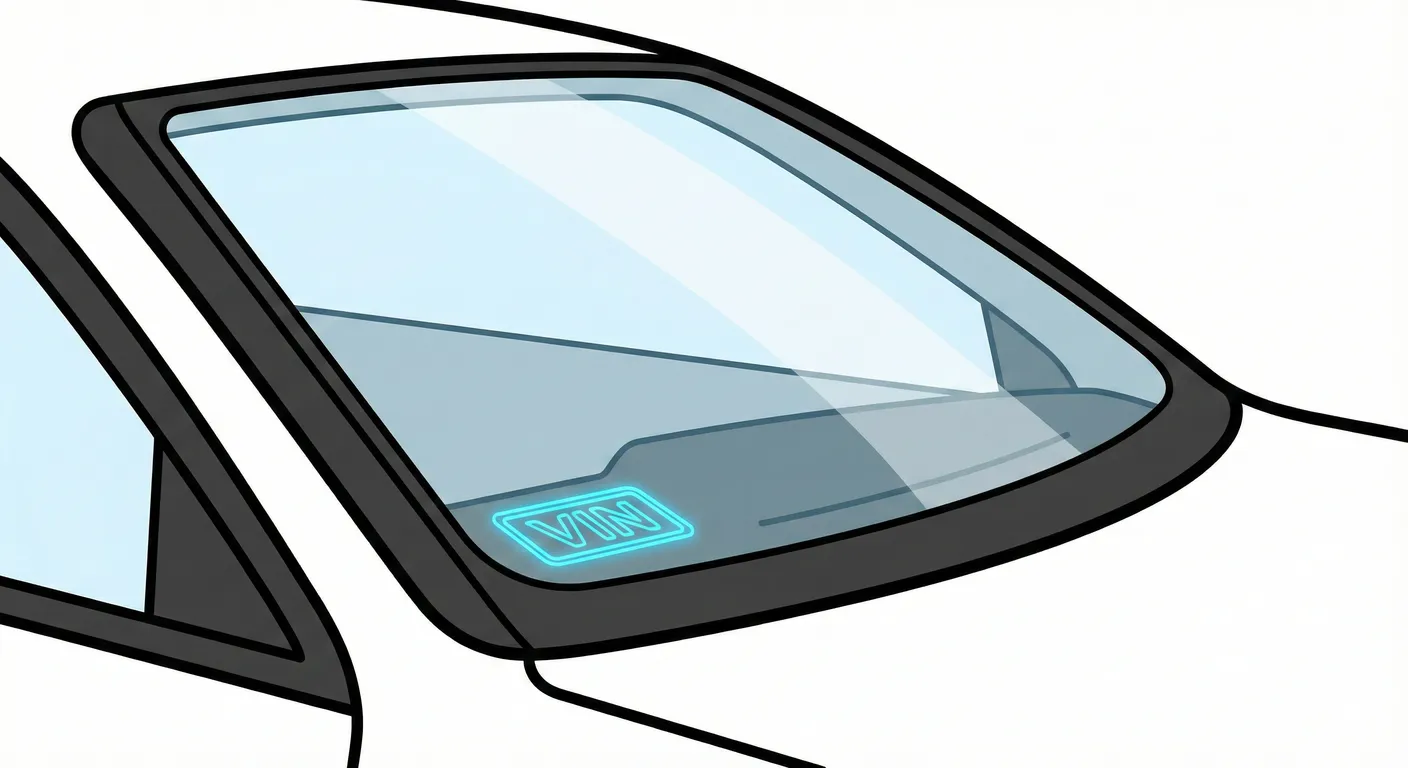
- Where to look: From outside the car, look through the lower corner of the windshield on the driver’s side. The VIN is displayed on the standard dash-mounted plate.
- Access: Easy to find, but reflections and glare can make it annoying to photograph cleanly.
- Note: Best checked in daylight with the camera held close to the glass.
- Tip: If glare/reflections keep ruining your photo, capture it quickly with your phone using ScanVin.app to avoid transcription mistakes.
Video Guide
Video Tutorial: VIN Number Locations - Hyundai Elantra (2017-2018)
- Clear, well-lit walkthrough showing the windshield VIN, the B-pillar label, and how to pull up the Velcro carpet flap to reach the stamped VIN under the seat.
Common Problems & Troubleshooting
- Can’t find the floor VIN under the seat: The carpet flap is pre-cut and sits flush—slide the seat fully back and feel for the Velcro seam before you start prying at trim.
- Stamped VIN is hard to read: It’s often painted and low-contrast—aim a flashlight at an angle and try from different viewpoints (side-lighting makes the characters pop).
- Door jamb sticker doesn’t match or looks tampered with: Treat it as a red flag—always verify the stamped floor VIN matches the label and windshield plate before buying.
Frequently Asked Questions
Where is the VIN on Hyundai Elantra GT?
Check the VIN certification label on the driver’s side B-pillar (door jamb) first. You can also find a stamped VIN on the floor pan under the front passenger seat, under a Velcro-secured carpet flap.
Which VIN location is the most important for Hyundai Elantra GT?
The stamped VIN on the body (floor pan under the seat) is the most authoritative because it’s physically part of the chassis. The door-jamb label and windshield VIN are convenient for quick checks but should match the stamped VIN.
Ready to scan?
Start the scanner and scan the VIN in seconds. No registration, no fees.
Check other generations of this model
Note on Data Sources
Information about VIN location in this model comes from aggregation of official technical documentation (OEM) and spare parts catalogs. Despite careful algorithmic verification, the data is for reference purposes only. Final vehicle identification should always be confirmed by an authorized technician.
See how we verify data and build our database →