
Where is the VIN in the Hyundai Santa Fe?
Select your car's generation to see the exact VIN number locations
VIN Location Overview for Hyundai Santa Fe
4 generationsSelect the generation of your car to see the exact VIN number locations
| Generation & Years | Typical VIN Locations | Details | |
|---|---|---|---|
| | III DM 2013 2013 | Dashboard / Windshield Driver’s Door Pillar (B-Pillar) Driver’s Door Edge (Bonus Location)
+2 | View details |
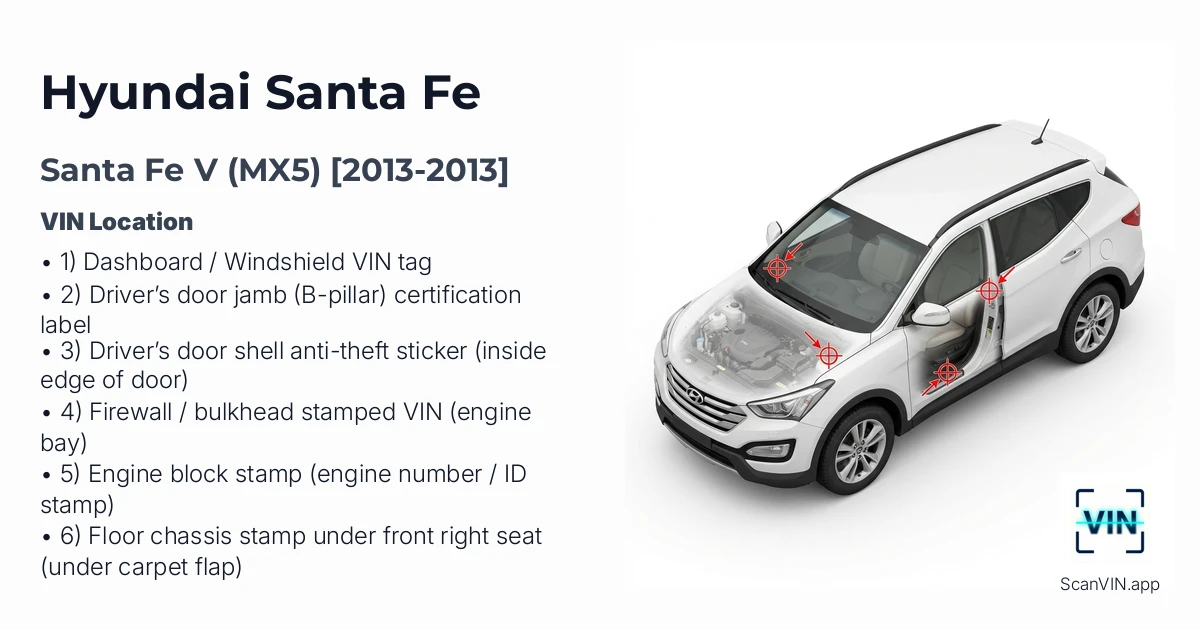 | V Mx5 2013 2013 | 1) Dashboard / Windshield VIN tag 2) Driver’s door jamb (B-pillar) certification label 3) Driver’s door shell anti-theft sticker (inside edge of door)
+3 | View details |
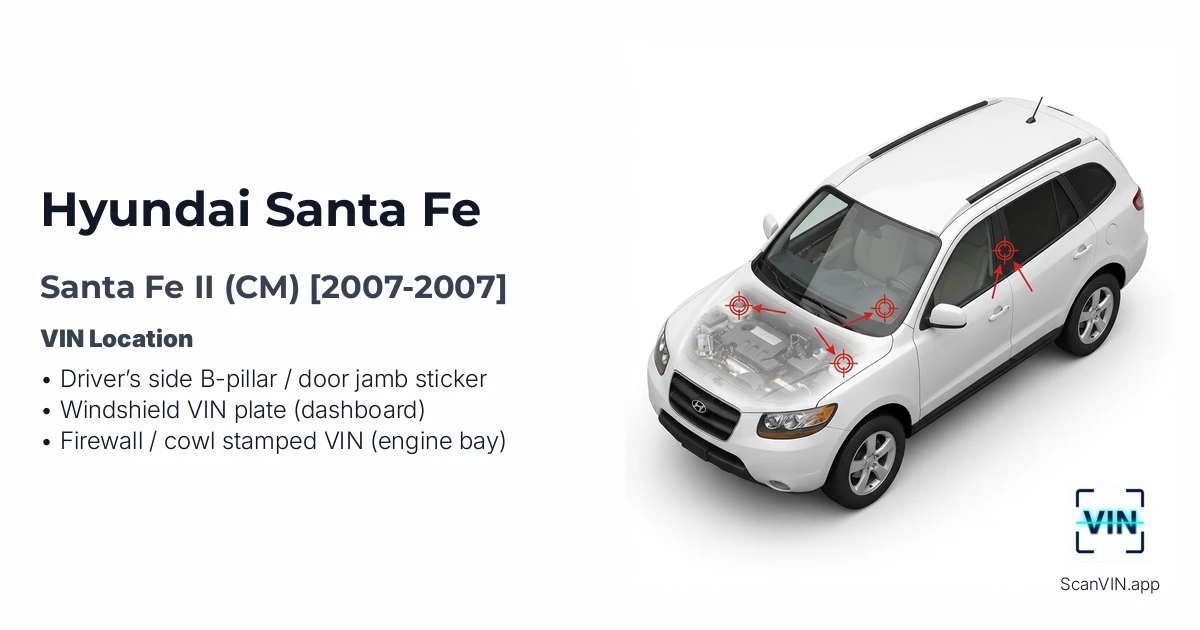 | II CM 2007 2007 | Driver’s side B-pillar / door jamb sticker Windshield VIN plate (dashboard) Firewall / cowl stamped VIN (engine bay) | View details |
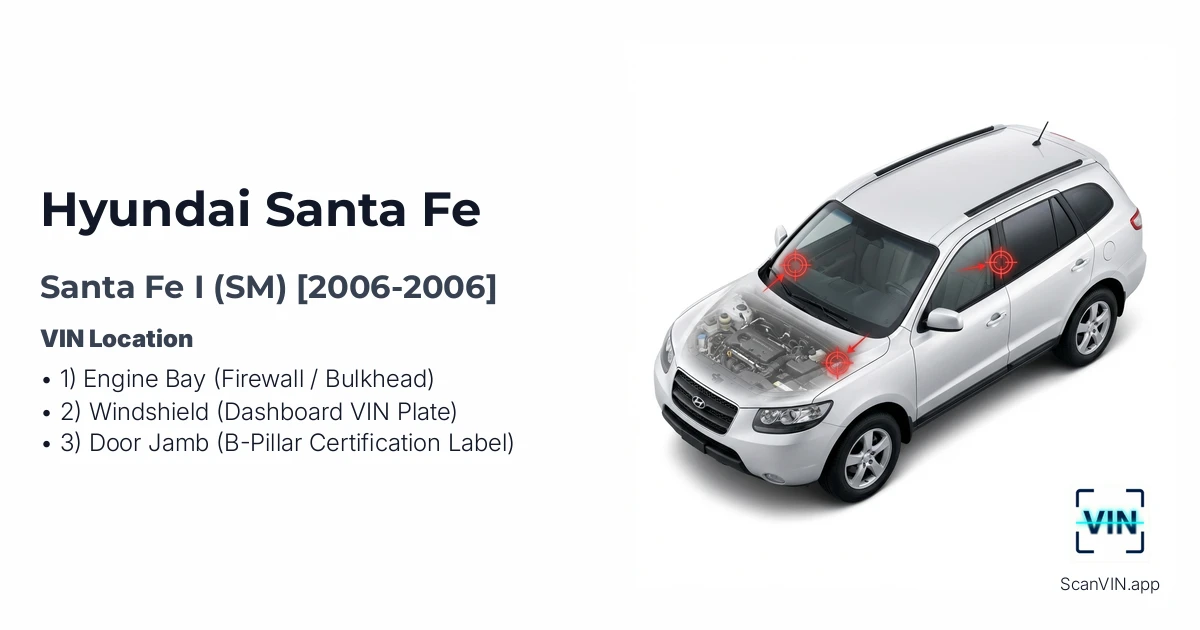 | I Sm 2006 2006 | 1) Engine Bay (Firewall / Bulkhead) 2) Windshield (Dashboard VIN Plate) 3) Door Jamb (B-Pillar Certification Label) | View details |
III DM 2013 2013
V Mx5 2013 2013
II CM 2007 2007
I Sm 2006 2006
Hyundai Santa Fe Santa Fe III (DM) [2013-2013]
Quick response
Quick Answer: The most reliable VIN location for the Hyundai Santa Fe is the stamped chassis number under the front right (passenger) seat. It’s engraved into the metal cross-member under a pre-cut carpet flap—use a flashlight because it’s dark and usually dusty.
This guide covers the VIN (chassis number) locations on the Hyundai Santa Fe III (DM) produced between 2013–2013, including the easy-to-check label locations and the hard-to-fake stamped chassis number.
Chassis Number Locations
Dashboard / Windshield 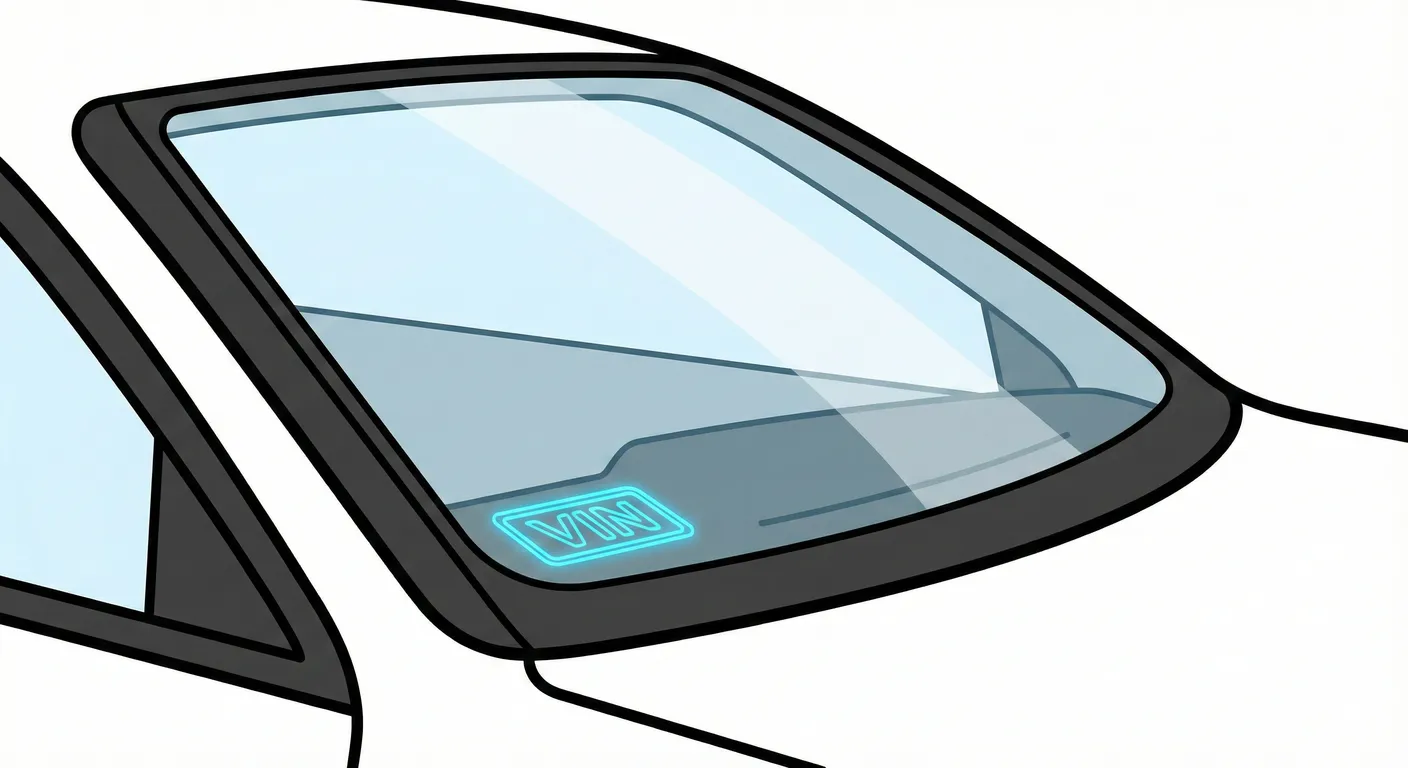
- Where to look: From outside the vehicle, look through the lower corner of the windshield on the left (driver’s) side. The VIN is on a metal plate set into the dashboard where it meets the glass.
- Access: Low difficulty. No tools needed, but glare/reflections on the windshield can hide characters.
- Note: For RHD markets, the windshield VIN typically shifts to the other side of the car, so check the opposite lower corner if you don’t see it.
- Tip: If glare is washing out the digits, scan it instantly with your phone camera so you don’t misread similar characters like 8/B or 5/S.
Driver’s Door Pillar (B-Pillar) 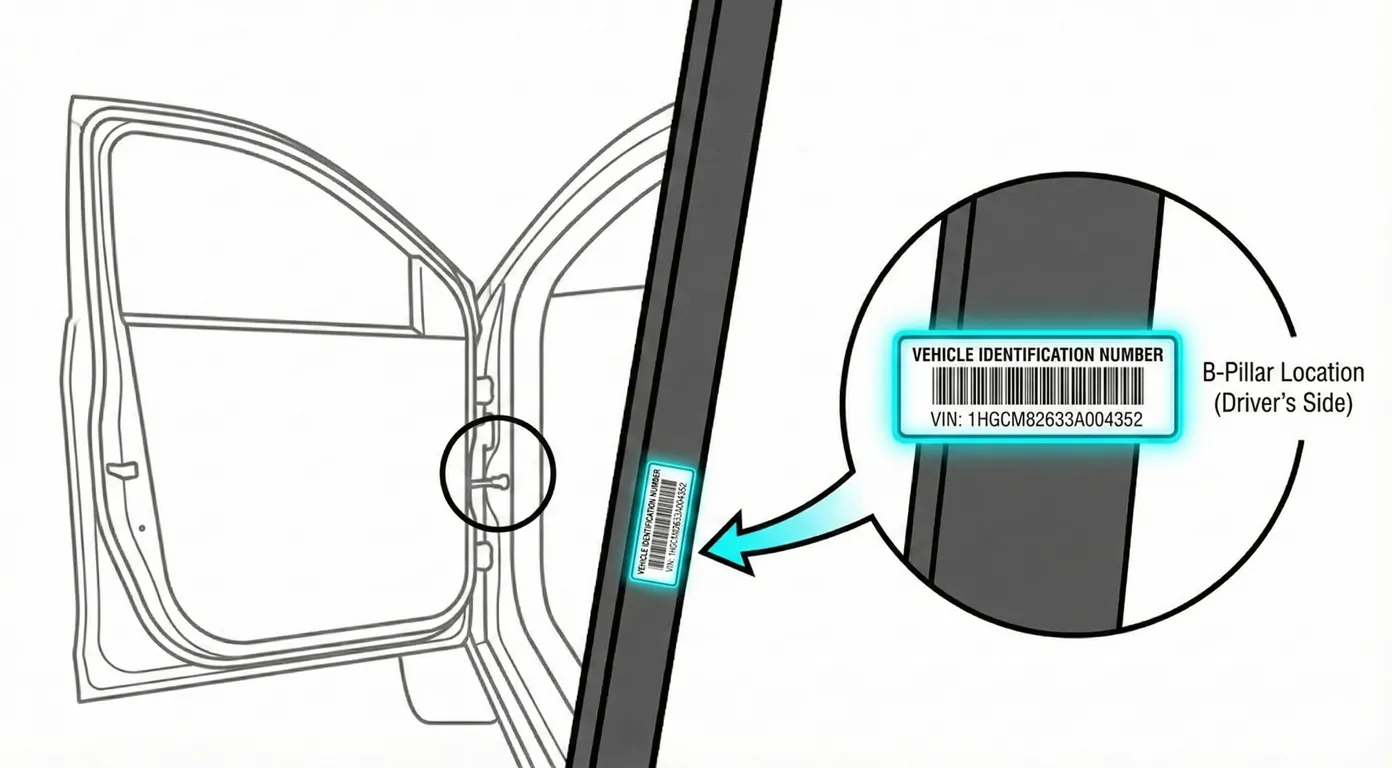
- Where to look: Open the driver’s door and inspect the lower section of the B-pillar/body frame. You’re looking for a black Vehicle Certification label/sticker showing the VIN plus production/tire info.
- Access: Low difficulty. Just open the door; wipe the label if it’s dusty or worn from use.
- Note: This is one of the best “daily” VIN checks because it’s clear and easy to photograph.
- Tip: For fast, accurate capture (especially if the sticker is slightly faded), use the free VIN reader to scan the label instead of typing it out.
Driver’s Door Edge (Bonus Location)
- Where to look: Check the vertical edge of the driver’s door shell (the door itself, not the body frame). There may be a small white anti-theft VIN sticker.
- Access: Medium difficulty. This sticker is often missing after repainting/door replacement and can be damaged by seatbelt strikes.
- Note: Treat this as a backup only—door stickers are easier to remove/replace than stamped numbers.
- Tip: Because you’ll be leaning into the door opening and the sticker can be partly torn, capture it with a quick scan to avoid transcription mistakes.
Passenger Floor (Stamped Chassis Number) 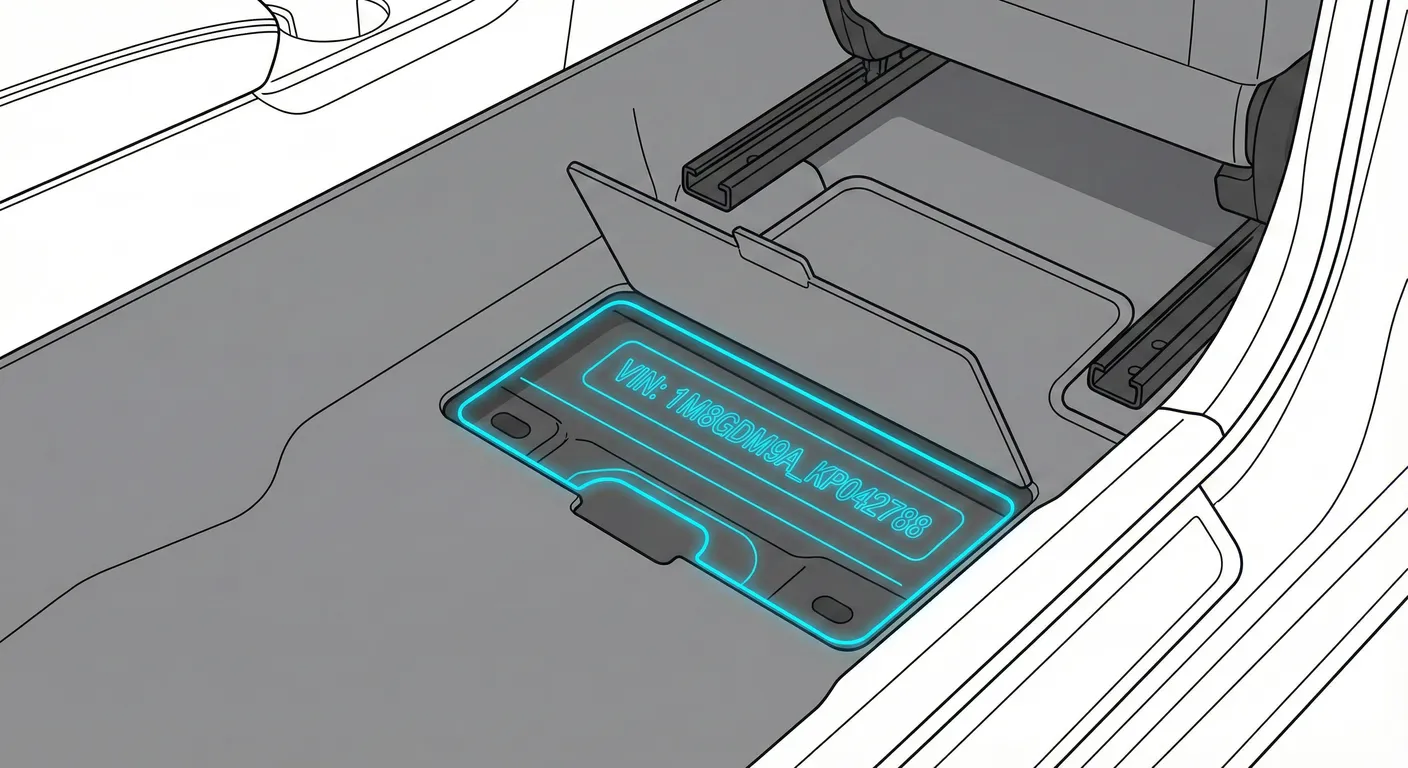
- Where to look: Under the front right seat. Slide the seat fully backward, then lift the pre-cut carpet flap / ducting cover to reveal the VIN stamped into the metal cross-member.
- Access: High difficulty. You’ll be working low to the floor; it’s commonly dark, dusty, and the stamping can be dirty.
- Note (critical): This stamped chassis number is typically on the front footwell floor (commonly passenger side for LHD vehicles, but check the driver side footwell if not found).
- Tip: Use a flashlight and then scan using Flashlight + OCR so you don’t have to write the characters down while crouched in an awkward position.
Engine Bay / Firewall (Secondary) 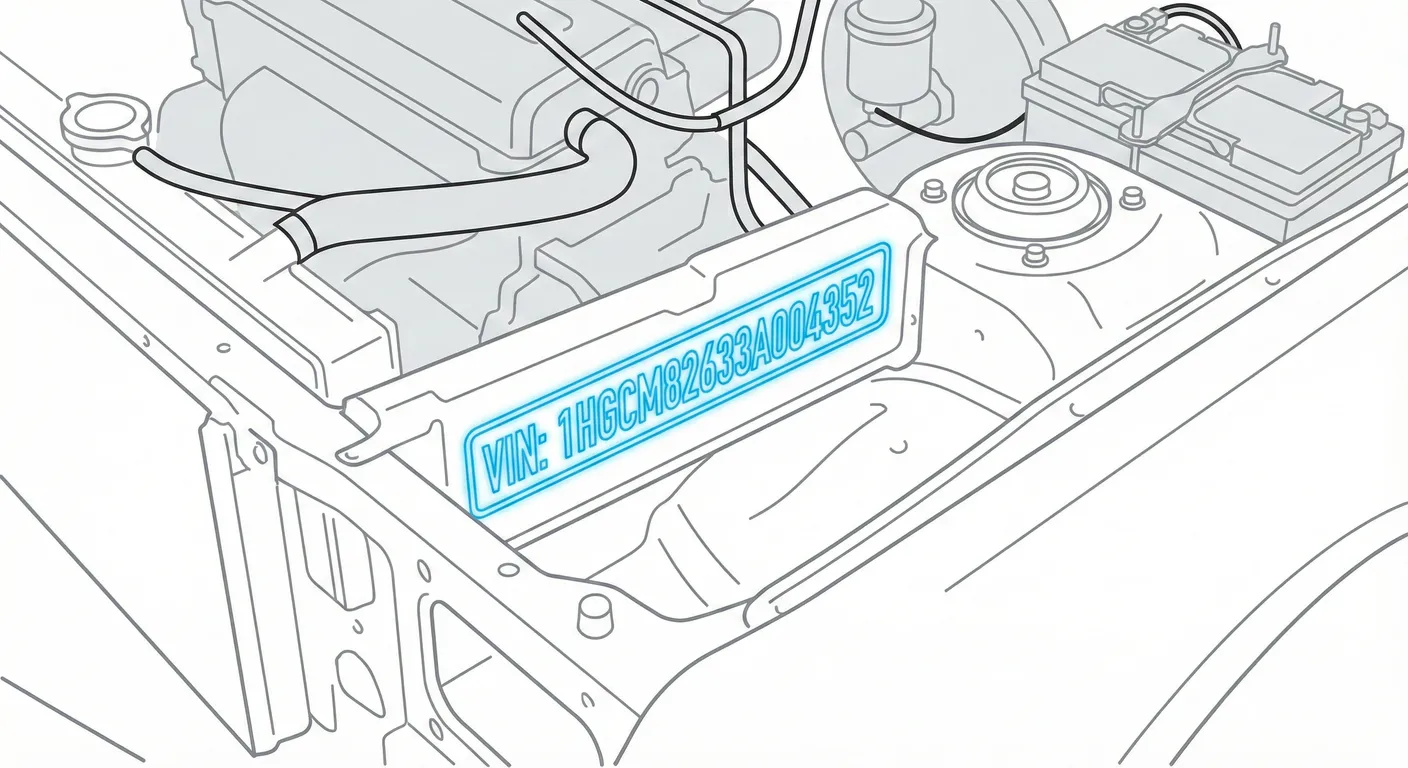
- Where to look: Check the firewall/bulkhead area and nearby supports for a stamped number or a metal ID plate (location varies). It may be offset from center and partially hidden by hoses/covers.
- Access: High difficulty. Expect grime, tight access, and obstructing components—cleaning may be required to read it.
- Note: Use this as a cross-check when inspecting for tampering or paperwork mismatches.
- Tip: If the characters are dirty or faint, lightly clean the area and use High Contrast AI Mode to decipher the stamping instead of guessing worn digits.
Video Guide
Video Tutorial: VIN Locations - Hyundai Santa Fe (2013-2018)
- Walkthrough of the windshield VIN plus the driver’s door/jamb sticker locations for quick identification.
Common Problems & Troubleshooting
- Windshield glare/reflections: Shade the VIN plate with your hand or change viewing angle; reflections can hide 1–2 characters.
- Floor VIN under-seat access: Slide the seat all the way back and lift the carpet flap—bring a flashlight because it’s dark and the stamping can be dusty.
- Sticker validity warning: Door/pillar stickers can be missing, repainted over, or swapped after body repairs—always confirm against the stamped chassis number when buying or verifying identity.
Frequently Asked Questions
Where is the VIN on Hyundai Santa Fe?
Check the VIN plate at the lower corner of the windshield (left/driver side on LHD) and the Vehicle Certification label on the driver’s door B-pillar.
Which VIN location is the most important for Hyundai Santa Fe?
The stamped chassis number in the floor area under the front seat (commonly the front right seat on LHD) is the most important because it’s physically stamped into the body and is the hardest to alter compared with stickers.
Hyundai Santa Fe V (MX5) [2013-2013]
Quick response
Quick Answer: The most reliable VIN location for the Hyundai Santa Fe is the dashboard plate visible through the lower corner of the windshield (driver’s side). It’s read from outside the vehicle at the base of the glass—watch for reflections and hold your phone flat to the windshield.
This guide covers the VIN (Vehicle Identification Number) locations on the Hyundai Santa Fe V (MX5) [2013-2013], helping you find the VIN quickly for registration, insurance, buying checks, or parts matching.
Chassis Number Locations
1) Dashboard / Windshield VIN tag
- Where to look: From outside the SUV, look through the lower corner of the windshield on the driver’s side. The VIN is on a plate mounted on top of the dashboard and is readable through the glass.
- Access: Low difficulty. Reflections from clouds/trees can hide characters; you’ll usually need to hold the camera close and fairly flat against the glass.
- Note: This is the most common “consumer-facing” VIN spot for LHD vehicles.
- Tip: If glare makes it hard to read, scan it directly with ScanVin.app’s VIN reader to capture the code cleanly without transcription mistakes.
2) Driver’s door jamb (B-pillar) certification label
- Where to look: Open the driver’s door and check the B-pillar door jamb (the body-side frame). Look for a black/white (or black/silver) certification label listing VIN, tire pressures, and weight ratings.
- Access: Low difficulty. Sticker can be faded, torn, or peeling on older vehicles.
- Note: Great secondary verification point if you suspect windshield plate tampering.
- Tip: If the label is faded, use the phone scan tool to grab the characters quickly instead of guessing worn letters.
3) Driver’s door shell anti-theft sticker (inside edge of door)
- Where to look: On the inside edge of the driver’s door itself (not the body frame). Check below the door latch mechanism for a small tamper-proof label.
- Access: Low difficulty. Often missing, painted over, or replaced if the door has been repaired or swapped.
- Note: Treat this as a backup identifier, not the primary VIN source.
- Tip: If the print is small, capture it with your phone scanner to avoid misreading tight, condensed characters.
4) Firewall / bulkhead stamped VIN (engine bay)
- Where to look: Open the hood and inspect the metal firewall (bulkhead) near the cowl area, around the center or slightly to the right. The VIN is stamped into the sheet metal.
- Access: High difficulty. Often obscured by hoses, insulation/sound deadening, and grime; you’ll need strong light and patience.
- Note: This is a physical body stamp, useful for deeper verification when labels look suspicious.
- Tip: If dirt and shadows hide the stamp, use ScanVin.app in High Contrast AI scanning mode to pull characters out of grimy metal without awkward manual copying.
5) Engine block stamp (engine number / ID stamp)
- Where to look: On a machined flat surface of the engine block—the code is stamped directly into the metal.
- Access: Very high difficulty. Commonly corroded/rusted and hard to reach; may require cleaning (rag/degreaser, brush) to become readable.
- Note: This is mainly for confirming whether the engine appears original; it’s not the easiest consumer VIN check.
- Tip: If the stamp is rusty or greasy, try a high-contrast phone scan so you’re not squinting and writing numbers in an awkward position.
6) Floor chassis stamp under front right seat (under carpet flap)
- Where to look: Inside the cabin, slide the front right-hand seat back and look for a pre-cut flap in the carpet. Lift the flap to reveal the VIN stamped into the floor/cross-member.
- Access: Medium difficulty. Requires moving the seat and lifting carpet/plastic trim; the area is dark and the stamp can be dusty.
- Note: In many LHD vehicles, this front right seat area is commonly the passenger side, but if you don’t find it there, check the opposite front footwell area as well.
- Tip: Because it’s dark under the seat, use ScanVin.app with your phone flashlight and OCR scanning to read the stamp without wrestling with a torch and handwritten notes.
Video Guide
Video Tutorial: VIN Locations - Hyundai Santa Fe (2013-2018)
- A clear walkthrough showing the windshield VIN plate and the driver door jamb (B-pillar) certification label.
Common Problems & Troubleshooting
- Windshield glare/reflections: Move your body to shade the plate, clean the glass, and hold the phone flat to the windshield to reduce distortion.
- Floor stamp hard to see: Slide the seat fully back, lift the carpet flap carefully, and use a flashlight—dust and shadows hide stamped characters easily.
- Sticker vs. stamped VIN mismatch: Door stickers can be replaced after repairs; for serious verification, cross-check the windshield plate with the firewall/floor stamped VIN before buying.
Frequently Asked Questions
Where is the VIN on Hyundai Santa Fe?
Start with the dashboard VIN plate visible through the lower driver-side windshield corner. Next, check the certification label on the driver’s door jamb (B-pillar).
Which VIN location is the most important for Hyundai Santa Fe?
For quick verification and paperwork, the windshield/dashboard VIN is the primary reference. For anti-tamper confirmation, the stamped body VIN (firewall or floor stamp under the front seat carpet flap) is the most authoritative because it’s physically stamped into the chassis.
Hyundai Santa Fe Santa Fe II (CM)
Quick response
Quick Answer: The most reliable VIN location for the Hyundai Santa Fe is the driver’s side B-pillar / door jamb VIN sticker. It’s typically on the vertical pillar between the front and rear doors (visible when you open the driver’s door). Expert tip: this spot is protected and high-contrast, so it’s usually the fastest to read and scan.
This guide shows you where to find the VIN (chassis number) on the Hyundai Santa Fe II (CM) produced between 2007–2007. Use these locations to verify the vehicle identity for registration, parts lookup, or a pre-purchase check.
Chassis Number Locations
Driver’s side B-pillar / door jamb sticker
- Where to look: Open the driver’s door and inspect the B-pillar (the vertical pillar between the front and rear doors). Look for a black label with white text in the door jamb/pillar area.
- Access: Easy access with the door open. Usually clean and readable—no tools required.
- Note: The reference vehicle is LHD (left-hand drive), so this label is on the left side of the car.
- Tip: Because it’s high-contrast, you can usually scan it directly with the free VIN reader in seconds without zooming or retyping characters.
Windshield VIN plate (dashboard)
- Where to look: Stand outside the car and look through the lower driver’s-side corner of the windshield (bottom-left corner of the glass for LHD). The VIN is on a white/silver plate with black text on top of the dashboard.
- Access: Easy to reach, but reflections/glare are common—especially in bright sunlight or with dusty glass.
- Note: On LHD cars, this is typically on the left side of the dash near the A-pillar.
- Tip: If the windshield is reflecting the sky, change your angle and capture the VIN instantly with your phone to avoid transcription mistakes caused by glare.
Firewall / cowl stamped VIN (engine bay)
- Where to look: Open the hood and check the upper firewall/cowl area (the metal panel at the back of the engine bay, below the windshield). The VIN is stamped directly into the metal, slightly toward the right side of the car (center-right when you’re facing the engine).
- Access: Moderate difficulty. The stamp can be dusty, slightly recessed under the cowl overhang, and lighting can be dim. Wipe the area before reading.
- Note: On the LHD reference vehicle, it’s still on the upper firewall/cowl area, just offset from center.
- Tip: If the characters look faint or the area is dirty, wipe it and use High Contrast AI Mode to scan the stamp so you don’t misread worn digits.
Video Guide
Video Tutorial: Hyundai Santa Fe 2007 – OBD Port & VIN Number Location | Quick DIY Guide
- A clear walkthrough showing the OBD port plus the main VIN locations (door jamb sticker, windshield plate, and firewall stamp) on a 2007 Santa Fe.
Common Problems & Troubleshooting
- Windshield glare/reflections: Clean the glass and change viewing angle (crouch lower or move sideways) to reduce reflections that hide digits.
- Firewall stamp hard to read: Dust and the recessed position under the cowl can shadow the stamping—scrub lightly and use a flashlight for better contrast.
- Sticker mismatch warning: Door jamb stickers can be replaced after repairs; always cross-check the sticker VIN against the windshield VIN and the stamped firewall VIN for consistency.
Frequently Asked Questions
Where is the VIN on Hyundai Santa Fe?
Check the driver’s side B-pillar/door jamb VIN sticker first, then verify it on the windshield VIN plate at the lower driver’s-side corner.
Which VIN location is the most important for Hyundai Santa Fe?
The stamped VIN on the body (firewall/cowl stamp) is the hardest to tamper with and is typically the most authoritative for identity verification, but you should confirm it matches the windshield plate and the door jamb sticker.
Hyundai Santa Fe Hyundai Santa Fe I (SM) [2006-2006]
Quick response
Quick Answer: The most reliable VIN location for the Hyundai Santa Fe is the stamped VIN on the engine bay firewall/bulkhead. It’s typically stamped high up at the back of the engine bay, slightly to the passenger side of center near the weatherstrip. Expert tip: bring a flashlight—this area is usually shadowy and can be dirty.
This guide shows where to find the VIN (chassis number) on the Hyundai Santa Fe I (SM) produced between 2006–2006, including the most trustworthy “permanent” stamped location and the quick-to-check display/sticker locations.
Chassis Number Locations
1) Engine Bay (Firewall / Bulkhead)
- Where to look: Open the hood. Locate the stamped 17-character VIN on the metal firewall (bulkhead/cowl panel) at the back of the engine bay. It’s typically slightly to the passenger side of the center line, high up near the rubber weatherstrip.
- Access: Moderate. The stamp can be covered with road grime/dust, and the rear of the engine bay is dark—use a flashlight and wipe the area with a rag (a soft brush helps).
- Note: Described for LHD vehicles. (On RHD models, the dashboard and door sticker positions swap sides, but the firewall stamp is still at the rear of the engine bay.)
- Tip: If the characters are faint or dirty, scrub lightly and use High Contrast AI Mode—you can scan the stamped VIN directly instead of guessing worn digits.
2) Windshield (Dashboard VIN Plate)
- Where to look: Stand outside on the driver’s side and look through the lower corner of the windshield. The VIN plate is riveted to the dashboard and reads through the glass.
- Access: Easy. Sometimes glare, tint, or a cracked windshield makes it harder to read.
- Note: For RHD markets (UK/AU/etc.), this plate is typically visible from the right-side lower windshield corner.
- Tip: If glare/reflections are washing out the digits, capture the VIN with your phone in one clean shot so you don’t transpose characters like B/8, S/5, or 0/O.
3) Door Jamb (B-Pillar Certification Label)
- Where to look: Open the driver’s door. Look on the driver’s side B-pillar (the vertical post where the door latches) for the black certification sticker (or a metal plate in some regions) showing the VIN plus other build info.
- Access: Easy. Usually clear unless the label is torn, repainted over, or worn from cleaning.
- Note: On RHD vehicles, the label is typically on the right-side B-pillar.
- Tip: If the sticker is scratched or low-contrast, use the VIN scanner to read it accurately without manually typing it.
Common Problems & Troubleshooting
- Firewall stamp is hard to see: The rear of the engine bay is often dark and dirty—use a flashlight and wipe the metal clean before reading/scanning.
- Windshield VIN has glare: Sunlight reflections and glass angle can hide characters—shade the area with your hand and change viewing angle, or scan it.
- Sticker vs. stamp mismatch: The door jamb sticker can be replaced (paint/bodywork, door swap). For verification, the stamped firewall VIN is the key “hard” identifier.
Frequently Asked Questions
Where is the VIN on Hyundai Santa Fe?
Check the stamped VIN on the engine bay firewall/bulkhead (rear of the engine bay, slightly passenger side of center). Also check the VIN plate visible through the lower corner of the windshield on the driver’s side.
Which VIN location is the most important for Hyundai Santa Fe?
The most important VIN is the permanently stamped chassis number on the firewall/bulkhead in the engine bay, because it’s part of the body structure and is the primary verification point if stickers or plates have been replaced.
Don't see your generation?
Try scanning simple VIN code. Our scanner will automatically identify the Make, Model and Generation.
Scan VINNote on Data Sources
Information about VIN location in this model comes from aggregation of official technical documentation (OEM) and spare parts catalogs. Despite careful algorithmic verification, the data is for reference purposes only. Final vehicle identification should always be confirmed by an authorized technician.
See how we verify data and build our database →