
Quick response
Quick Answer: The most reliable VIN location for the KIA Cee'd I is the passenger floor cross member under the front seat. It’s stamped into metal under a small carpet flap in the front footwell area. Push the seat fully back and use a flashlight—the stamp sits in a dark, shadowed spot.
![VIN location KIA Cee'd I [2007-2011]](/_astro/vin-location-kia-ceed-i-2007-2011.Kwj0uxZ6.webp)
Where is the VIN number in KIA Cee'd I (2007-2011)?
This guide shows where to find the VIN/chassis number on the KIA Cee'd I, produced between 2007–2011, including the hidden stamped VIN used for identity checks.
Chassis Number Locations
1) Passenger Floor Cross Member 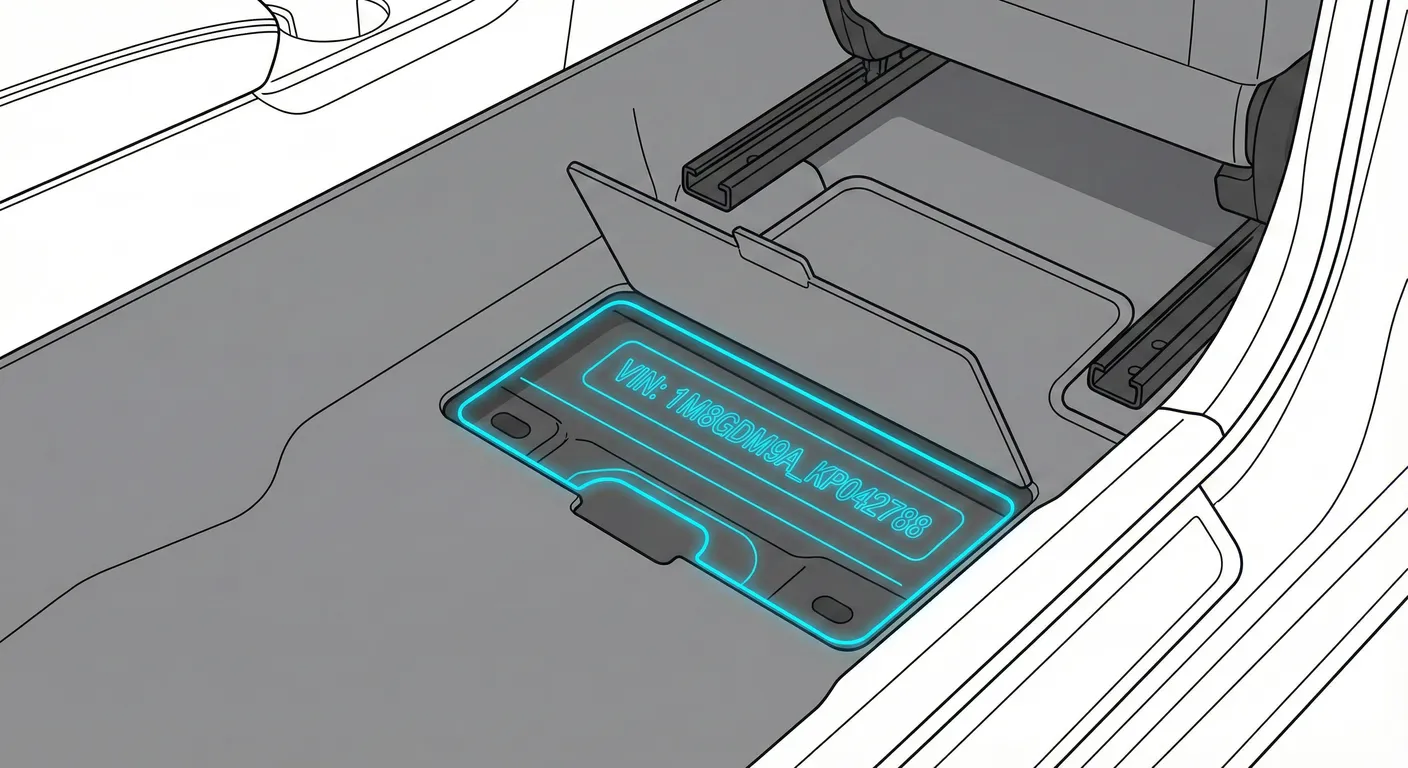
- Where to look: On the floor pan directly under the front passenger seat, under a rectangular cutout/flap in the carpet. Lift the flap to reveal the VIN stamped into the metal cross member.
- Access: Slide the front seat all the way back to its rear stop, then pry/lift the carpet flap to expose the stamping. Expect low light under the seat and in the footwell.
- Note: The vehicle shown is LHD and the VIN is on the right-side floor (commonly the passenger side for LHD vehicles, but check the driver side footwell if not found—especially on RHD cars).
- Tip: Because it’s dark and you’re working in an awkward position, scan it directly with your phone using ScanVin.app’s flashlight + OCR instead of trying to read and write down the characters under the seat.
2) Dashboard / Windshield (not shown in video) 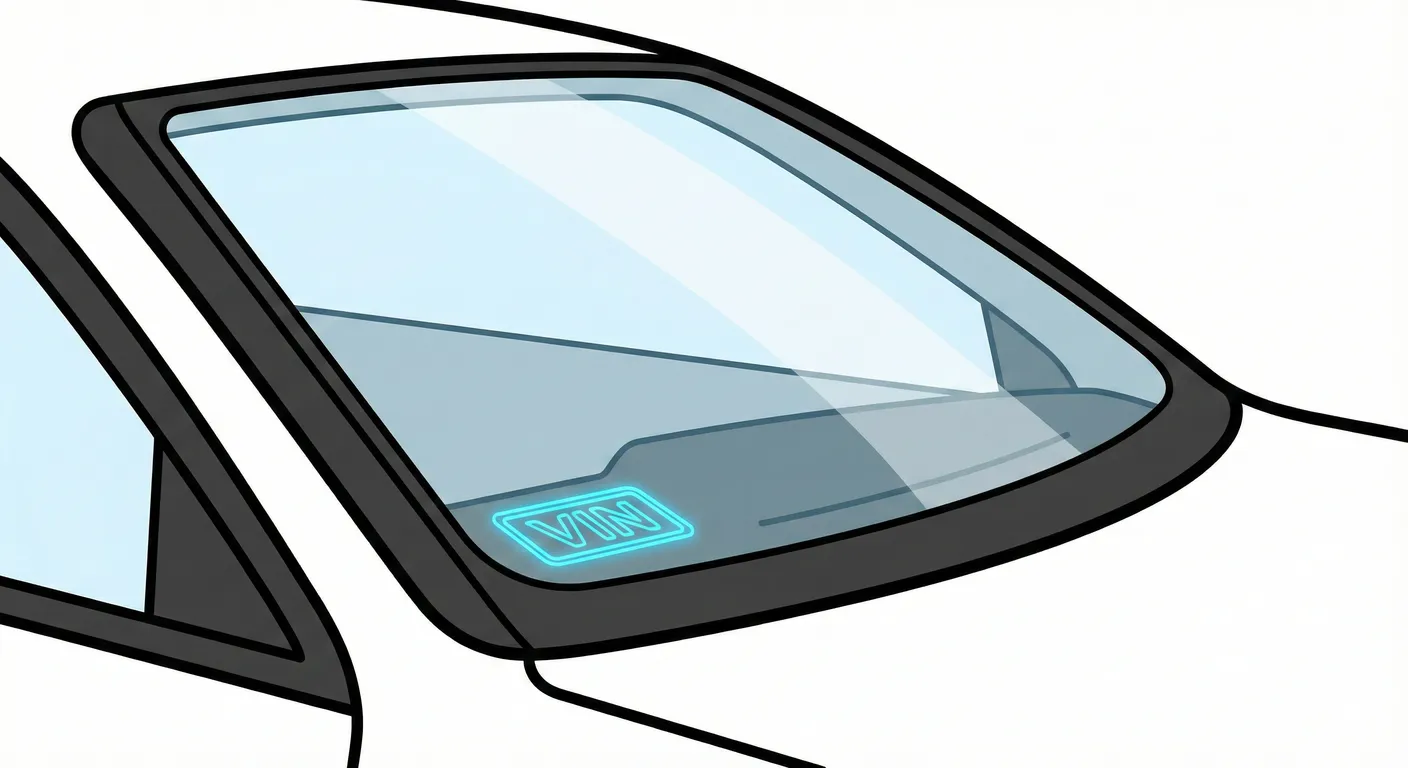
- Where to look: At the bottom corner of the windshield on the dashboard (the typical “visible VIN” location on many modern cars).
- Access: View it from outside the car through the glass; you may need to change your angle to reduce reflections.
- Note: This location is often the quickest for a basic VIN check, but always compare it to the stamped chassis VIN for anti-tamper verification.
- Tip: If glare/reflections make it hard to read, capture the VIN cleanly with the ScanVin.app VIN scanner to avoid transcription errors.
3) B‑Pillar Identification Plate (not shown in video) 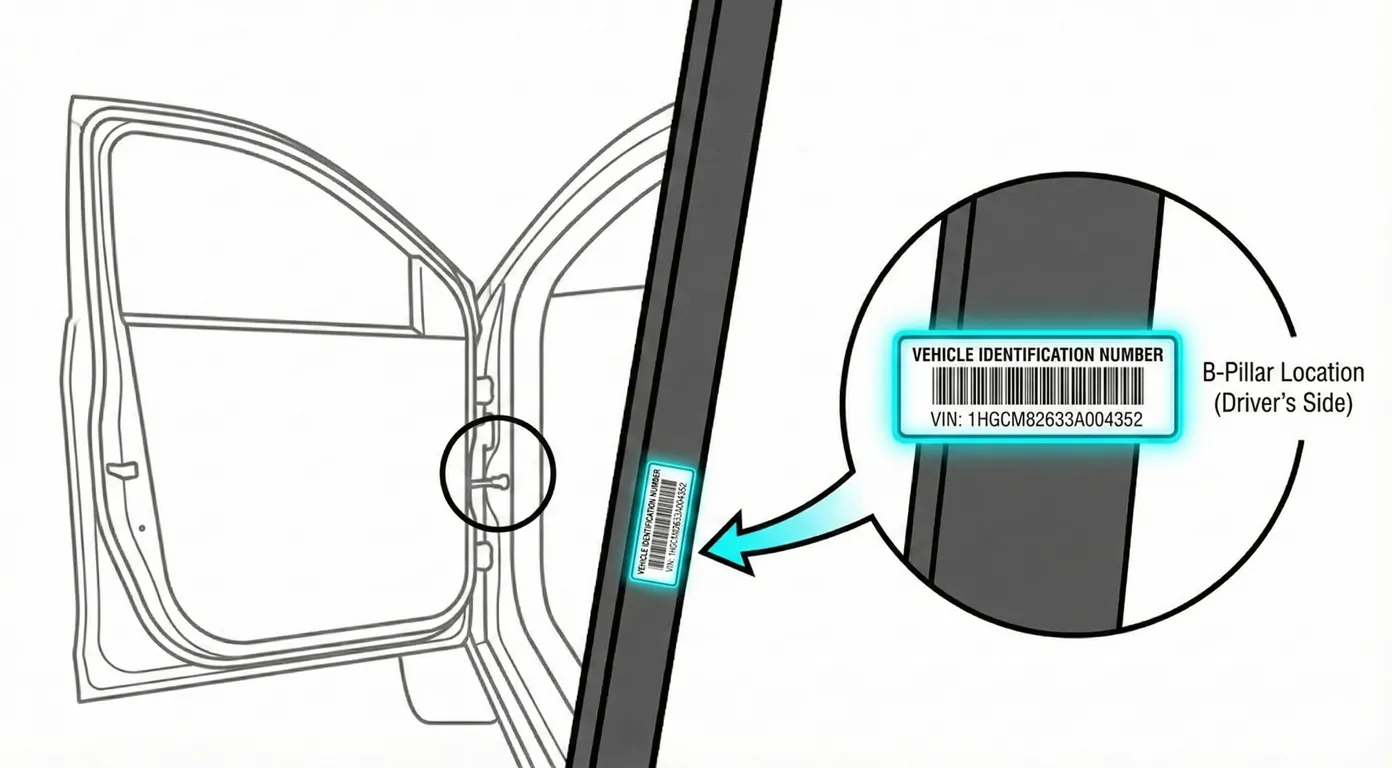
- Where to look: On the B‑pillar door jamb area (commonly a sticker/plate visible when a front door is open).
- Access: Open the front door and inspect the pillar/jamb surfaces for the manufacturer label.
- Note: Stickers/plates can be missing, replaced, or painted over—use the stamped floor VIN as your hard check when you’re verifying identity.
- Tip: If the label is faded or scratched, use ScanVin.app to scan the characters instead of squinting and guessing.
Video Guide
Video Tutorial: Where is the VIN number of my Kia Ceed I ( 2006 – 2012 ) - YouTube
- Clear POV demo: opens the passenger door, slides the seat back, lifts the carpet flap, and shows the stamped VIN on the floor cross member.
Common Problems & Troubleshooting
- Too dark under the seat: The seat and footwell create heavy shadows—use a flashlight and clean, direct lighting to make the stamped characters pop.
- Carpet flap is hard to spot / access is awkward: Slide the seat fully back and feel for the rectangular cutout in the carpet; don’t force trim—just lift the flap carefully.
- Sticker/plate doesn’t prove everything: Door-jamb labels can be replaced—when buying or verifying the car, always cross-check the stamped chassis VIN against paperwork.
Frequently Asked Questions
Where is the VIN on KIA Cee'd I [2007-2011]?
The most reliable spot is the stamped VIN on the passenger-side front floor cross member under the front seat (under a carpet flap). You may also find a visible VIN at the bottom corner of the windshield.
Which VIN location is the most important for KIA Cee'd I [2007-2011]?
The stamped chassis VIN (under the seat/floor area) is the most important for identity verification because it’s physically stamped into the body and is harder to replace than a label or plate.
Ready to scan?
Start the scanner and scan the VIN in seconds. No registration, no fees.
Check other generations of this model
Note on Data Sources
Information about VIN location in this model comes from aggregation of official technical documentation (OEM) and spare parts catalogs. Despite careful algorithmic verification, the data is for reference purposes only. Final vehicle identification should always be confirmed by an authorized technician.
See how we verify data and build our database →