
Where is the VIN in the Mitsubishi Lancer?
Select your car's generation to see the exact VIN number locations
VIN Location Overview for Mitsubishi Lancer
2 generationsSelect the generation of your car to see the exact VIN number locations
| Generation & Years | Typical VIN Locations | Details | |
|---|---|---|---|
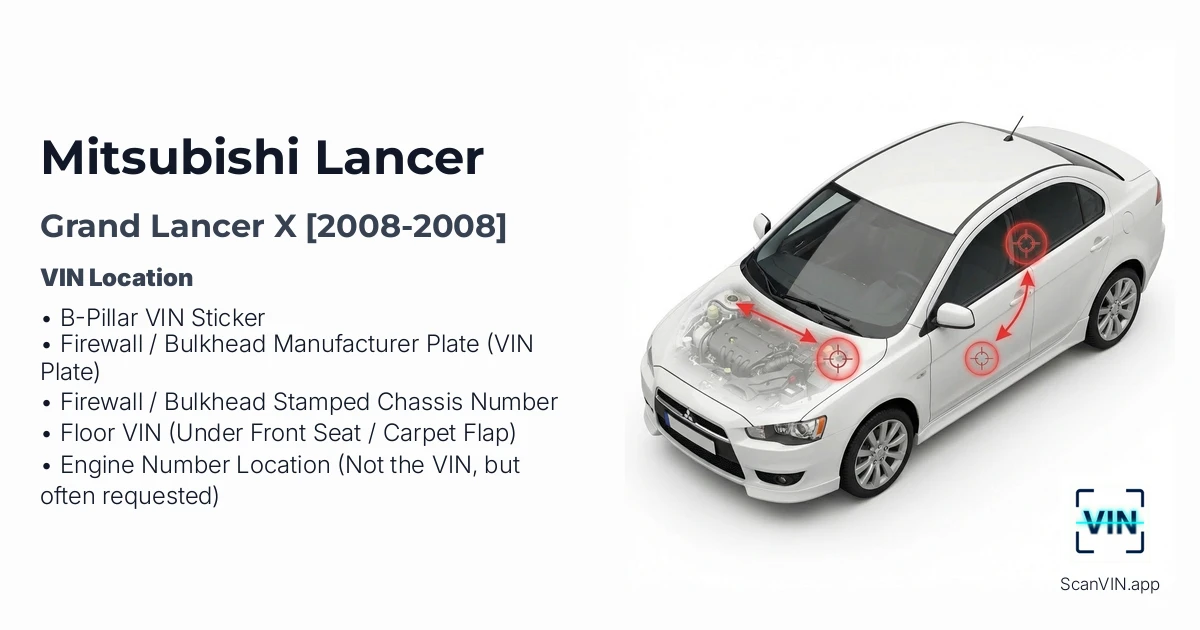 | Mitsubishi Grand Lancer X 2008 2008 | B-Pillar VIN Sticker Firewall / Bulkhead Manufacturer Plate (VIN Plate) Firewall / Bulkhead Stamped Chassis Number
+2 | View details |
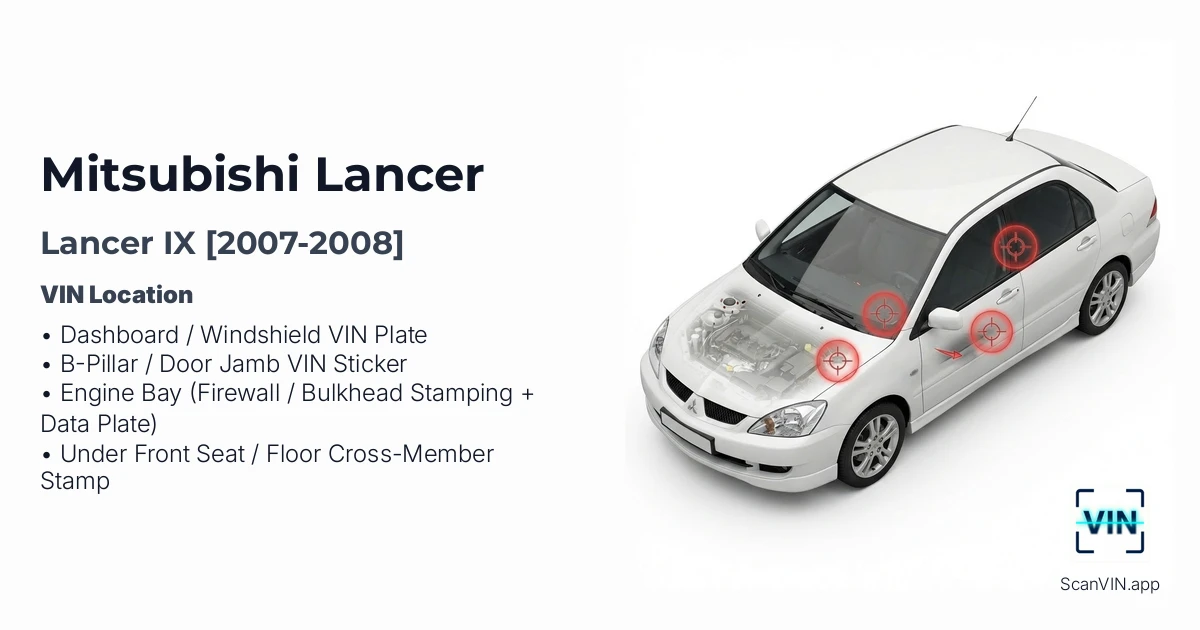 | IX 2007 2008 | Dashboard / Windshield VIN Plate B-Pillar / Door Jamb VIN Sticker Engine Bay (Firewall / Bulkhead Stamping + Data Plate)
+1 | View details |
Mitsubishi Lancer 2008-2008
Quick response
Quick Answer: The most reliable VIN location for the Mitsubishi Grand Lancer X is the stamped chassis number on the firewall/bulkhead in the engine bay. It’s typically stamped into the painted metal on the upper center/left area (when you’re facing the engine), just below the cowl weather strip. Expert tip: it sits in shadow—wipe it clean and use a flashlight to read it.
This guide covers the VIN (chassis number) locations on the Mitsubishi Grand Lancer X (2008-2008), including the common stamped body locations and the easier-to-scan plates/stickers.
Chassis Number Locations
B-Pillar VIN Sticker 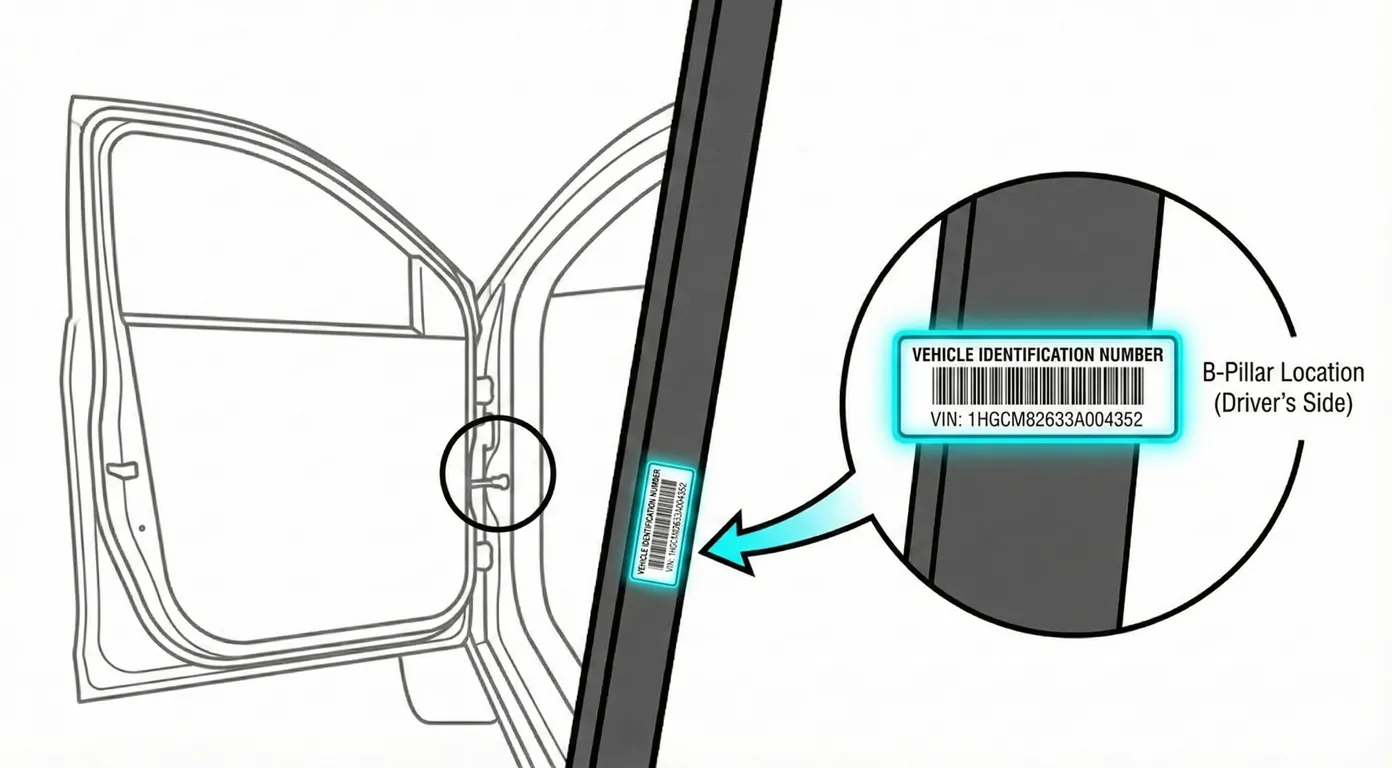
- Where to look: Open the front door and look at the lower section of the B-pillar (the pillar between the front and rear doors). It’s typically a black sticker with white text.
- Access: Low difficulty. Easy access and usually high contrast/legible.
- Note: On LHD vehicles, this sticker is often on the driver-side door jamb (left side); on other markets it may appear on the passenger side.
- Tip: If you want to avoid misreading characters, scan the sticker in one shot with your phone so OCR captures the VIN cleanly.
Firewall / Bulkhead Manufacturer Plate (VIN Plate) 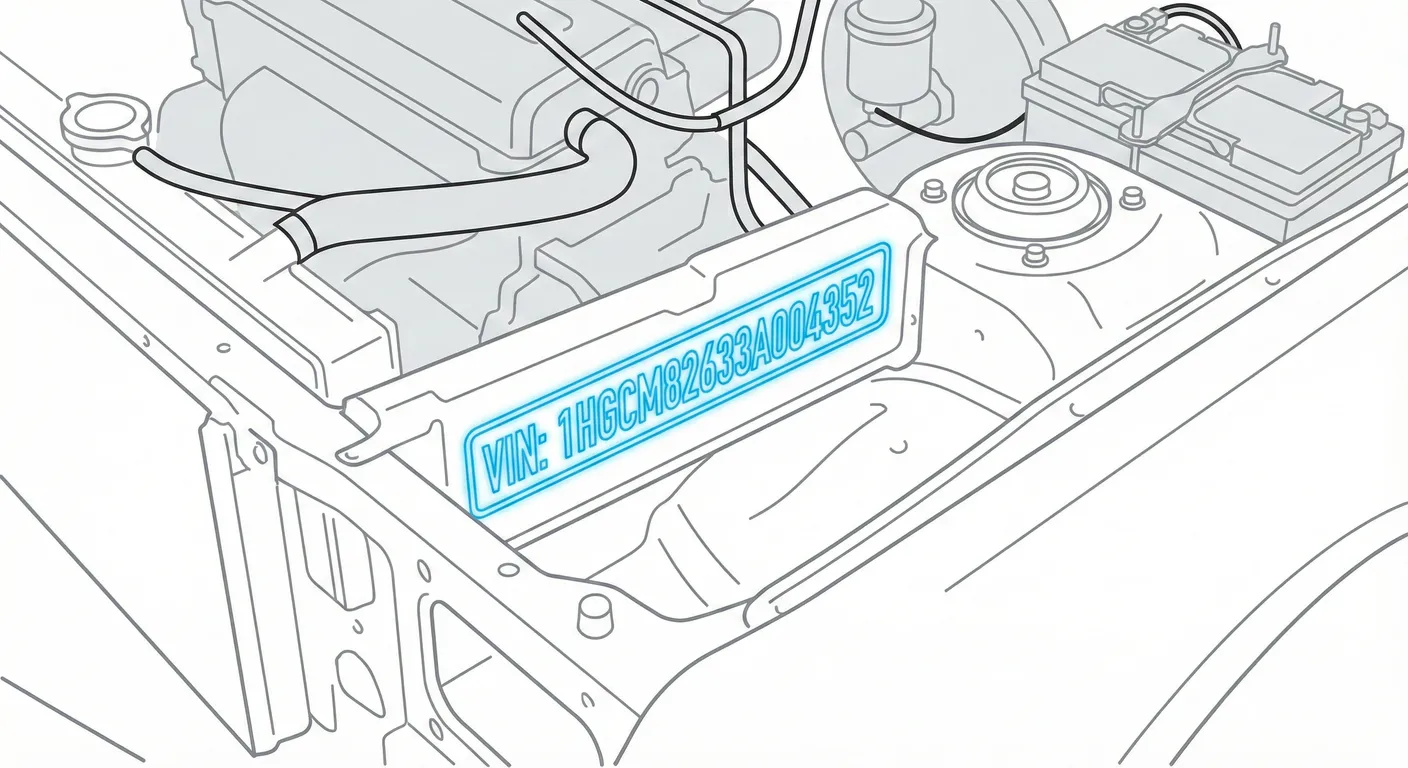
- Where to look: In the engine bay, find a rectangular riveted metal plate on the firewall/bulkhead (position can be slightly left/right depending on market). It typically lists VIN, model code, engine code, and color code.
- Access: Low difficulty. Usually easy to reach and readable, though older plates can oxidize or fade.
- Note: This is one of the best “official-looking” identifiers to cross-check against the stamped chassis number.
- Tip: If the plate is dull or lightly corroded, use the VIN scanner with OCR so the app can pick up characters you might miss by eye.
Firewall / Bulkhead Stamped Chassis Number
- Where to look: In the engine bay, look for the chassis number stamped directly into the metal firewall. It’s typically on the upper center/left area (when facing the engine), just under the cowl weather stripping, partly behind intake piping/manifold area.
- Access: Moderate. Clear stamping, but it’s recessed and commonly dirty; shadows from the cowl/hood make it harder to read.
- Note: This is a key “hard” ID point—inspectors often trust the stamped number more than a sticker.
- Tip: Because it’s shadowed under the cowl, turn on the flashlight and scan it directly after wiping the area for best OCR results.
Floor VIN (Under Front Seat / Carpet Flap) 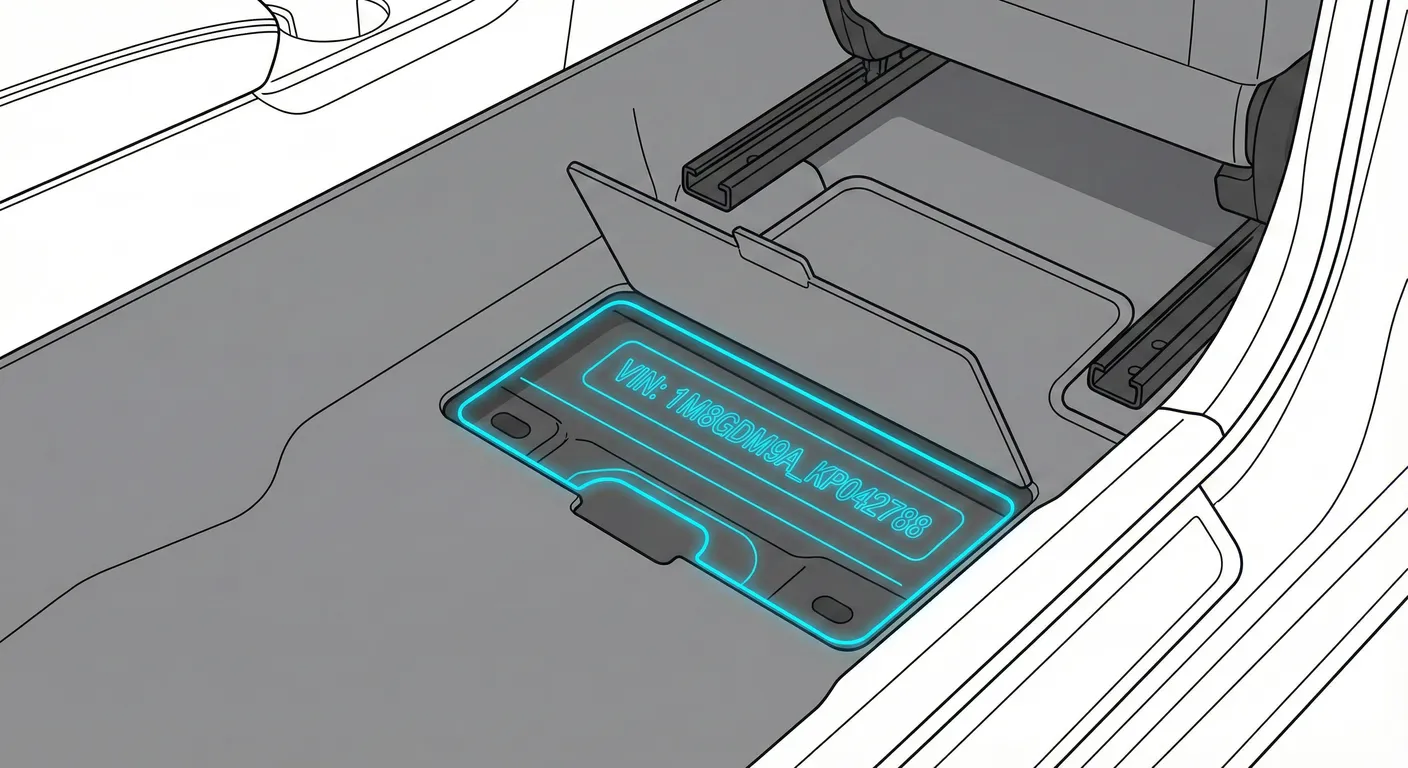
- Where to look: Inside the cabin, the VIN/chassis number is stamped on the floor pan/cross-member under the front seat area.
Access path: slide the seat all the way back, locate the pre-cut carpet flap, then lift the flap to expose the stamped number on the metal. - Access: Medium–High difficulty. You’ll be working in a cramped, dark spot; debris and dust often cover the stamping.
- Note (LHD/RHD): Check the front footwell floor (commonly on the passenger side for LHD vehicles, but check the driver side footwell if not found)—market trims can vary.
- Tip: Since it’s dark and you’ll be holding the phone at an awkward angle, use ScanVin’s flashlight + OCR to capture the code without manually copying it.
Engine Number Location (Not the VIN, but often requested)
- Where to look: The engine number is on the engine block, usually near the transmission bell housing junction, on a flat machined vertical surface (stamped/dot-peened).
- Access: High difficulty. Deep in the bay, often oily/grimy; visibility depends on engine size/trim.
- Note: The engine number is not the same as the VIN—use it as a supporting identifier for registration/inspection where required.
- Tip: If the stamping is greasy or faint, try a high-contrast scan with your phone after wiping the surface clean.
Video Guide
Video Tutorial: MITSUBISHI LANCER CY2A CHASSIS NUMBER, ENGINE ...
- Walkthrough showing the floor VIN under the carpet flap, the B-pillar sticker, and the engine number location.
Video Tutorial: Mitsubishi Lancer | Chassis Plate, Chassis Number & Engine ...
- Clear engine-bay views of the firewall stamped chassis number, the manufacturer VIN plate, and the engine number on the block.
Common Problems & Troubleshooting
- Floor stamping won’t read: Slide the seat fully back, vacuum/scrub the exposed metal, and use a flashlight—crumbs and dirt commonly hide characters under the carpet flap.
- Firewall stamp hard to see: The cowl area casts shadows; wipe grease, then change your viewing angle (phone slightly tilted) to reduce glare and improve contrast.
- Sticker/plate mismatch: Door-jamb stickers can be replaced—always cross-check the stamped body VIN (firewall/floor) against the plate/sticker before buying.
Frequently Asked Questions
Where is the VIN on Mitsubishi Grand Lancer X?
Check the firewall/bulkhead in the engine bay for the stamped chassis number, and the B-pillar door-jamb sticker for a quick, easy-to-read VIN label.
Which VIN location is the most important for Mitsubishi Grand Lancer X?
The stamped chassis number on the vehicle body (firewall/bulkhead and/or floor stamping) is typically the most important because it’s the hardest identifier to tamper with and is used for verification.
Mitsubishi Lancer [2007-2008]
Quick response
Quick Answer: The most reliable VIN location for the Mitsubishi Lancer IX is the VIN plate at the lower corner of the windshield (dashboard area). It’s typically visible from outside the car, looking through the glass at the base of the windshield. Expert tip: tilt your phone to avoid windshield glare so you don’t misread characters.
This guide covers where to find the VIN (chassis number) on the Mitsubishi Lancer IX (2007–2008), including the quick-check public VIN points and the stamped chassis locations used on some market specs.
Chassis Number Locations
Dashboard / Windshield VIN Plate 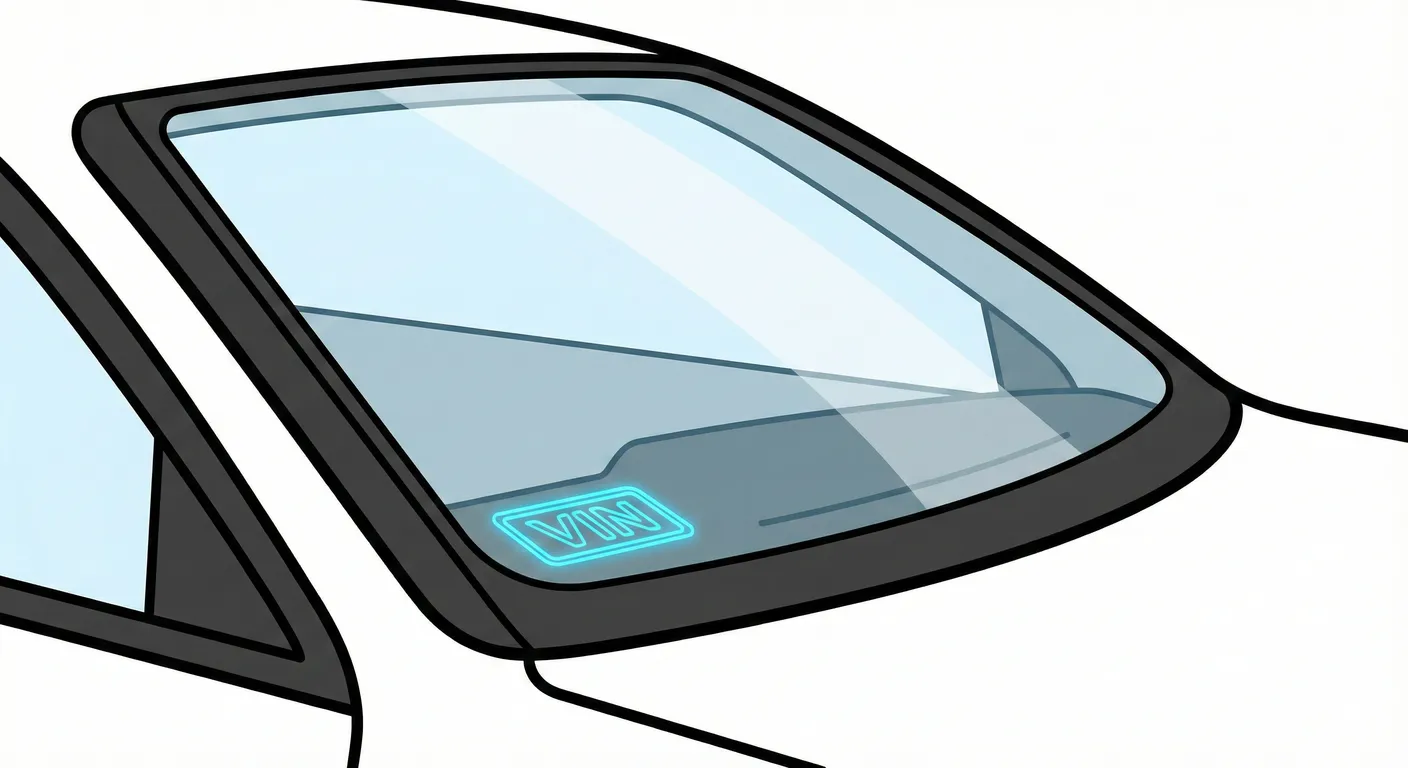
- Where to look: At the lower corner of the windshield, on the top of the dashboard—you read it from outside through the glass (usually the left-side corner for LHD vehicles).
- Access: Easy access, but windshield reflections/glare can wash out the digits; wiper position can partially block your view.
- Note: Best “walk-up” VIN check point for EU/US/LHD cars.
- Tip: If reflections are making it hard to read, capture it cleanly in one shot—use your phone to scan the VIN instantly instead of transcribing through glare.
B-Pillar / Door Jamb VIN Sticker
- Where to look: Open the front door and inspect the B-pillar door jamb area (the vertical pillar where the door latches). Look for a manufacturer label with VIN plus paint/weight info.
- Access: Low difficulty—usually clean, high contrast, and well-lit.
- Note: Great cross-check against stamped VINs (if the car has them).
- Tip: For the fastest, most accurate read, use the free VIN reader on the sticker so you don’t mix up similar characters like B/8 or O/0.
Engine Bay (Firewall / Bulkhead Stamping + Data Plate)
- Where to look: With the hood open, check the metal firewall/bulkhead near the center area, often slightly toward the passenger side depending on market. The VIN may be stamped into the metal, and there’s commonly a riveted manufacturer data plate nearby.
- Access: Generally accessible, but the digits can sit in shadow near the cowl and can be grimy/corroded on older cars. You may need to push aside a hose or wiring loom.
- Note: The example footage is from a RHD car; on LHD cars, the stamping is still on the firewall area but your viewing angle/offset can differ.
- Tip: If the stamping is dirty or lightly rusted, wipe it and then scan it in High Contrast AI mode to pull characters out of faint metal stamps.
Under Front Seat / Floor Cross-Member Stamp
- Where to look: On the floor pan/cross-member under the front seat area, usually under a carpet flap or cut-out. Slide the seat fully back/forward and lift the carpet edge to expose bare metal.
- Access: Awkward and often very dark; high risk of rust and debris making the stamp hard to read.
- Note (important): Check the front footwell floor (commonly on the passenger side for LHD vehicles, but check the driver side footwell if not found). Don’t assume it’s always on the driver’s side.
- Tip: Because it’s dark and you’ll be twisted up trying to read it, scan with Flashlight + OCR so you don’t have to write it down in an uncomfortable position.
Video Guide
Video Tutorial: Mitsubishi Lancer CS3 Chassis Number & Engine Number Location
- Shows the firewall chassis/VIN stamping and nearby data plate, plus an under-seat/floor stamp example (including what heavy rust can look like).
Common Problems & Troubleshooting
- Rust or grime hiding the stamped VIN (firewall/floor): Scrub lightly with a nylon brush and wipe with degreaser; avoid aggressive sanding that can damage characters.
- Floor stamp is unreadable due to corrosion or poor lighting: Use a strong flashlight at a low angle (side-lighting) to cast shadows in the stamped digits.
- Door jamb sticker missing or replaced: Stickers can be removed or swapped—always verify the sticker VIN matches the dash VIN and any stamped chassis number.
Frequently Asked Questions
Where is the VIN on Mitsubishi Lancer IX?
Start with the VIN plate visible through the lower windshield (dashboard area). Next, check the B-pillar/door jamb manufacturer sticker for the VIN label.
Which VIN location is the most important for Mitsubishi Lancer IX?
The windshield/dashboard VIN is the primary quick-ID used for registration and inspections, but you should also confirm it matches the door jamb label and any stamped chassis number (firewall/floor) when available.
Don't see your generation?
Try scanning simple VIN code. Our scanner will automatically identify the Make, Model and Generation.
Scan VINNote on Data Sources
Information about VIN location in this model comes from aggregation of official technical documentation (OEM) and spare parts catalogs. Despite careful algorithmic verification, the data is for reference purposes only. Final vehicle identification should always be confirmed by an authorized technician.
See how we verify data and build our database →