
Quick response
Quick Answer: The most reliable VIN location for the Opel Corsa E is the B-pillar manufacturer sticker (passenger side door jamb). It’s on a high-contrast label visible when you open the front passenger door. Expert tip: this label scans cleanly, but check it hasn’t been scratched, painted over, or peeled.
![VIN location Opel Corsa E [2015-2019]](/_astro/vin-location-opel-corsa-e-2015-2019.B2735bAW.webp)
Where is the VIN number in Opel Corsa E (2015-2019)?
This guide shows the VIN (chassis number) locations on the Opel Corsa E (2015–2019), including the easy-to-see windshield tag, the door-jamb label, and the hidden chassis stamp under the passenger-side carpet.
Chassis Number Locations
1) B-Pillar Manufacturer Sticker (Passenger Side Door Jamb) 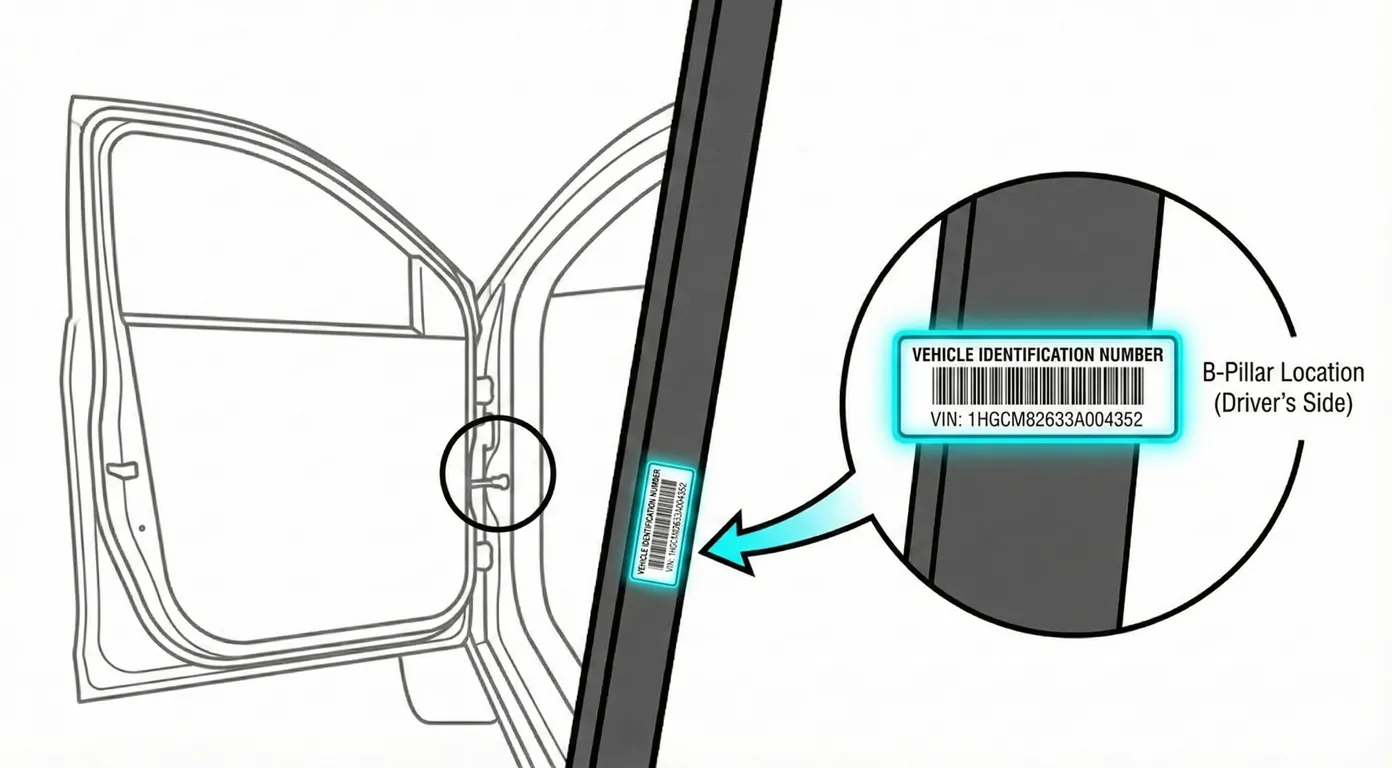
- Where to look: Open the front passenger door and look at the lower B-pillar / door jamb. You’ll see a black manufacturer label with white text that includes the VIN plus weights/paint info.
- Access: Low difficulty. No tools needed—just open the door and read/scan it. Watch for older labels that are scuffed, torn, or peeling.
- Note: This is the best “everyday” VIN check point because it’s high contrast and easy to reach.
- Tip: If you don’t want to risk copying a character wrong, scan it directly with your phone—this label is ideal for fast, accurate OCR.
2) Lower Windshield VIN Plate (Dashboard) 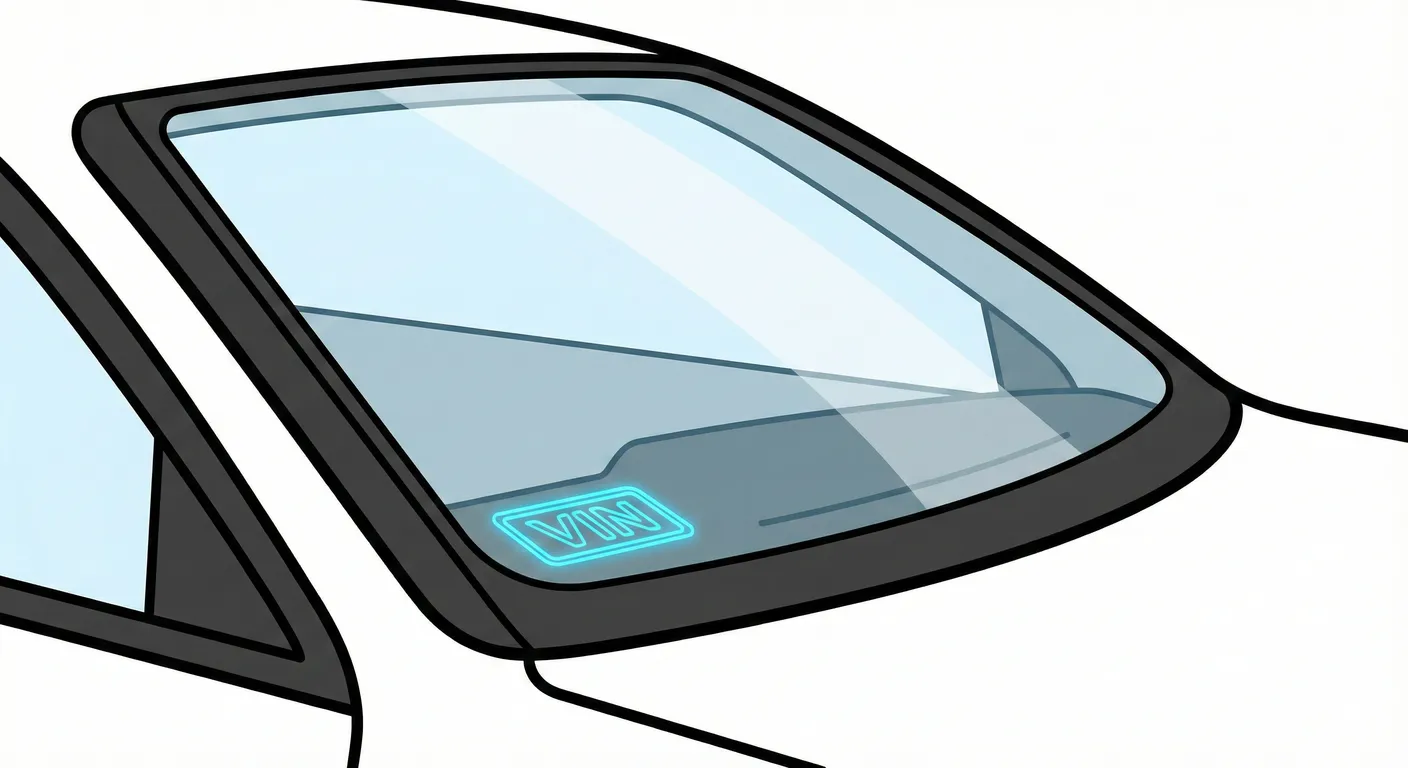
- Where to look: From outside the car, look through the lower corner of the windshield on the passenger side. The VIN tag sits behind the glass on the dashboard.
- Access: Generally easy to access, but glare/reflections on the windshield can hide characters.
- Note: This is a standard public VIN plate used for quick visual checks.
- Tip: When glare makes it hard to read, capture it with the free VIN reader instead of squinting and manually transcribing digits.
3) Floor VIN Stamp (Front Footwell, Under Carpet Flap) 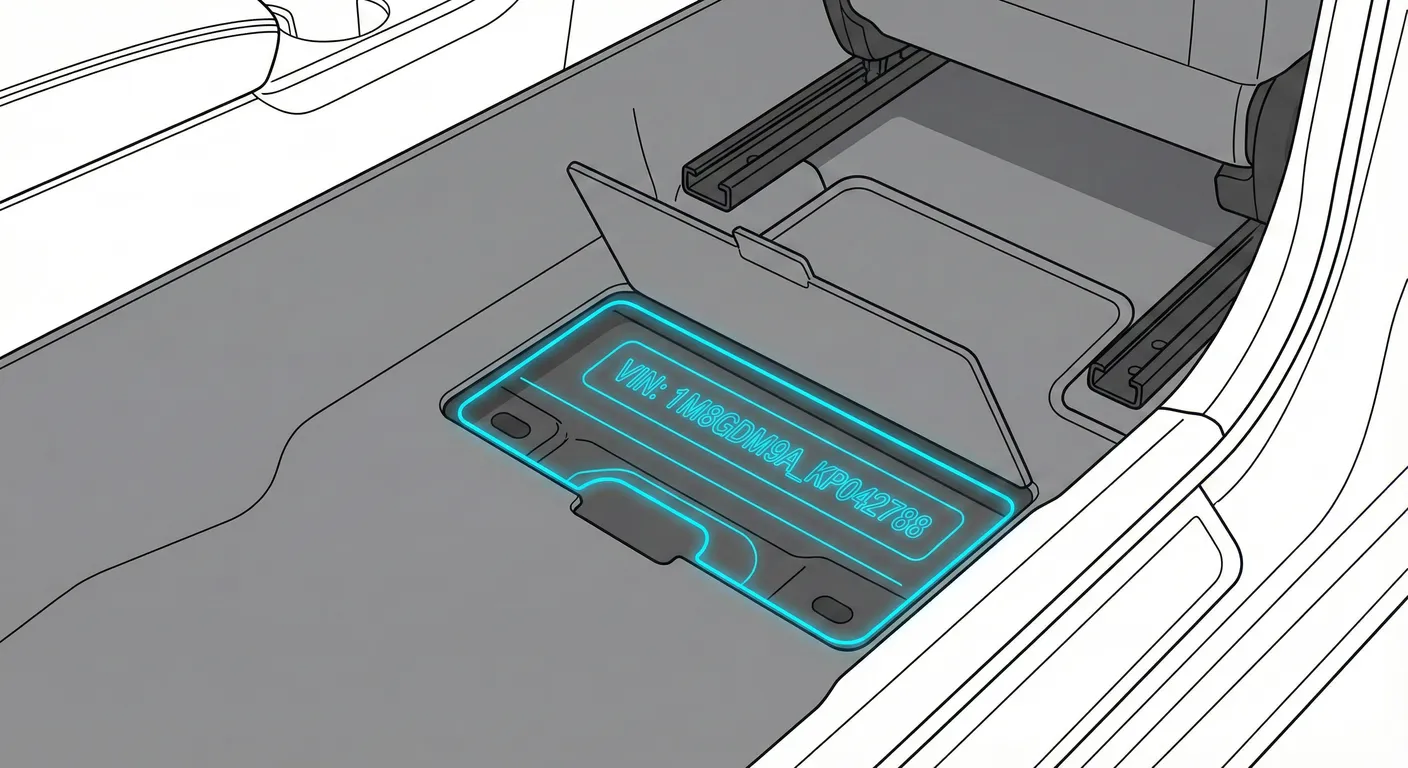
- Where to look: Go to the front passenger footwell (right side on LHD vehicles). Lift the floor mat, then locate the pre-cut rectangular flap in the carpet and lift it to expose the VIN stamped into the chassis metal.
- Access: Medium difficulty. You must move mats and lift the carpet flap; the stamped metal can be low-contrast and the recess is often dark.
- Note: Floor VIN placement is commonly on the right side of the vehicle. On LHD cars that’s usually the passenger footwell—if you don’t find it there, check the driver-side footwell as well.
- Tip: Use light and a steady camera—scan it using Flashlight + OCR so the app can pick up faint stamped characters in the shadowed recess.
Video Guide
Video Tutorial: Where to find the vehicle identification number (VIN) at ... - YouTube
- Clear daylight walkthrough showing the windshield VIN, door-jamb label, and the under-carpet floor stamp (plus document verification).
Common Problems & Troubleshooting
- Windshield glare/reflections: Change your viewing angle, shade the glass with your hand, or scan from inside the cabin to reduce reflections.
- Floor stamp hard to see: Dirt, shadows, and body-color paint over the stamping can hide characters—lift the carpet fully, add light, and wipe the area clean before scanning.
- Sticker validity warning: A B-pillar label can be damaged or replaced—always confirm the VIN matches across multiple locations (windshield + floor stamp + documents).
Frequently Asked Questions
Where is the VIN on Opel Corsa E?
Check the B-pillar manufacturer sticker on the passenger-side door jamb first, then the VIN plate at the lower passenger-side corner of the windshield.
Which VIN location is the most important for Opel Corsa E?
For quick identification, the windshield VIN is the most commonly checked. For verification, match it to the B-pillar label and the stamped floor VIN—stamped chassis VINs are hardest to fake and best for cross-checking.
Ready to scan?
Start the scanner and scan the VIN in seconds. No registration, no fees.
Check other generations of this model
Note on Data Sources
Information about VIN location in this model comes from aggregation of official technical documentation (OEM) and spare parts catalogs. Despite careful algorithmic verification, the data is for reference purposes only. Final vehicle identification should always be confirmed by an authorized technician.
See how we verify data and build our database →