
Quick response
Quick Answer: The most reliable VIN location for the Peugeot 2008 is the B-pillar manufacturer’s sticker/label. It is typically located low on the B-pillar in the front door jamb (visible with the front door open). Expert tip: this is the easiest, cleanest, highest-contrast VIN to scan.
![VIN location Peugeot 2008 Peugeot 2008 II [2019-2021]](/_astro/vin-location-peugeot-2008-ii-2019-2021.BZqSAfdl.webp)
Where is the VIN number in Peugeot 2008 (Peugeot 2008 II [2019-2021])?
This guide shows where to find the VIN (chassis number) on the Peugeot 2008 II, produced between 2019 and 2021, using the same spots inspectors check for verification.
Chassis Number Locations
1) B-Pillar Sticker (Manufacturer’s Label) 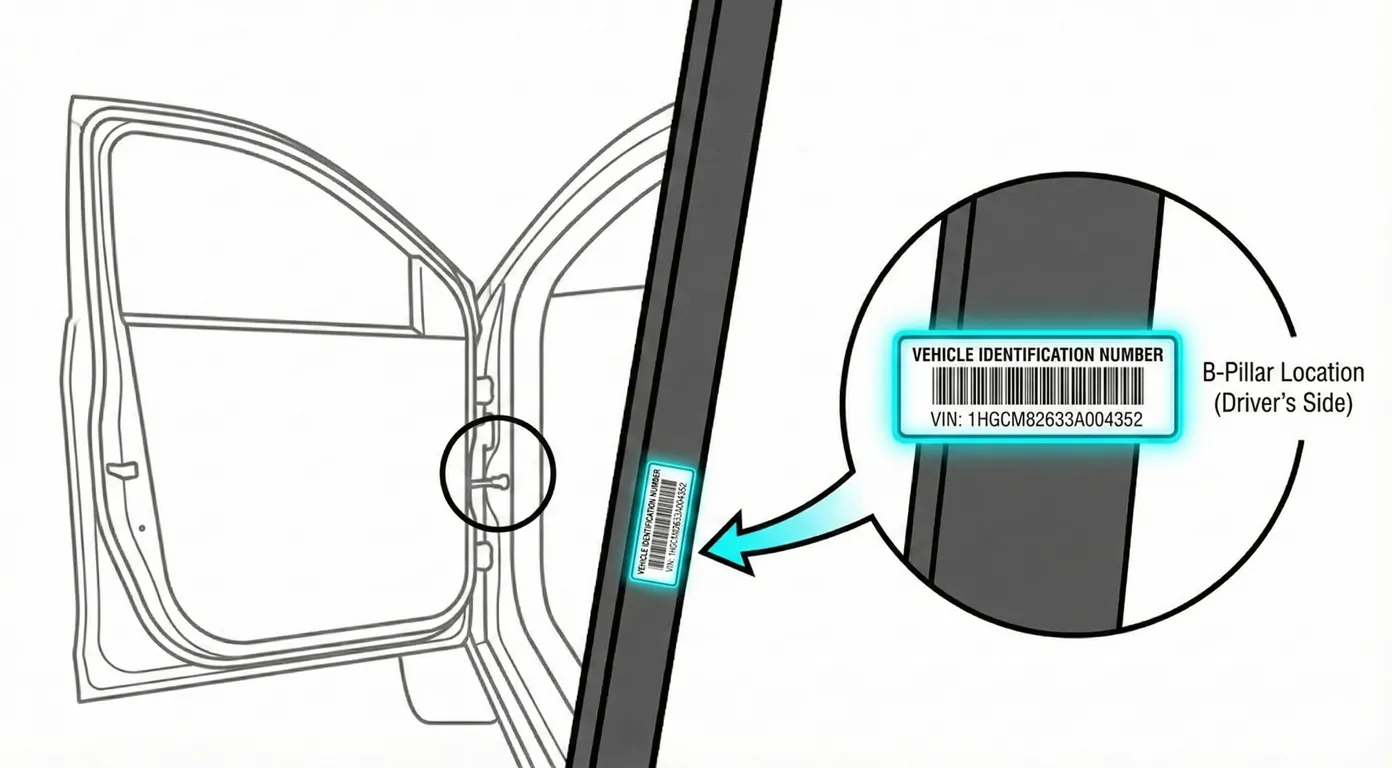
- Where to look: Open the front door and locate the sticker low on the B-pillar/door jamb area. It includes the VIN, weight limits, and often the paint code.
- Access: Very low difficulty—usually clean, flat, and easy to photograph.
- Note: The videos are RHD, where this label appears on the left-hand B-pillar (front passenger door jamb). For LHD, check the left-hand side of the car first (driver side area), then the opposite jamb if needed.
- Tip: For the fastest, error-free read, scan it directly with your phone instead of typing the long VIN character-by-character.
2) Windshield VIN Plate (Visible VIN) 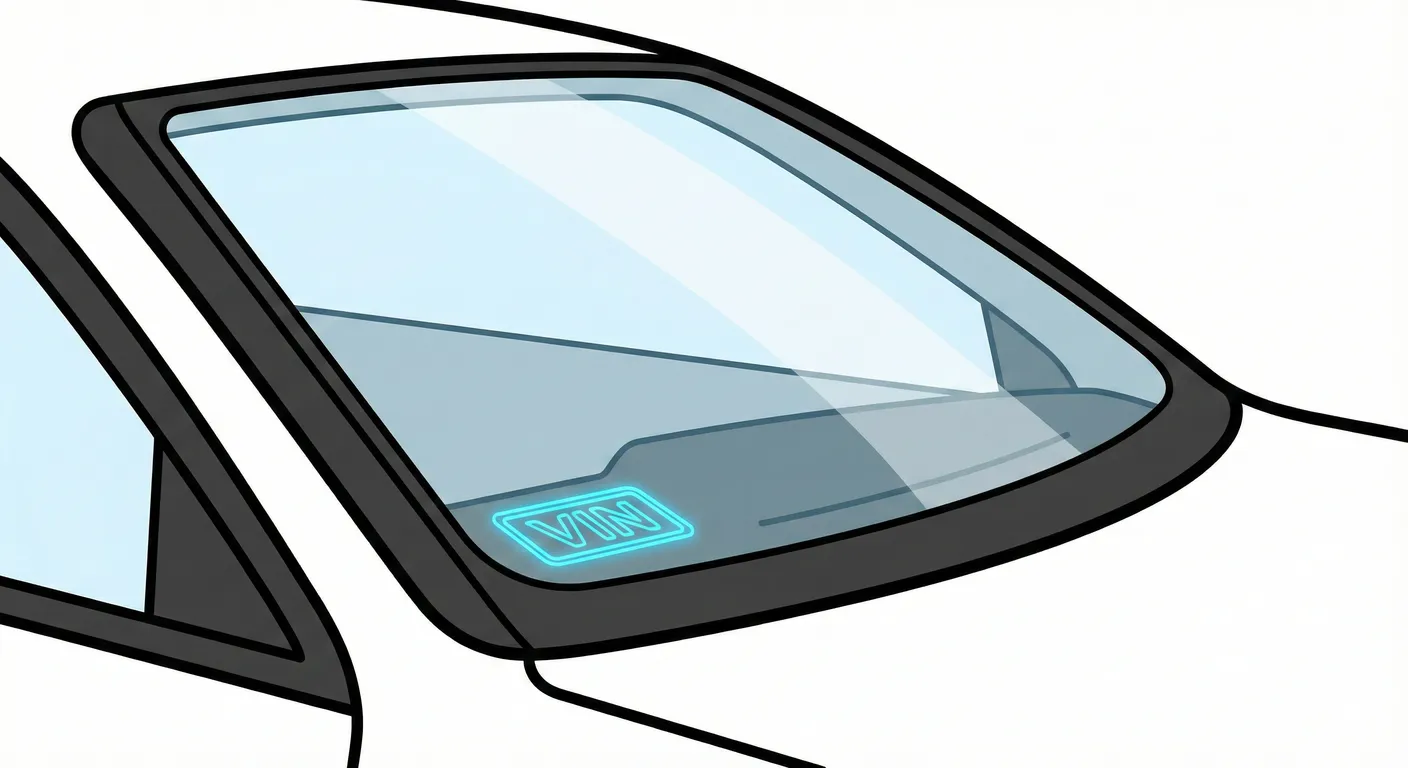
- Where to look: Look through the windshield at the lower corner, where the VIN is displayed behind the glass.
- Access: Easy to see from outside, but the glass can be reflective.
- Note: On the shown vehicle it’s on the passenger-side lower corner; some markets may place it on the opposite lower corner, so check both lower corners if you don’t spot it immediately.
- Tip: If glare or reflections hide characters, capture it with the ScanVin.app camera at a slight angle so the app can grab the VIN without you transcribing it.
3) Engine Bay (Stamped Chassis Number) 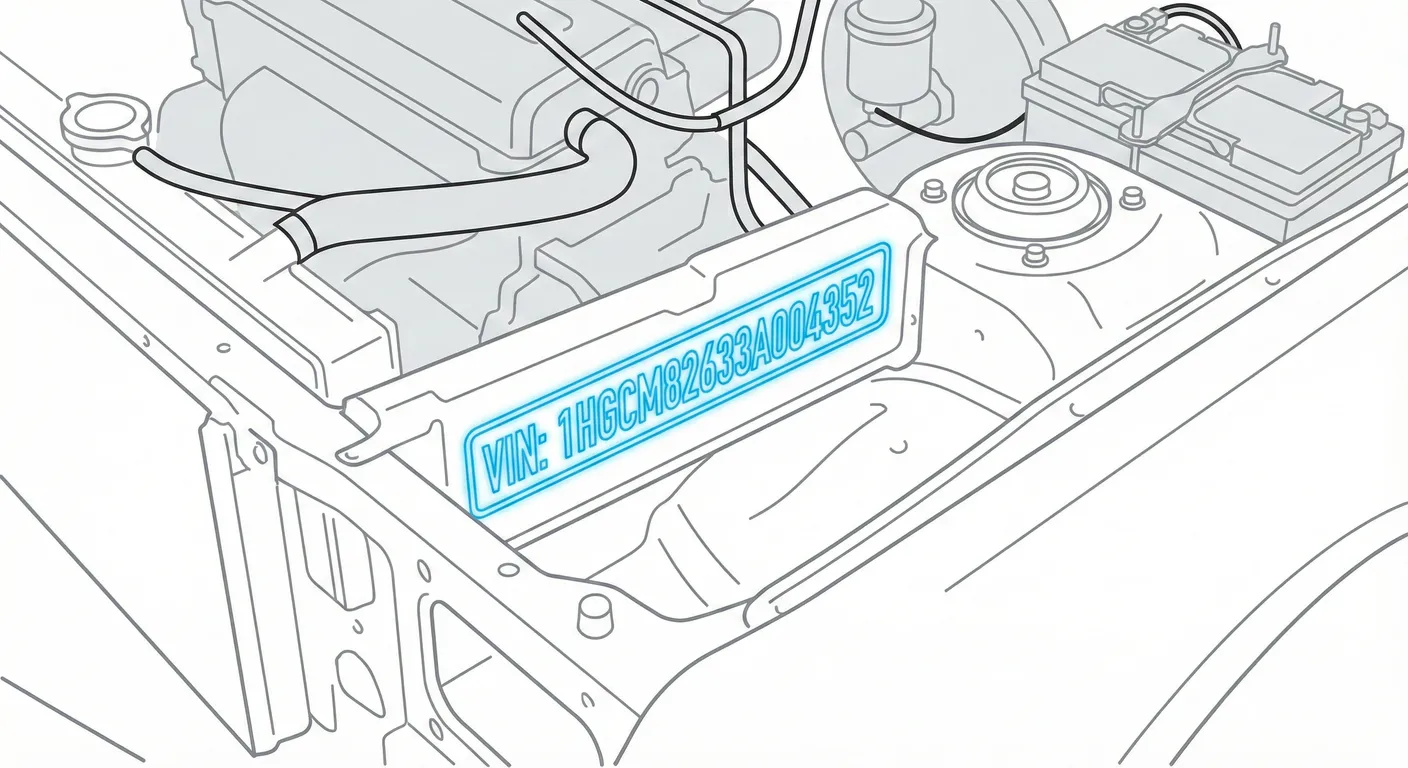
- Where to look: Open the hood and go to the right-hand side inner fender / suspension turret. The VIN is stamped into the metal near the coolant expansion tank and the windshield washer filler neck.
- Access: Generally easy access, but the stamping can be harder to read if it’s dusty, painted, or in harsh sunlight/shadow.
- Note: Both videos show RHD and still find it on the right-hand side of the car—for LHD, start on the right-hand inner fender/suspension turret as well.
- Tip: If dirt, paint, or sun glare makes the stamp faint, wipe it and then use the app’s high-accuracy scan to pick out characters—use the VIN scanner here.
Video Guide
Video Tutorial: Peugeot 2008 2021 Chassis and Engine number location
- Clear walkaround showing the windshield VIN, engine-bay stamped chassis number, and the B-pillar VIN label.
Common Problems & Troubleshooting
- Windshield glare/focus issues: Reflections on the glass and dot-matrix printing can make the VIN hard to read—change your viewing angle and avoid direct sun.
- Stamped VIN hard to read: Dirt/oxidation or bright sunlight on painted metal can hide characters—scrub lightly with a rag and use better lighting.
- Sticker validity warning: A door-jamb sticker can be replaced; for a proper identity check, always compare the sticker VIN with the windshield VIN and the stamped chassis VIN.
Frequently Asked Questions
Where is the VIN on Peugeot 2008?
Check the B-pillar manufacturer label in the front door jamb first (easy to scan). You can also find a visible VIN plate at the lower corner of the windshield.
Which VIN location is the most important for Peugeot 2008?
For quick identification, the B-pillar sticker and windshield VIN are the fastest. For verification, the stamped chassis VIN in the engine bay is the most tamper-resistant and should match the other two.
Ready to scan?
Start the scanner and scan the VIN in seconds. No registration, no fees.
Check other generations of this model
Note on Data Sources
Information about VIN location in this model comes from aggregation of official technical documentation (OEM) and spare parts catalogs. Despite careful algorithmic verification, the data is for reference purposes only. Final vehicle identification should always be confirmed by an authorized technician.
See how we verify data and build our database →