
Quick response
Quick Answer: The most reliable VIN location for the Porsche Cayenne is the VIN plate visible through the lower corner of the windshield. It’s typically located at the base of the glass on the left side for LHD cars. Expert tip: glare/reflections can hide characters—shield the glass with your hand while scanning.
![VIN location Porsche Cayenne Cayenne III [2019-2019]](/_astro/vin-location-porsche-cayenne-iii-2019-2019.CTghH_ES.webp)
Where is the VIN number in Porsche Cayenne III (2019-2019)?
This guide covers the common chassis/VIN number locations for the Porsche Cayenne III produced between 2019–2019, including the easiest places to verify the VIN before buying, registering, or ordering parts.
Chassis Number Locations
1) Windshield VIN (dashboard plate) 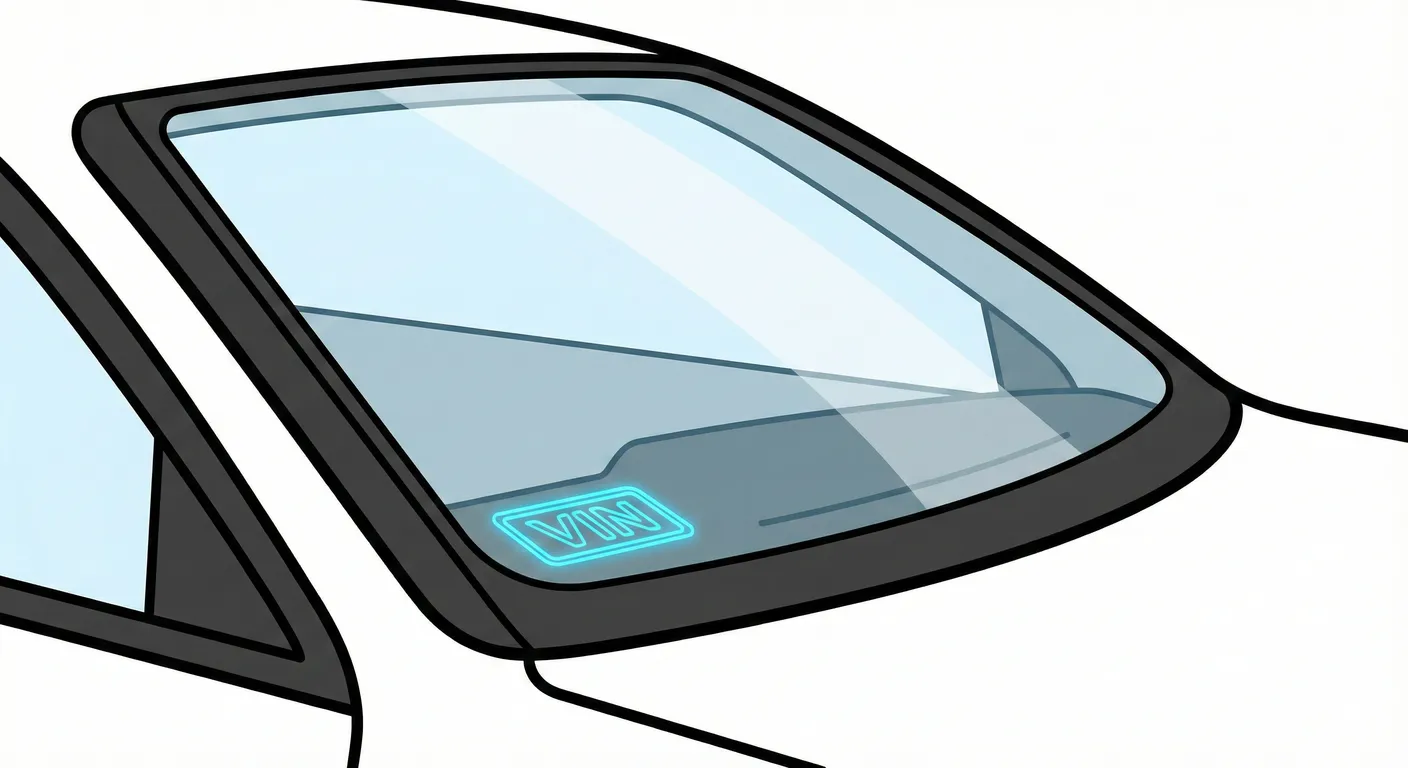
- Where to look: From outside the car, look through the lower corner of the windshield at the base of the glass (typically left side on LHD cars). The VIN is printed on a plate/sticker behind the glass.
- Access: Easy to reach, but glare/reflections from sky/trees can make characters hard to read.
- Note: For RHD markets this is commonly mirrored to the opposite lower corner.
- Tip: If reflections wash out the digits, use your phone to capture it instantly—you can scan it directly with the free VIN reader so you don’t misread characters like 8/B or 5/S.
2) B‑pillar certification label (VIN sticker) 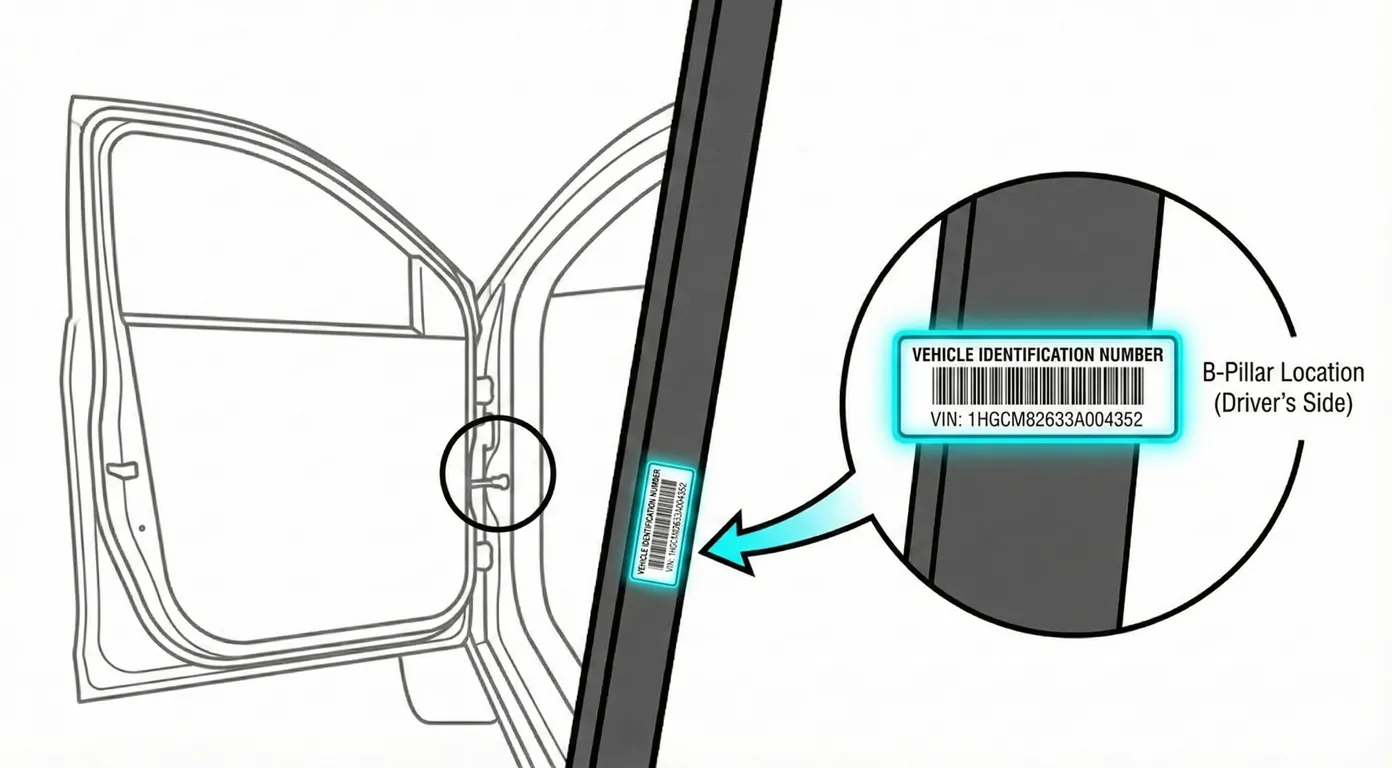
- Where to look: Open the front door and check the B‑pillar area (the center pillar). Look for a black label with silver text; it typically includes the VIN plus weight/paint information.
- Access: Usually the easiest VIN to check—good lighting, no trim removal. Watch for flash glare on the glossy sticker.
- Note: On LHD vehicles, check the left-side B‑pillar area; on RHD, it’s often on the opposite side.
- Tip: If your camera flash blows out the print, angle the phone slightly and use the VIN scanner to grab the text cleanly without manually typing it.
3) Floor / chassis VIN stamp (under carpet flap) 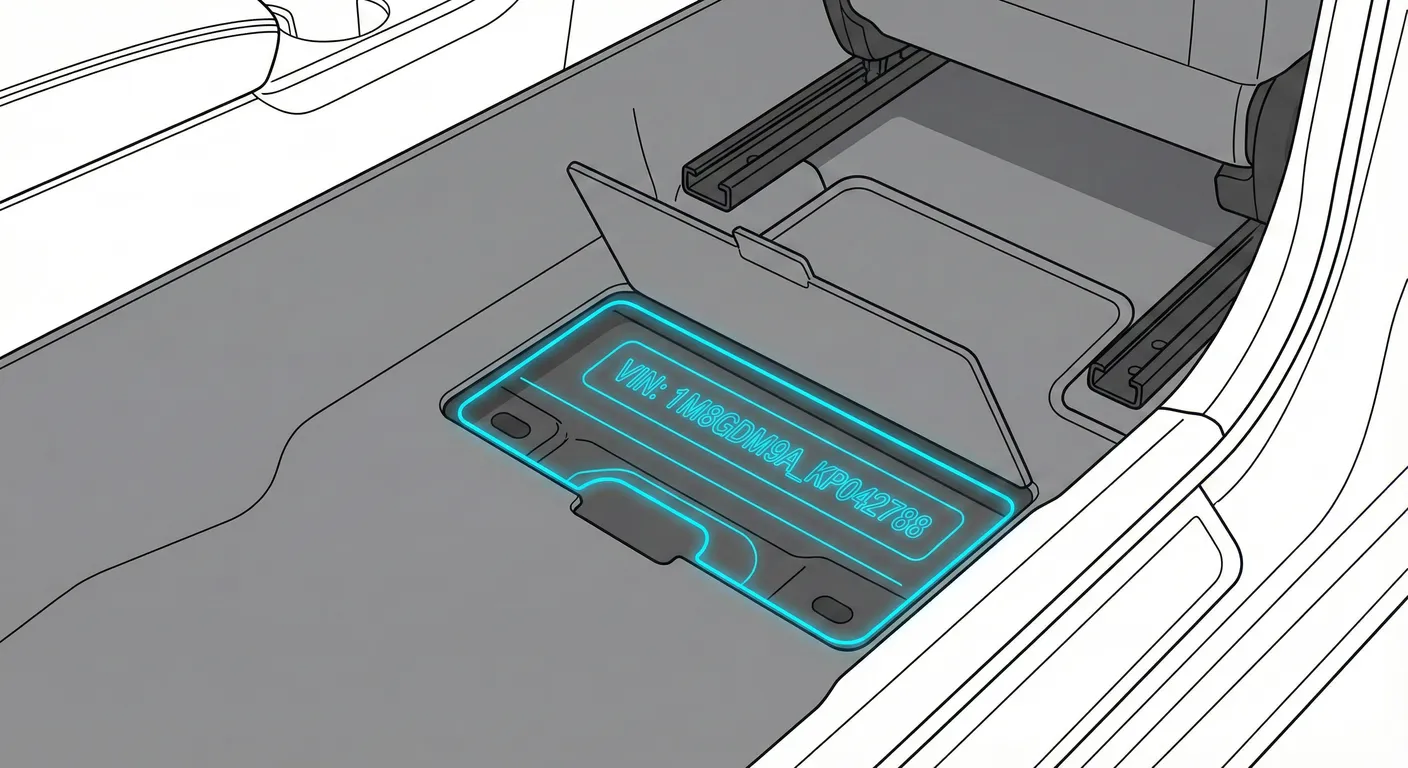
- Where to look: In the front footwell floor, the VIN is stamped into the floor pan and hidden under a rectangular pre-cut carpet flap. It’s typically in front of the seat rails area.
- Access:
- Slide the seat back for room.
- Pull the floor mat out.
- Locate the rectangular cut-out in the carpet.
- Lift the carpet flap.
- If present, flip open the plastic cover underneath to reveal the stamped metal.
This area is commonly dark/shadowed, and the stamp can be painted over, reducing contrast.
- Note (LHD-safe guidance): Check the front footwell floor (commonly on the passenger side for LHD vehicles, but check the driver side footwell if not found).
- Tip: Because it’s shadowy and low-contrast, turn on your phone light and scan with Flashlight + OCR so the app can pick up faint stamped characters.
Common Problems & Troubleshooting
- Windshield VIN glare: Reflections can hide multiple characters—shade the glass with your hand, change your viewing angle, or scan instead of trying to read it off the glass.
- Floor stamp hard to see: The stamp sits in a dark recess and may be body-color painted; use a flashlight and clean dust off the metal before scanning.
- Sticker validity warning: A missing/peeling B‑pillar label or mismatched fonts/spacing is a red flag—always confirm the windshield VIN and the stamped floor VIN match exactly.
Frequently Asked Questions
Where is the VIN on Porsche Cayenne?
Check the VIN plate visible through the lower corner of the windshield and the B-pillar certification label (door jamb sticker). A stamped VIN may also be under a carpet flap in the front footwell floor.
Which VIN location is the most important for Porsche Cayenne?
The stamped chassis VIN on the body (floor stamp) is the hardest to fake and is the best verification point—then confirm it matches the windshield VIN and the B-pillar label.
Ready to scan?
Start the scanner and scan the VIN in seconds. No registration, no fees.
Check other generations of this model
Note on Data Sources
Information about VIN location in this model comes from aggregation of official technical documentation (OEM) and spare parts catalogs. Despite careful algorithmic verification, the data is for reference purposes only. Final vehicle identification should always be confirmed by an authorized technician.
See how we verify data and build our database →