
Quick response
Quick Answer: The most reliable VIN location for the Renault Megane I is the manufacturer label on the right B-pillar (open the front right door and look on the lower B-pillar). It’s usually easy to access and scan, unless the sticker is faded or peeling.
![VIN location Renault Megane I [2000-2000]](/_astro/vin-location-renault-megane-i-2000-2000.lFEAbuoK.webp)
Where is the VIN number in Renault Megane I ([2000-2000])?
This guide covers where to find the VIN (chassis number) on the Renault Megane I ([2000-2000]) so you can verify the car’s identity quickly and correctly.
Chassis Number Locations
Manufacturer Label (Right B-Pillar) 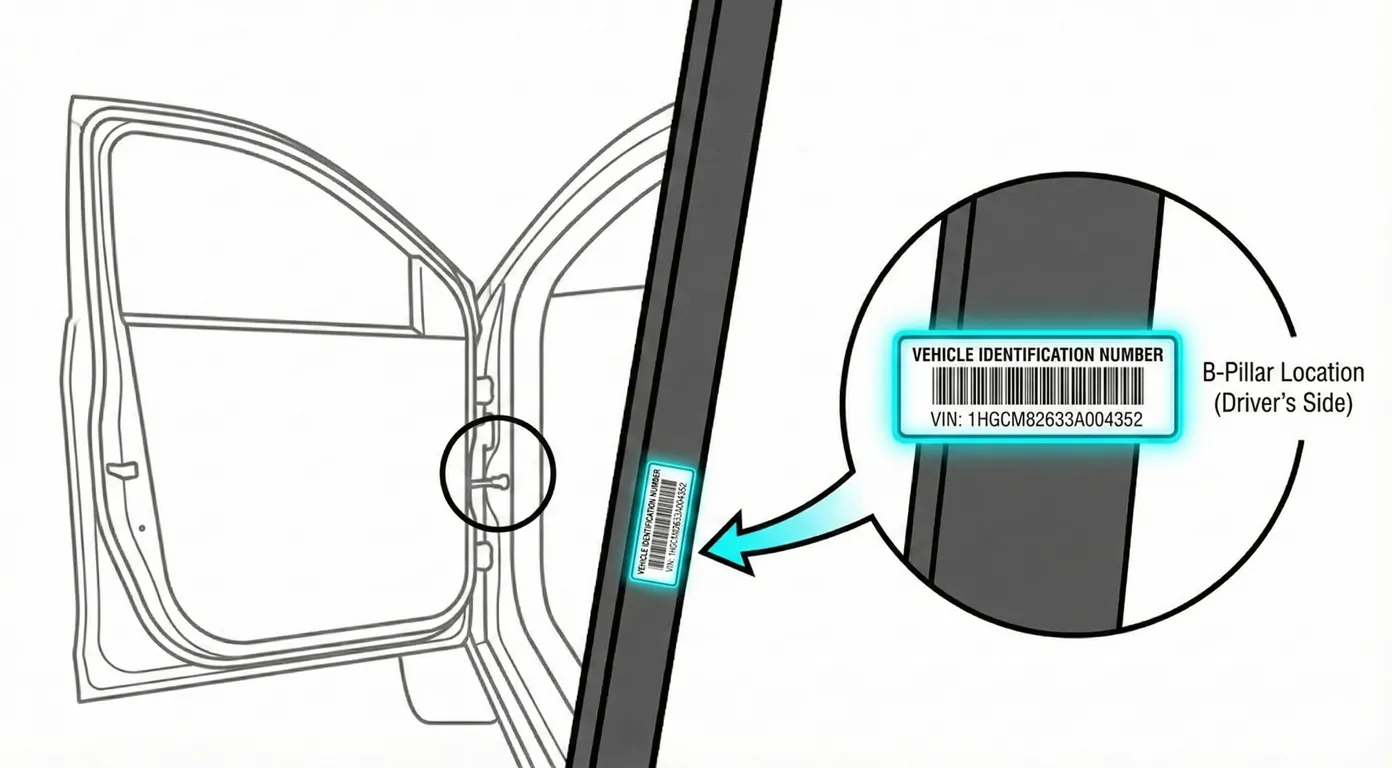
- Where to look: Open the front right door (passenger side on LHD cars). Look on the lower section of the B-pillar for a silver/white vertical sticker showing the VIN plus weights/paint/equipment codes.
- Access: Low difficulty. Flat, readable surface—unless it’s rubbed, torn, or sun-faded from years of door use.
- Note: This is the easiest VIN to check on LHD cars (steering wheel on the left).
- Tip: If the print is faded, use high-resolution capture and let OCR do the work—you can scan the label directly with your phone instead of guessing characters.
Shock Absorber Turret / Right Strut Tower (Engine Bay) 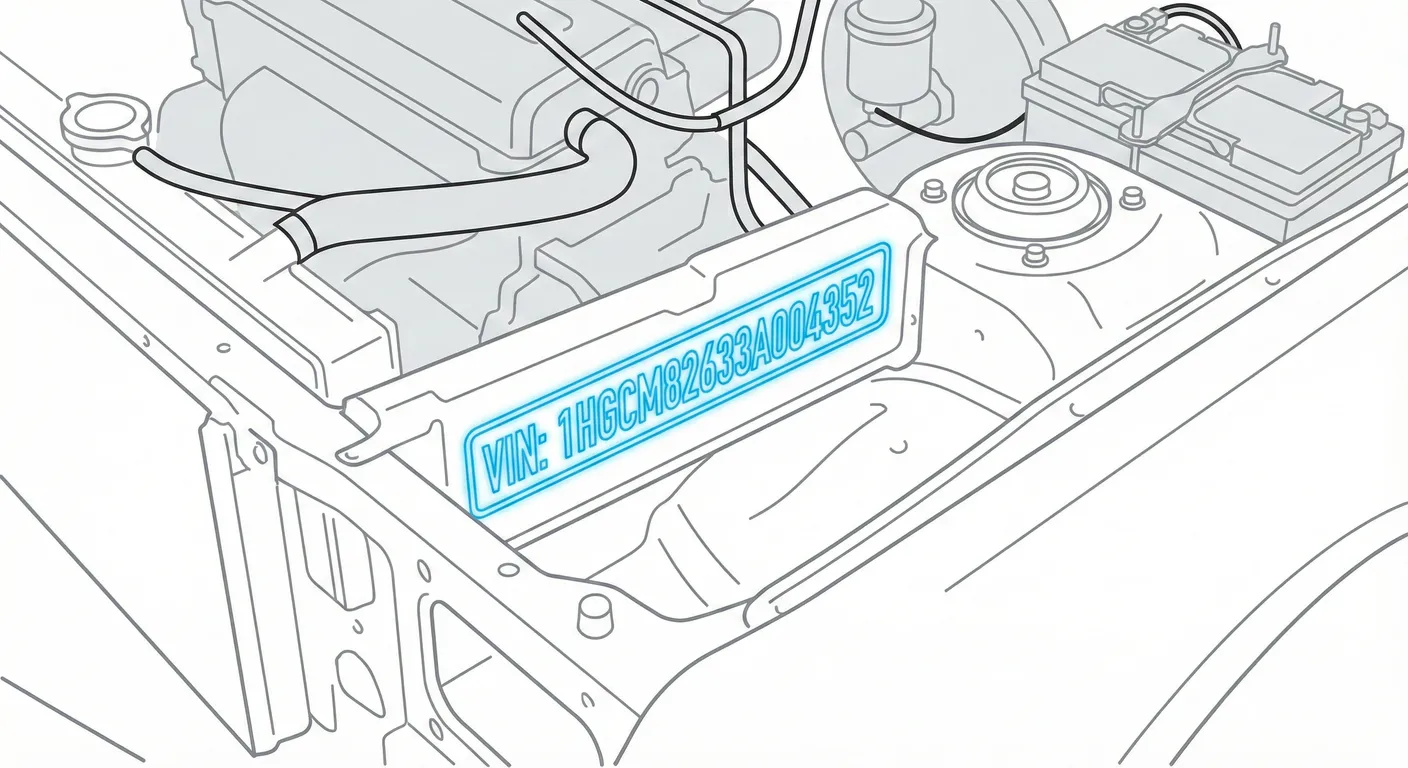
- Where to look: In the engine bay, find the top of the right-hand shock absorber turret/strut tower. The VIN is stamped into the metal near the mounting bolts, between the bolts and the outer wing/fender edge.
- Access: Medium-to-hard. This area often gets dirty and grimy, and the stamping can be shallow. Hoses/wiring may partly block your view depending on engine layout.
- Note: “Right” is the vehicle’s right side (direction of travel). On LHD cars, this is typically the passenger side of the engine bay.
- Tip: If the characters are filled with dirt or low-contrast, wipe/scrub it first, then use High Contrast AI Mode to scan the stamping so you don’t misread a faint letter/number.
Engine Block Number (Engine Code — NOT the VIN)
- Where to look: On the front face of the engine block, on a flat machined pad low down in the bay (often hidden behind hoses/tubes).
- Access: Very difficult. It’s typically dark, greasy, and obstructed, and the characters can be hard to read on the cast/dirty surface.
- Note: This is the engine number/engine code, not the 17-digit chassis VIN (VF1…). Use it for engine identification, not vehicle identity checks.
- Tip: If you need the engine code for parts matching, don’t fight the awkward angle—scan it with your phone to avoid copying errors.
Video Guide
Video Tutorial: How to find the chassis number on a Renault Megane MK1 vin number
- Walkthrough of the B-pillar VIN sticker, the engine-bay strut tower VIN stamping, and the separate engine block number on a real Megane I wagon.
Common Problems & Troubleshooting
- Strut tower VIN is unreadable: Dirt/grime fills shallow stampings—spray cleaner, scrub with a nylon brush, then wipe and re-check from multiple angles.
- Engine block number is nearly impossible to read: It’s low, greasy, and blocked by hoses—use a flashlight and zoom, but remember it’s not the chassis VIN.
- Sticker VIN doesn’t “count” on its own: If the B-pillar label is damaged or looks tampered with, confirm the VIN against the stamped body VIN before you buy or register the car.
Frequently Asked Questions
Where is the VIN on Renault Megane I?
Check the manufacturer VIN label on the right B-pillar (open the front right door). Also verify the stamped VIN on the top of the right strut tower in the engine bay.
Which VIN location is the most important for Renault Megane I?
For identity verification, the stamped body VIN (engine bay strut tower) is the most authoritative because it’s physically stamped into the chassis. The B-pillar sticker is very useful for quick checks but can be replaced if damaged.
Ready to scan?
Start the scanner and scan the VIN in seconds. No registration, no fees.
Check other generations of this model
Note on Data Sources
Information about VIN location in this model comes from aggregation of official technical documentation (OEM) and spare parts catalogs. Despite careful algorithmic verification, the data is for reference purposes only. Final vehicle identification should always be confirmed by an authorized technician.
See how we verify data and build our database →