
Quick response
Quick Answer: The most reliable VIN location for the Volkswagen Sharan is the B-pillar label (driver’s door jamb on LHD cars). It’s a black sticker on the lower B-pillar visible when you open the front door. It’s usually easy to read, but it can be worn from years of getting in/out.
![VIN location Volkswagen Sharan Sharan II [2011-2012]](/_astro/vin-location-volkswagen-sharan-ii-2011-2012.CbCH_WjY.webp)
Where is the VIN number in Volkswagen Sharan (Sharan II [2011-2012])?
This guide covers where to find the VIN (chassis number) on the Volkswagen Sharan II, produced between 2011–2012, and how to read/scan it without miscopying characters.
Chassis Number Locations
B-Pillar (Driver’s Door Jamb) 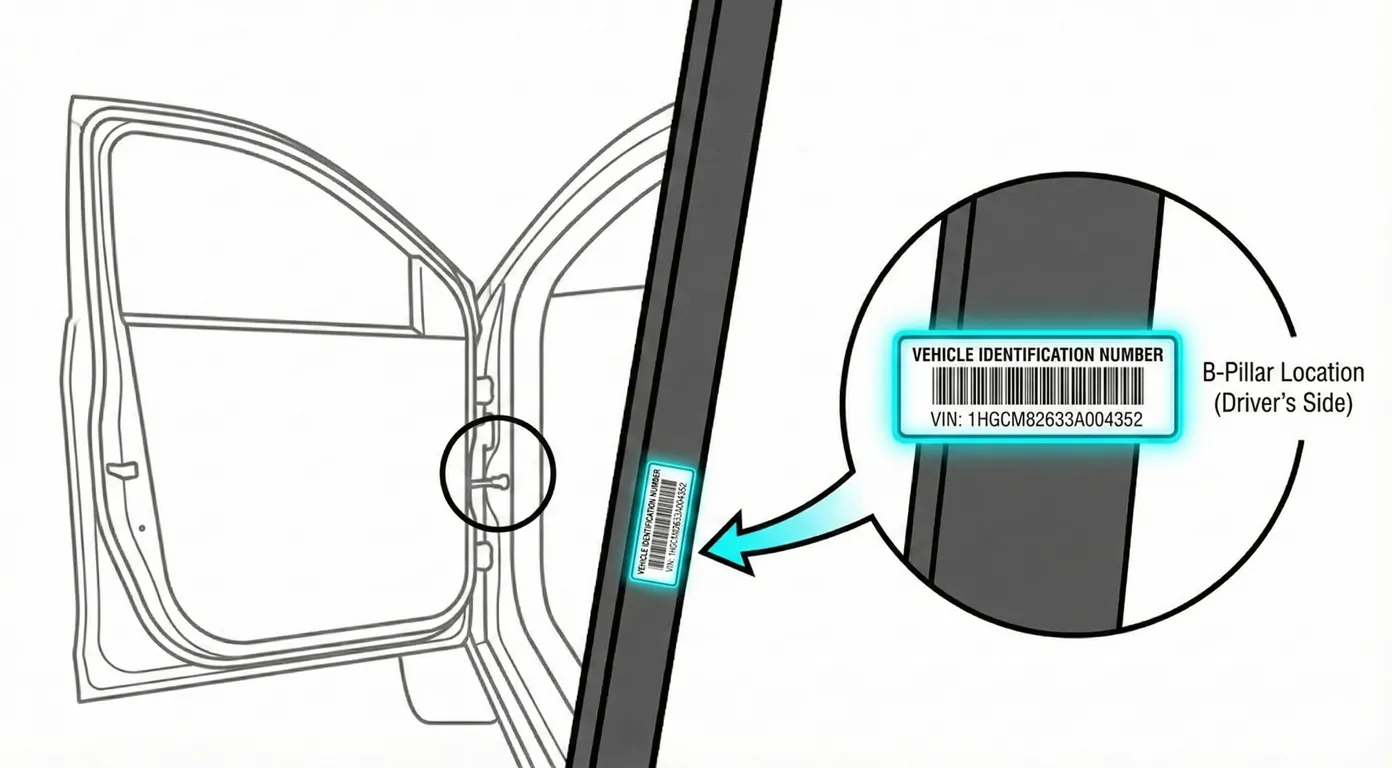
- Where to look: Open the front left door (LHD) and inspect the lower section of the B-pillar. You’re looking for a black sticker label with white text showing the VIN plus weight ratings/paint info.
- Access: Generally low difficulty—flat surface and high contrast. The only issue is sticker wear/damage from repeated contact over time.
- Note: On LHD Sharan II models, this label is typically on the left side. (On RHD cars it may be on the opposite side.)
- Tip: If a few characters are scuffed or faded, use the free VIN reader to scan it directly so you don’t misread similar characters like 8/B or 0/O.
Windshield (Lower Corner) 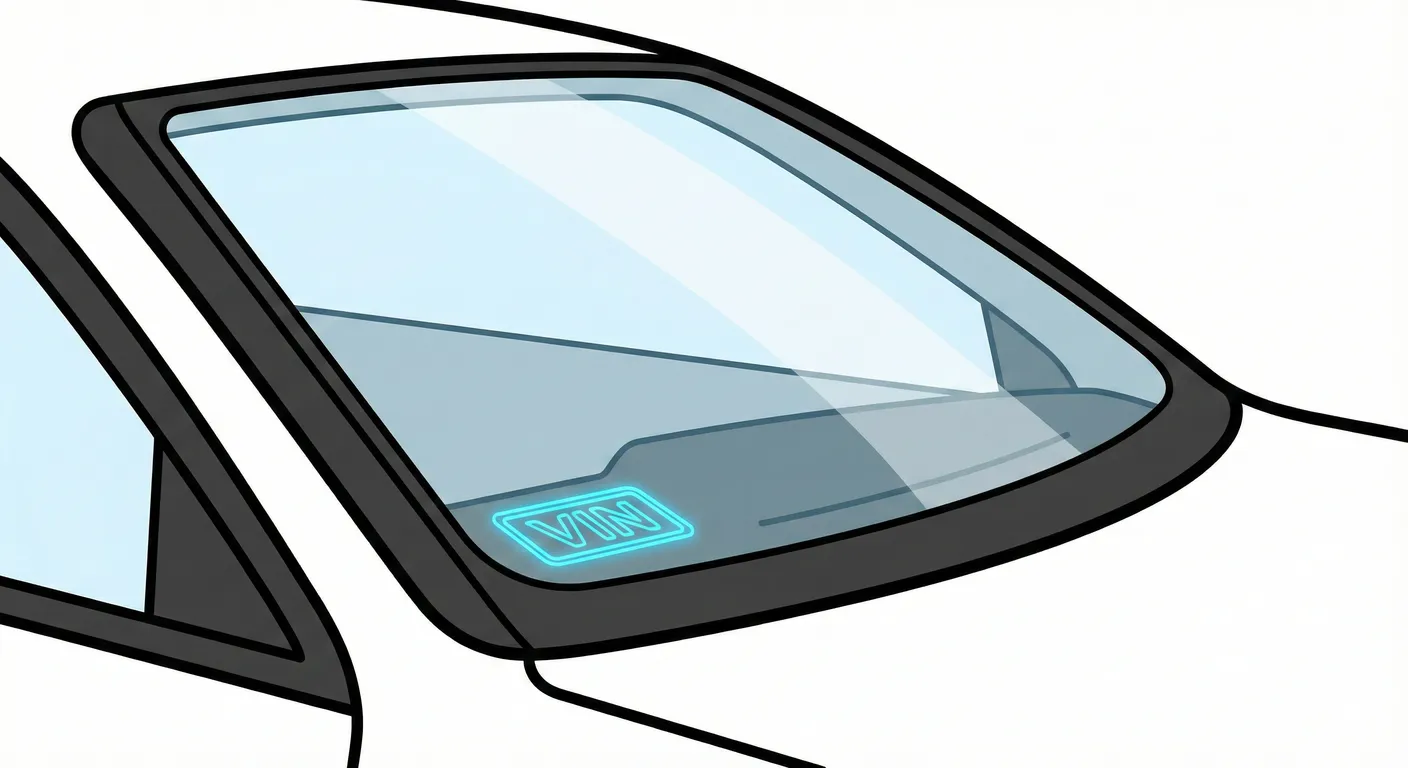
- Where to look: From outside the vehicle, look through the lower left corner of the front windshield (LHD) at the VIN plate on top of the dashboard.
- Access: Moderate difficulty because glare/reflections and a dirty windshield can hide characters.
- Note: On the LHD vehicle shown, the windshield VIN is on the left (driver’s) side.
- Tip: To beat reflections, change your viewing angle and capture it with your phone using ScanVin so the VIN is recorded instantly without transcription errors.
Engine Bay (Firewall / Rain Tray) 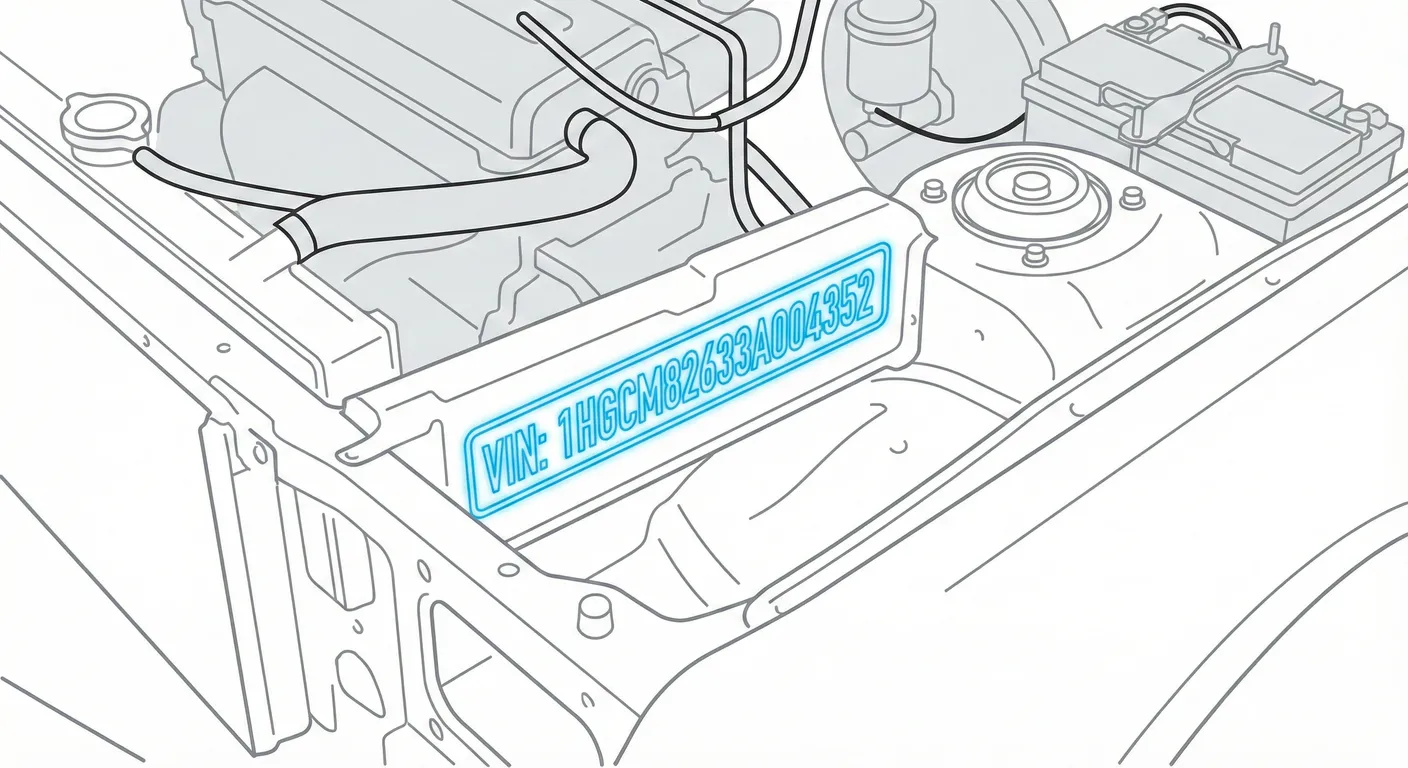
- Where to look: Open the hood and locate the VIN stamped into the metal firewall/cowl area, near the rain tray (bulkhead), slightly off-center. It may be partly blocked by the coolant expansion tank and hoses, so you’ll need to lean in and look from a specific angle.
- Access: High difficulty—the stamping is on body-colored metal with low contrast, and shadows/grime make it hard to read.
- Note: This is a true chassis stamping (not a sticker), but it’s the hardest one to visually confirm on the Sharan II.
- Tip: Wipe the area and use a flashlight; then use High Contrast AI Mode to scan the stamped VIN so the shallow characters pop even on dirty, low-contrast metal.
Video Guide
Video Tutorial: Where is the VIN number of my Volkswagen Sharan II (2010–now)
- A clear walk-around of a Sharan II showing the B-pillar sticker, engine-bay chassis stamp, and the windshield VIN in real time.
Common Problems & Troubleshooting
- Windshield VIN glare: If you can’t read it due to reflections, change the angle, shade the glass with your body, and clean the inside/outside of that corner.
- Engine bay stamp hard to see: Dust/grease and low-contrast stamping are common—scrub lightly with a rag and use a strong light to create shadow in the stamped characters.
- Sticker vs. stamped VIN: A damaged door-jamb sticker can be missing or illegible—always cross-check with another VIN location before relying on it for paperwork or purchase.
Frequently Asked Questions
Where is the VIN on Volkswagen Sharan?
Start with the B-pillar label in the front door jamb (typically left side on LHD). You can also find it on the lower corner of the windshield, and as a stamped number on the firewall in the engine bay.
Which VIN location is the most important for Volkswagen Sharan?
For everyday checks and fast verification, the door-jamb (B-pillar) VIN label is the most practical. For identity verification, the stamped VIN in the engine bay is the most authoritative because it’s physically stamped into the chassis.
Ready to scan?
Start the scanner and scan the VIN in seconds. No registration, no fees.
Note on Data Sources
Information about VIN location in this model comes from aggregation of official technical documentation (OEM) and spare parts catalogs. Despite careful algorithmic verification, the data is for reference purposes only. Final vehicle identification should always be confirmed by an authorized technician.
See how we verify data and build our database →