
Quick response
Quick Answer: The most reliable VIN location for the Peugeot 5008 is the front passenger-side B-pillar / door jamb manufacturer label. It’s typically a white sticker low on the B-pillar, visible when you open the front passenger door. It’s usually easy to access, but can sit in the door shadow—use extra light if needed.
![VIN location Peugeot 5008 5008 II [2017-2020]](/_astro/vin-location-peugeot-5008-ii-2017-2020.kpjNzheQ.webp)
Where is the VIN number in Peugeot 5008 (5008 II [2017-2020])?
This guide covers where to find the VIN (chassis number) on the Peugeot 5008 II, produced between 2017–2020, with the most common and easiest-to-verify locations first.
Chassis Number Locations
1) B-Pillar / Door Jamb Manufacturer Label 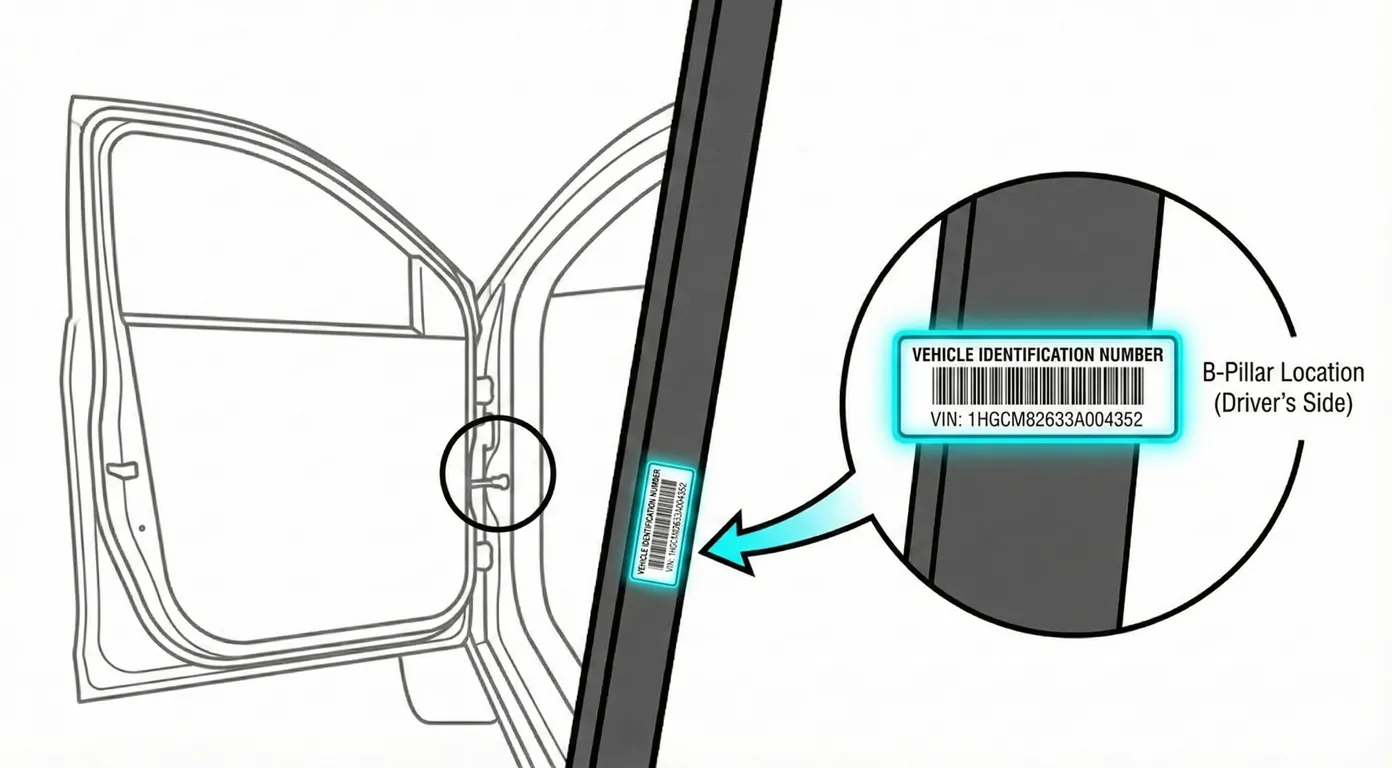
- Where to look: Open the front passenger door and look low on the B-pillar (the center pillar between the front and rear doors). You’ll see a white manufacturer sticker with the VIN plus tire pressures and weight ratings.
- Access: Very easy—no tools. If the cabin is dim, aim a light from above to avoid the door casting a shadow.
- Note: The reference video is RHD, but this label location is still typically found on a B-pillar/door aperture; for LHD vehicles, start on the front passenger-side door opening and check the opposite side only if missing.
- Tip: If the label is in shadow or you’re getting blur, scan it directly with ScanVin.app using your phone camera so you don’t mistype characters.
2) Engine Bay (Chassis Stamped VIN) 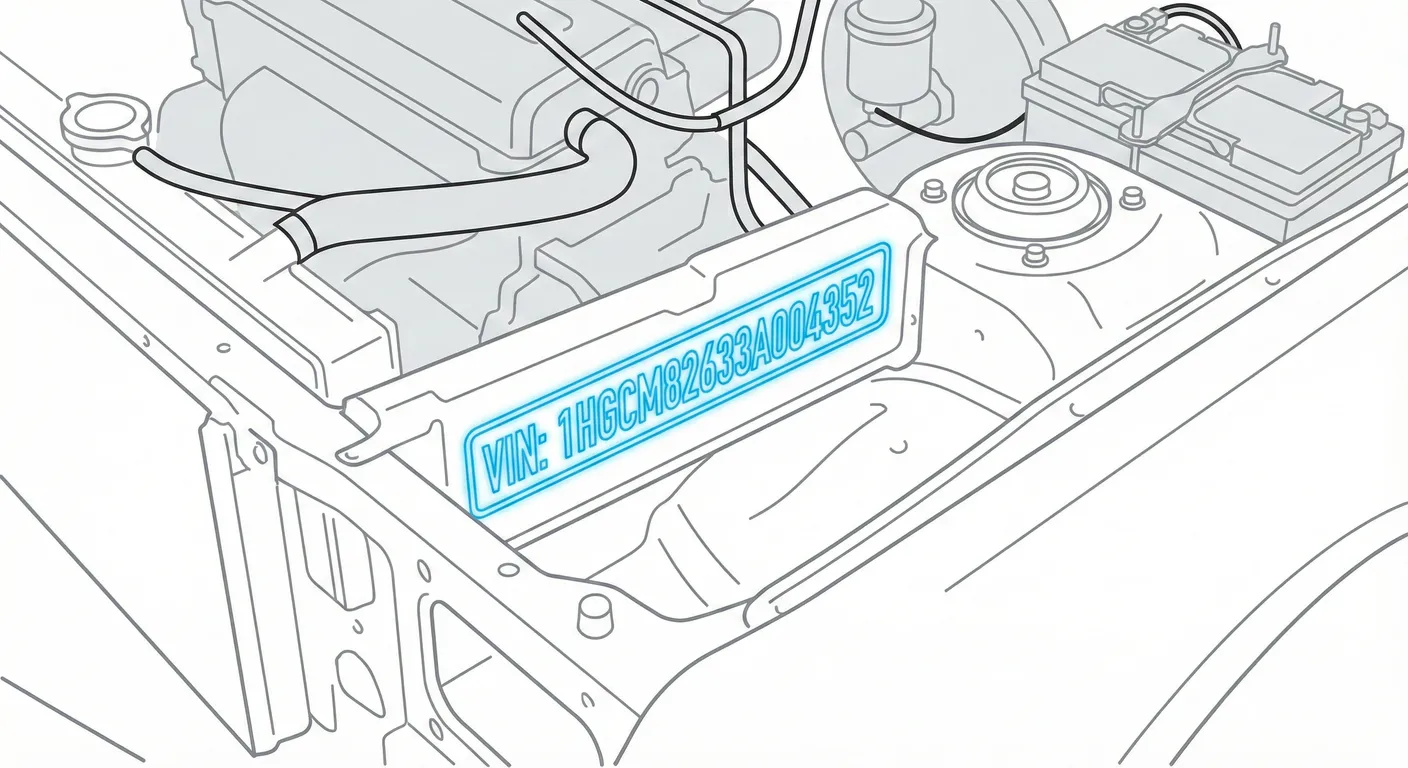
- Where to look: Open the hood and go to the right side of the engine bay (vehicle right, as you sit in the car). Look on the inner wing / strut tower area for a VIN stamped directly into the metal (alphanumeric string in the painted metal).
- Access: Moderate. You may need to wipe dust/road film off the stamping; it can be partly crowded by hoses/lines depending on engine layout.
- Note: The video vehicle is RHD, but the key detail that carries over is the VIN is stamped on the inner wing/strut-tower zone. Use “vehicle right side” orientation rather than “driver side” when searching.
- Tip: If grime or low contrast makes the stamping hard to read, use ScanVin.app with a high-contrast scan to pull the characters without you scrubbing for 10 minutes.
3) Windshield VIN Plate (Visible VIN) 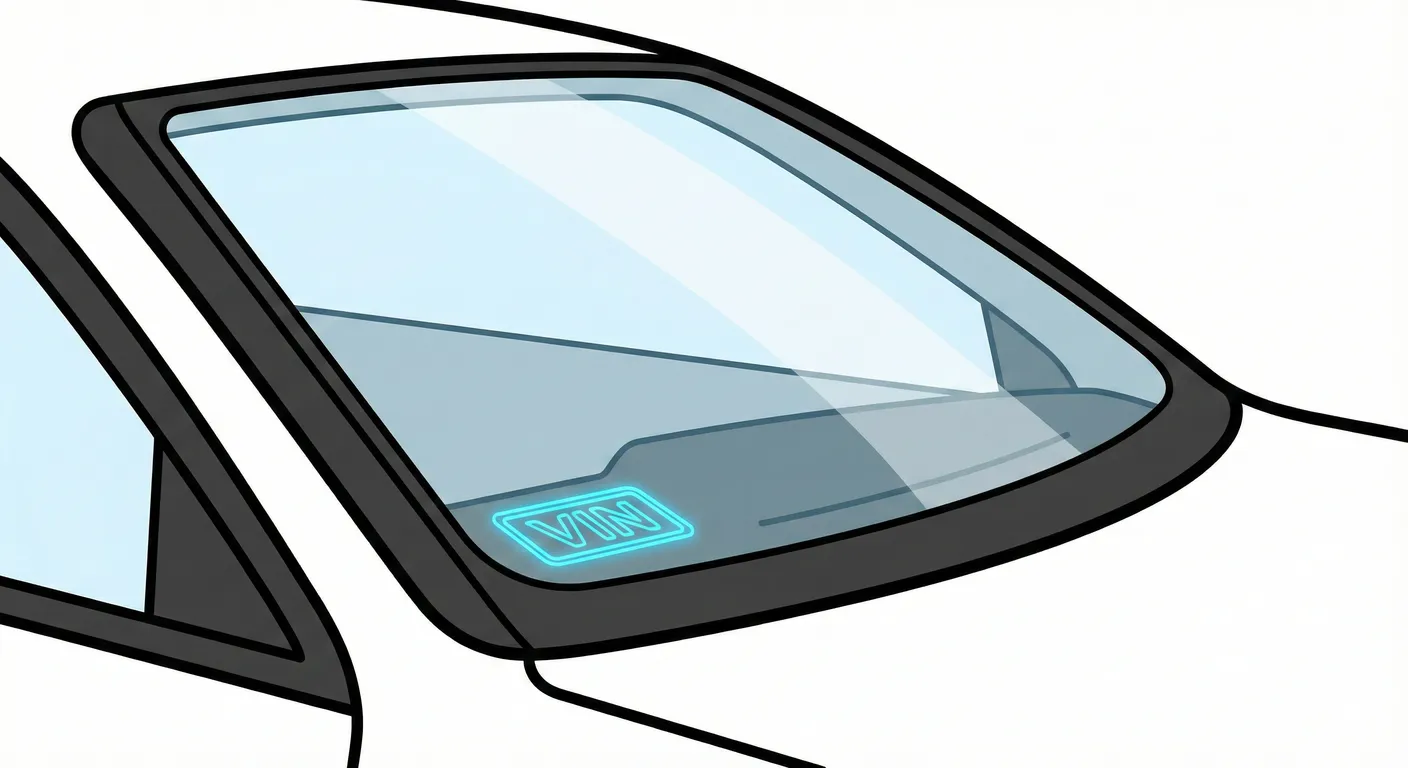
- Where to look: Check the lower corner of the windshield on the passenger side and read the VIN through the glass.
- Access: Easy from outside the vehicle, but reflections are common and wipers can partially block the view.
- Note: On LHD vehicles, this is still commonly positioned toward the passenger-side lower windshield area.
- Tip: If glare/reflections are washing out the numbers, capture it with ScanVin.app quickly at an angle so you avoid transcription mistakes.
Video Guide
Video Tutorial: PEUGEOT 5008 CHASSIS NUMBER LOCATION (SHASHIKA)
- Shows the engine-bay stamped VIN and the B-pillar VIN label on a Peugeot 5008 II (SUV body style).
Common Problems & Troubleshooting
- Stamped VIN is dirty or faint: Scrub the area with a rag and mild cleaner, then re-check from a different angle; road film can hide shallow stampings.
- Door sticker is hard to photograph: The open door casts a shadow—move your body/light source above the label and steady the phone for a sharp scan.
- Sticker vs. stamped VIN mismatch: The stamped chassis VIN is the hard verification point; if a label looks replaced, faded, or peeling, confirm against the stamping and the windshield VIN.
Frequently Asked Questions
Where is the VIN on Peugeot 5008?
Start with the front passenger-side B-pillar/door jamb manufacturer label, then verify using the stamped VIN in the engine bay on the inner wing/strut tower area.
Which VIN location is the most important for Peugeot 5008?
The stamped VIN on the body/chassis (engine bay stamping) is the most authoritative because it’s physically stamped into the vehicle structure; use the B-pillar label and windshield plate as convenient cross-checks.
Ready to scan?
Start the scanner and scan the VIN in seconds. No registration, no fees.
Check other generations of this model
Note on Data Sources
Information about VIN location in this model comes from aggregation of official technical documentation (OEM) and spare parts catalogs. Despite careful algorithmic verification, the data is for reference purposes only. Final vehicle identification should always be confirmed by an authorized technician.
See how we verify data and build our database →