
Quick response
Quick Answer: The most reliable VIN location for the SEAT Leon is the engine bay chassis stamping on the left strut tower/inner wing. It is typically stamped into the painted metal right next to the coolant expansion tank cap. It’s easy to access, but you may need to wipe off dirt/grime for a clear read.
![VIN location SEAT Leon Leon III [2013-2019]](/_astro/vin-location-seat-leon-iii-2013-2019.h-exyxiU.webp)
Where is the VIN number in SEAT Leon (Leon III [2013-2019])?
This guide covers where to find the VIN (chassis number) on the SEAT Leon (Leon III [2013-2019]), including the quickest stamping to check and the common secondary locations used for identification.
Chassis Number Locations
1) Engine Bay – Chassis Stamping (Left Strut Tower / Inner Wing) 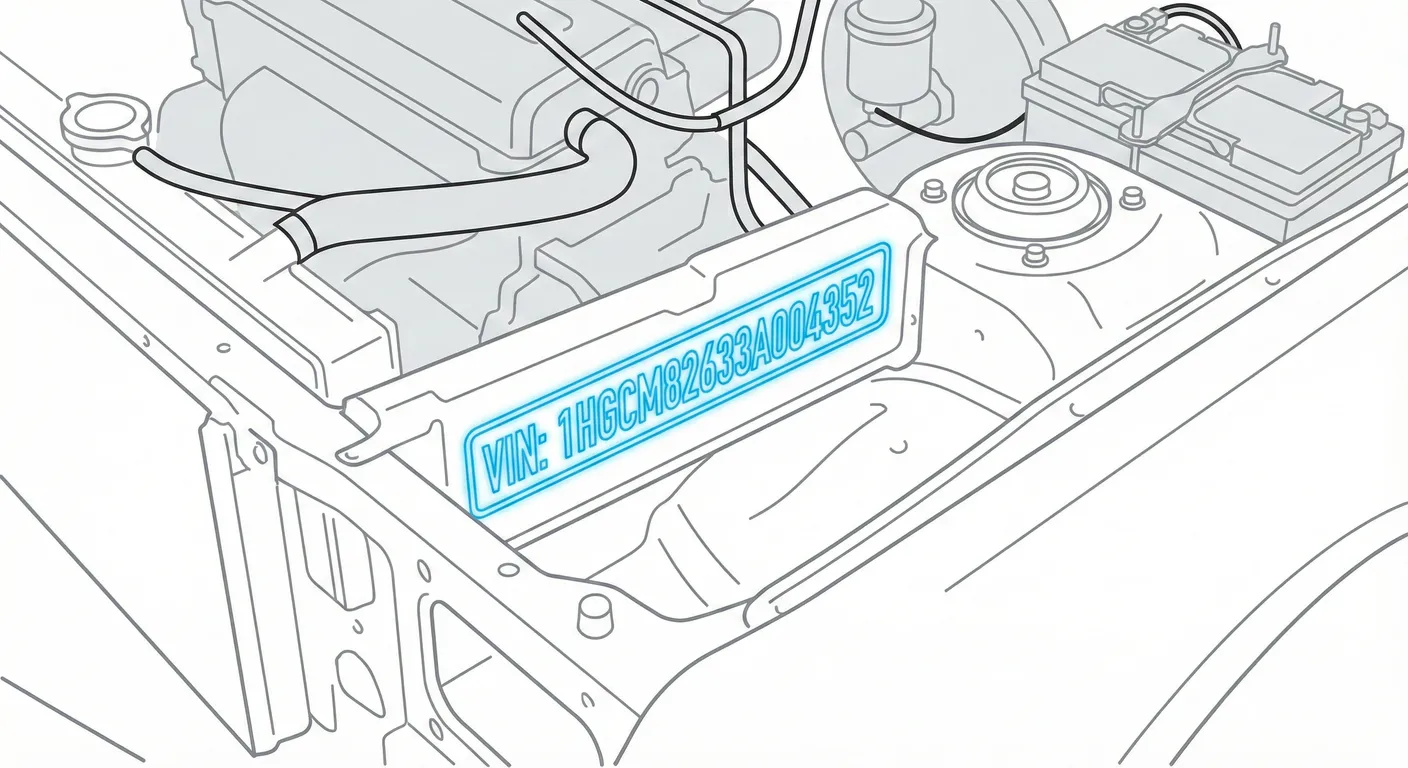
- Where to look: Open the hood and locate the left suspension strut tower (inner wing). The VIN is stamped into the painted metal on the top/side of the tower area, right next to the coolant expansion tank cap.
- Access: Low difficulty. It’s high up and easy to reach, but it can be obscured by dirt/grime—wipe it clean before trying to read it.
- Note: “Left” means vehicle-left when sitting in the car (direction of travel). On some markets the “passenger side” wording can flip (LHD vs RHD), so rely on left strut tower rather than “driver/passenger”.
- Tip: If the stamping is dusty or low-contrast, wipe it and then use ScanVin.app’s VIN scanner with high-contrast OCR to pick up faint characters without guessing.
2) VIN Plate/Etching – Windshield Viewing Window (Lower Dashboard Corner) 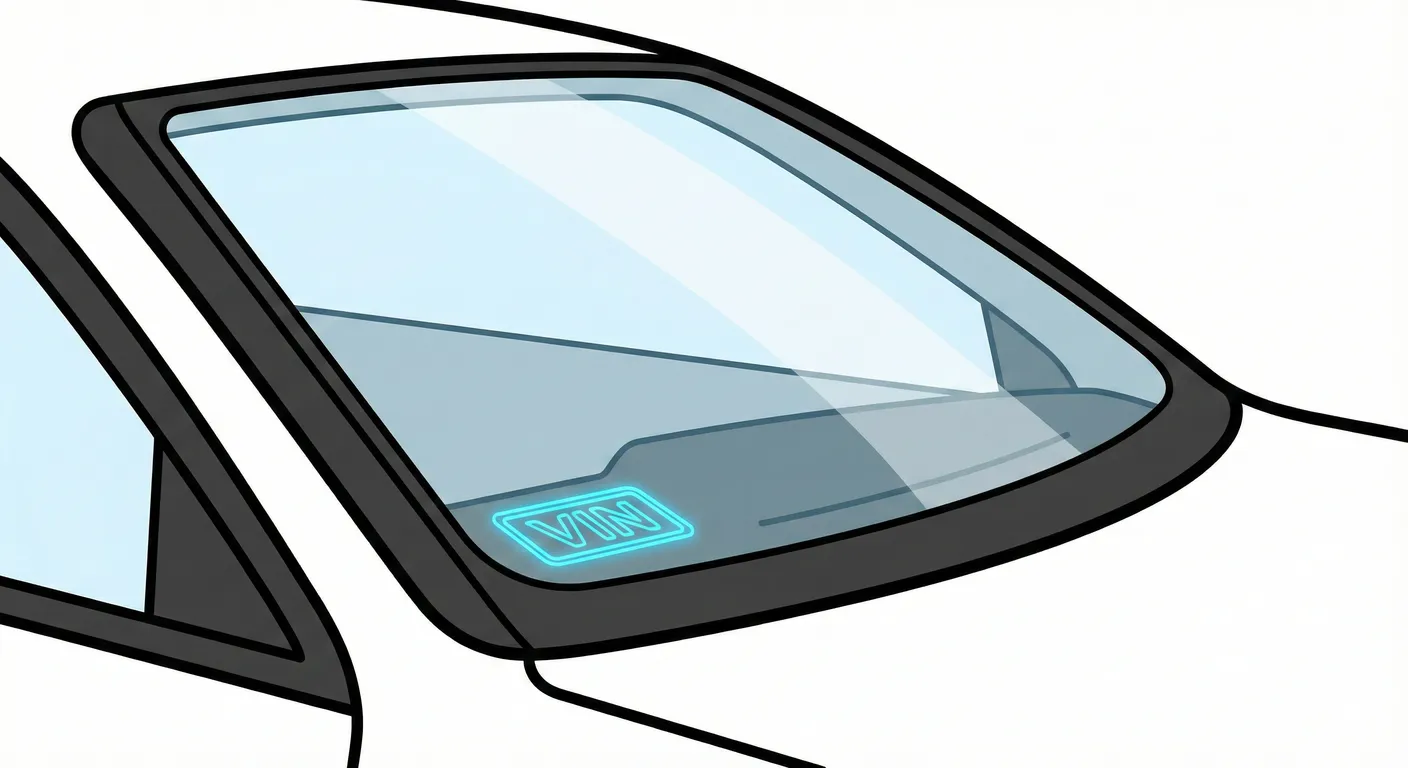
- Where to look: Check the bottom corner of the windshield on the passenger-side dashboard area, where the VIN is visible through a small viewing window from outside the car.
- Access: Can be tricky due to glare/reflections on the glass; sometimes you need to change your angle or shade the area.
- Note: Best viewed from outside the vehicle, looking down through the glass at the dash.
- Tip: If reflections make it hard to read, capture it instantly with your phone using ScanVin.app to avoid transcription mistakes.
3) Vehicle Data Sticker / Production Label (Engine Bay or B-Pillar Door Jamb) 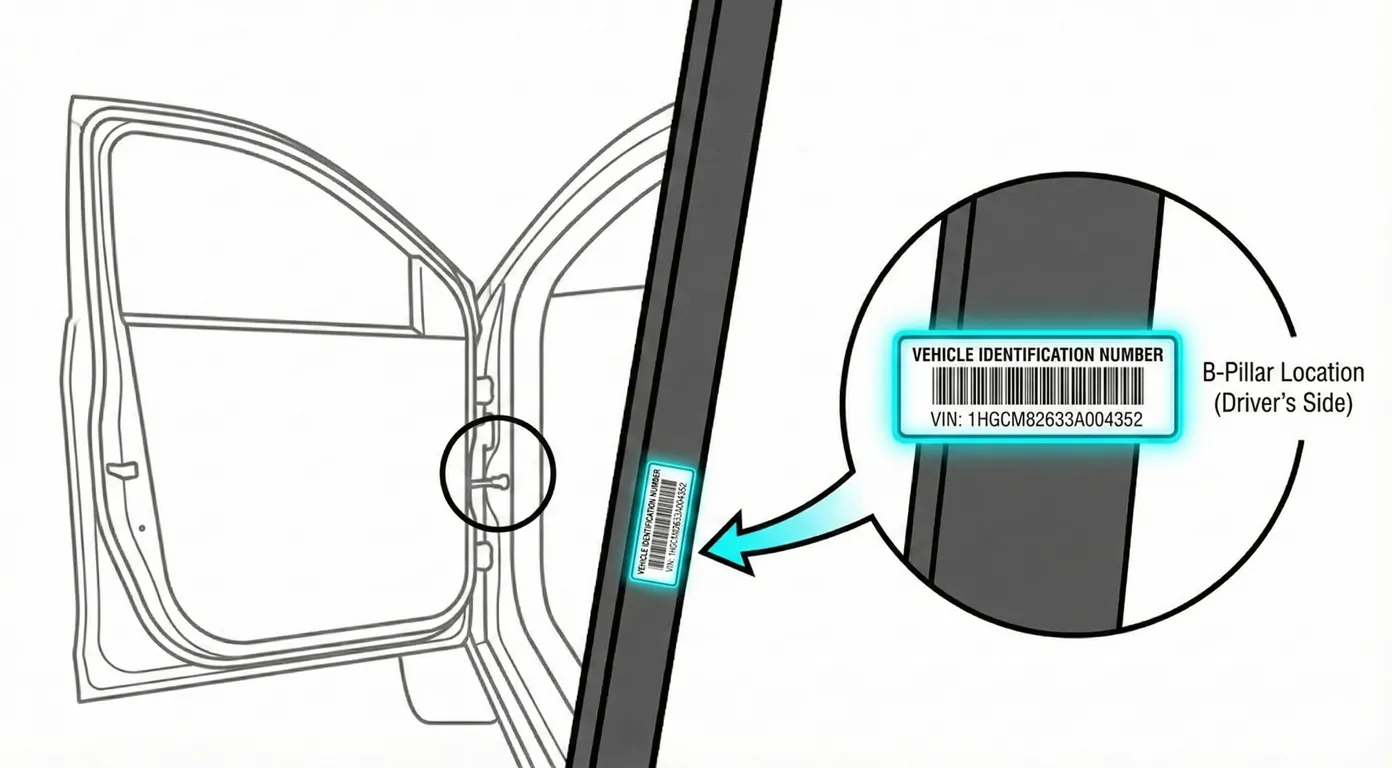
- Where to look: Look for a black or silver data sticker either:
- in the engine bay (often near the strut tower area), or
- on the B-pillar door jamb (open the front door and check the pillar/door shut area).
- Access: Usually easy to see, but on older vehicles the label can be peeled, faded, or missing.
- Note: This sticker is helpful for confirmation, but the stamped VIN is typically the most authoritative physical identifier.
- Tip: If the print is faded, scan the sticker with ScanVin.app so OCR can read what your eyes can’t.
Common Problems & Troubleshooting
- Stamped VIN covered in grime: Degrease/wipe the strut tower area, then re-check the stamping under good light.
- Windshield VIN unreadable due to glare: Move the car into shade, change viewing angle, or block sunlight with your hand/card.
- Sticker not valid proof (or missing): Data stickers can be replaced or removed—always cross-check against the stamped VIN and the vehicle documents.
Frequently Asked Questions
Where is the VIN on SEAT Leon?
Start with the stamped VIN in the engine bay on the left strut tower/inner wing near the coolant expansion tank cap. Then check the VIN visible through the lower corner of the windshield on the passenger-side dashboard area.
Which VIN location is the most important for SEAT Leon?
The physically stamped chassis VIN is the most important because it’s the hardest identifier to alter compared with stickers or printed labels. Use the windshield VIN and data sticker as secondary cross-checks.
Ready to scan?
Start the scanner and scan the VIN in seconds. No registration, no fees.
Check other generations of this model
Note on Data Sources
Information about VIN location in this model comes from aggregation of official technical documentation (OEM) and spare parts catalogs. Despite careful algorithmic verification, the data is for reference purposes only. Final vehicle identification should always be confirmed by an authorized technician.
See how we verify data and build our database →